7 Common Skin Conditions Tourists and Expats Develop in Phuket (and When to See a Dermatologist)
Phuket's hot, humid climate makes certain skin issues more common for tourists and expats. This guide covers seven conditions you’re likely to encounter here, how to spot them, and when it’s time to see a dermatologist. If symptoms arise, knowing when to consult a skin doctor phuket can save time and prevent complications, with local options like Takecare Clinic Phuket offering in-clinic diagnostics and practical treatment paths.
1. Tinea Versicolor (Pityriasis Versicolor)
Phuket’s hot, humid climate makes tinea versicolor one of the most common tropical skin issues you’ll encounter. The infection arises from Malassezia yeasts that overgrow on oily skin, creating lighter or darker patches, usually on the trunk, shoulders, and upper arms. After a week of beach heat and sweat, many travelers notice pigment changes that persist even after itching subsides. A quick skin doctor Phuket consultation helps confirm the diagnosis and tailor treatment. For background reading, see DermNet NZ on tinea-versicolor.
Diagnosis and treatment options
Diagnosis is usually clinical, based on appearance and distribution. A Wood lamp can help reveal fluorescence, and if the presentation is unclear, a clinician may scrape the patch for microscopy or submit a sample to confirm yeast overgrowth.
- Topical antifungals such as ketoconazole cream or ciclopirox; apply twice daily for 2–4 weeks, depending on product guidelines.
- Body washes with selenium sulfide or zinc pyrithione used as a wash 2–3 times weekly for several weeks to reduce surface yeast and help prevent recurrence.
- Oral antifungals like fluconazole or itraconazole for extensive disease, persistent recurrences, or when topical regimens fail; these require clinician supervision.
Even after clearing, pigment may take weeks to normalize, and recurrences are common in Phuket’s warm, humid seasons. Practical prevention includes regular use of a sunscreen with UVA/UVB protection, wearing breathable fabrics, avoiding heavy oils on the trunk, and continuing periodic antifungal washes during peak months.
Concrete Example: A 34-year-old tourist in Phuket develops pale patches on the chest after a week of heat and sweating. A two-week course of ketoconazole 2% cream clears the patches, but they reappear during a subsequent humid spell, illustrating why some patients use periodic antifungal washes to keep new lesions at bay.
Key point: The patches can resemble eczema or vitiligo; misdiagnosis often leads to ineffective or inappropriate treatment. A simple clinical check, possibly with a Wood lamp, usually clarifies the diagnosis and prevents unnecessary steroid use.
Takeaway: If you notice patchy pigment that shifts with sun exposure, schedule a skin consultation Phuket to confirm diagnosis and tailor therapy.
2. Tinea Pedis (Athlete's Foot) and Other Fungal Infections
In Phuket's humid heat, fungal skin infections are a frequent concern for travelers and residents. Foot infections, in particular, are common because feet sweat and stay moist in sandals and pool areas. A prompt, local assessment can differentiate fungal from irritant rashes and start targeted treatment without a long detour to care.
Overview of tropical fungal infections
Beyond tinea pedis, you may notice tinea versicolor on sun-exposed skin and candidal irritations in skin folds. Humid air and shared facilities—locker rooms, showers, hotel spas—boost exposure. Correctly identifying the culprit matters: fungal infections require antifungals, while contact dermatitis may need barrier care or a topical steroid. For a deeper background, see DermNet NZ on tinea pedis.
Symptoms and differential
Tinea pedis typically causes itching, burning, and a scaly rash that may sit between the toes or on the soles. Look for a ring-like patch with a clearer center when it extends beyond the toes. In contrast, allergic contact dermatitis or eczema tends to be more diffuse and may lack the moisture signature of a fungal infection. Tinea versicolor presents as lighter or darker patches on the trunk, not the feet, and can coexist with foot infections if not treated.
Self-care vs when to see a skin doctor Phuket
Mild cases often respond to moisture control and over-the-counter antifungals for two to four weeks. Practical steps include keeping feet dry, changing socks daily, and wearing breathable footwear. Do not occlude affected areas, which can worsen moisture and dull the response.
- Keep feet clean and dry; thoroughly dry between the toes after washing.
- Change socks daily and choose breathable materials.
- Apply an over-the-counter antifungal cream for the recommended duration if the diagnosis is clear.
- Seek a skin doctor Phuket if the rash spreads, it itches intensely, or there are signs of infection.
If there is spreading, increasing redness, warmth, swelling, or pain, or if the rash does not improve after two weeks of self-care and antifungals, book a skin consultation Phuket for a formal diagnosis and tailored therapy.
Concrete example: A traveler develops a moist, itchy patch between the toes after swimming in a resort pool. A clinician at a skin clinic Phuket confirms tinea pedis by visual exam and prescribes a topical antifungal, plus dry-foot care and sock rotation guidance. Within two weeks, symptoms fade significantly.
Local treatment options and clinic services
At Takecare Clinic Phuket, you can get in-clinic evaluation with skin analysis Phuket, prescription antifungals when needed, and practical guidance on prevention. Walk-in visits and same-day appointments can fit a traveler’s schedule, especially for troublesome between-toe itching or recurrent infections.
Takeaway: persistent foot fungal infections or unclear symptoms deserve a skin consultation Phuket to confirm diagnosis and tailor therapy promptly.
3. Miliaria (Prickly Heat)
Phuket’s climate makes miliaria a common pitfall for tourists and expats. Miliaria arises when sweat ducts get blocked, causing sweat to leak into the skin and trigger inflammation. There are three main forms: miliaria crystallina (superficial vesicles), miliaria rubra (prickly heat; red, itchy bumps), and miliaria profunda (deeper, flesh-colored lesions). In practice, rubra is the form most seen in travelers who sweat through hot days in light clothing. The telltale sign is a sudden eruption after a hot spell with a prickling itch in sweat-prone areas such as the chest, back, and underarms. It is not an infection, though scratching can invite a superficial secondary infection if not managed.
Prevention hinges on keeping skin cool, dry, and non-occluded. Wear loose, breathable fabrics, rinse and thoroughly dry after sweating, and avoid heavy ointments in affected areas that can block sweat ducts. For mild cases, cool compresses and a light, non-greasy moisturizer help the itch. If symptoms persist or you notice signs of infection, a skin doctor Phuket can advise on targeted therapy, which may include a short course of a mild topical steroid for short-term inflammation.
Concrete Example: A 32-year-old traveler hikes in a humid afternoon and develops a clustered red, itchy rash on the chest and back. After a cool shower and drying thoroughly, they switch to breathable cotton clothing and apply a light moisturizer and a gentle, talc-free powder. They visit Takecare Clinic Phuket, where a clinician confirms miliaria rubra and prescribes a short course of 0.5% hydrocortisone cream for itch and advice on preventing recurrence. Within a week the rash resolves with no infection.
A practical depth point: miliaria is a climate-driven skin inflammation, not a hygiene failure. It can resemble eczema or a fungal rash, so misdiagnosis leads to unnecessary treatments or delayed relief. In practice, distinguishing miliaria rubra from superficial candidiasis or tinea versicolor matters because the latter require antifungals rather than steroids. In Phuket, a quick skin consultation Phuket appointment can settle the diagnosis and tailor climate-aware care so you stay on schedule.
4. Atopic Dermatitis (Eczema) in a Tropical Environment
In Phuket's hot, humid climate, atopic dermatitis often amplifies moisture and irritants that keep the skin inflamed. The eczema skin barrier is consistently breached by sweat, saltwater, chlorine, and fragrance-laden products, so standard regimens need climate-specific tweaks. In practice this means prioritizing barrier repair, gentle cleansing, and purposeful avoidance of local irritants rather than chasing a single universal regimen.
Among travelers and expats, eczema typically shows up as itchy red patches on flexural areas like the inside of the elbows or behind the knees, sometimes on the hands or face after using scented sunscreen or detergents. The tropical heat can trigger quicker flares, and secondary bacterial colonization is more common when the skin is scratched or cracked.
Management hinges on three moves: restore the barrier, control itch, and tailor medications to the tropical context. Use ceramide-rich moisturizers twice daily and after sweating; pick fragrance-free cleansers; avoid long hot showers and rough scrubbing. Apply a low-potency steroid for short bursts during flares (for example hydrocortisone 1% for up to 7 days) under supervision. In sensitive areas, steroid-sparing options such as calcineurin inhibitors can be useful, though they may cause a transient burning sensation. Also audit your routine for irritants common in Phuket—fragranced sunscreens or detergents can keep flares alive if not swapped for milder formulations. See a skin doctor Phuket for a tailored plan.
When to seek dermatologist input at a Phuket clinic: if flares persist beyond two to four weeks, involve large areas, show signs of infection (pus, warmth, fever), or you’re not achieving control with barrier-first care. A skin consultation Phuket with a dermatologist Phuket at Takecare Clinic Phuket can confirm the diagnosis, adjust therapies, and advise on avoidance strategies. See Takecare Clinic Phuket for scheduling and access to derm tests.
Concrete Example: A 34-year-old expat arrives in Phuket and develops a stubborn itchy patch on the inner elbow after a humid week of outdoor activity. They switch to a fragrance-free cleanser, apply a ceramide moisturizer twice daily, and use hydrocortisone 1% during a flare. Within days the itch eases and the patch fades, and barrier care is continued to prevent recurrence.
- Steroids are effective for rapid relief but should be used briefly in sensitive areas to avoid skin thinning.
- Calcineurin inhibitors offer a steroid-sparing option but can sting initially and are pricier.
- Heavier moisturizers help but can feel sticky in tropical heat; opt for lighter ceramides when possible and reapply as sweat and water exposure allow.
Takeaway: Prioritize barrier-first management and seek a skin doctor Phuket when flares persist or infection signs appear.
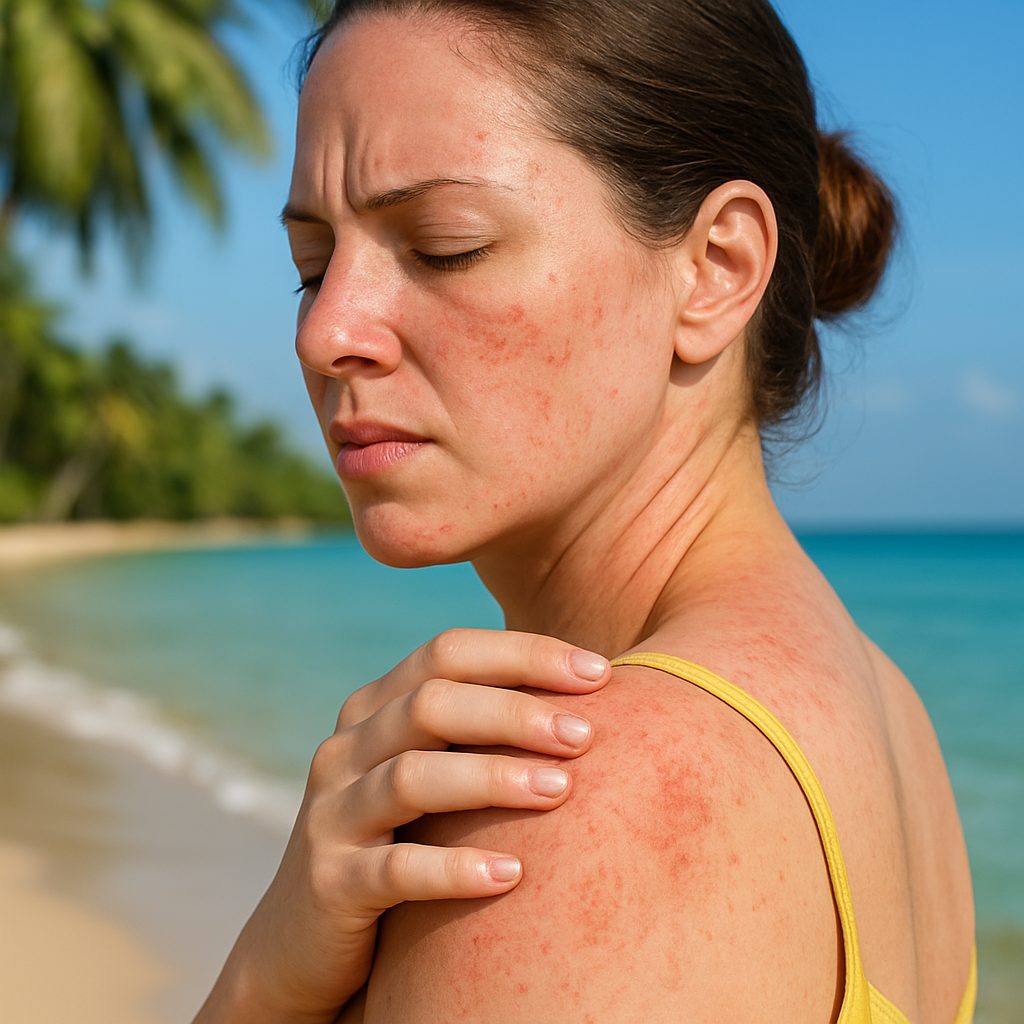
5. Sunburn and Solar Dermatitis
In Phuket, the sun hits harder than many travelers expect. The tropical UV index, humidity, and intense midday glare mean skin can burn quickly even during short outdoor activities. Protection is not optional here; without it, you risk pain, peeling, and longer-term damage. A simple daily routine—broad-spectrum sunscreen, protective clothing, and shade—prevents most missteps and keeps skin healthier during your stays.
Sunburn is the predictable acute UV damage. Solar dermatitis is a related but broader reaction that can involve itching, swelling, and rashes, sometimes triggered by photosensitive ingredients in skincare or medications. In Phuket's hot-humid climate, it can feel more intense, and what starts as a burn can evolve into a stubborn pigment change if not managed early. Distinguishing the two helps you decide when to treat at home and when to seek evaluation from a skin doctor Phuket if symptoms persist.
Immediate care steps prioritize cooling and moisture. Take a cool shower or apply cool compresses for 10–15 minutes, stay hydrated, and avoid perfumed or drying products. Use a fragrance-free moisturizer or aloe vera gel on affected areas, and apply broad-spectrum sunscreen SPF 50+ on intact skin before going outside. For pain, an over-the-counter NSAID can help, and avoid breaking blisters; if the skin is severely painful or there is extensive blistering, seek in-person evaluation promptly.
When to see a dermatologist: If blistering covers large areas, redness spreads, you have fever or dehydration, or if a rash develops beyond typical sunburn boundaries, a skin doctor Phuket should assess for more serious reactions or infection. If you’re using photosensitizing meds or have a history of skin cancer, get tailored advice sooner rather than later. Prompt in-clinic assessment at a local dermatology clinic Phuket can guide targeted treatments and preventive steps.
Long-term strategy: Phuket's climate makes daily photoprotection essential. Wear breathable clothing, seek shade during peak sun, and choose a sunscreen that protects against UVA and UVB with SPF 50+ or higher. For ongoing skin health Phuket, consider a consult with a skin health Phuket professional to review your regimen, check for pigment changes, and map a plan for future sun exposure, skin-care products, and follow-up if needed. Walk-in access to dermatology services Phuket can help you stay on track during travel or expat life Walk-in Clinic Phuket Guide.
Concrete example: A traveler spends a sunny afternoon at a beach and returns with bright red shoulders within hours. They cool the skin, apply fragrance-free moisturizer, and limit sun exposure the next day, then visit a skin clinic Phuket within 48 hours where a clinician confirms a mild sunburn and prescribes mild topical care and a plan to resume sun protection.
Take sun protection seriously from day one in Phuket to minimize skin damage and reduce the need for urgent care. If in doubt, a quick skin consultation Phuket can calibrate your regimen and keep you on a healthy path.
6. Impetigo and Other Bacterial Skin Infections
Impetigo remains a common bacterial skin infection in Phuket's humid climate, and it spreads quickly in shared living spaces. It is usually caused by Staphylococcus aureus or Streptococcus pyogenes and often starts from a small cut or irritation. In practice, early recognition and timely care from a skin doctor Phuket minimizes contagion and speeds healing, which matters when you’re navigating crowded accommodations or a busy travel schedule.
What impetigo looks like in Phuket
Two main forms show up here: non-bullous impetigo, with honey-colored crusts that cling to the skin around the nose or mouth, and bullous impetigo, with larger, fragile blisters that can rupture and crust. The tropical climate makes crust formation faster after scratching or minor trauma. Because these lesions can resemble eczema or dermatitis, a clinician's evaluation is valuable to confirm the diagnosis and avoid unnecessary treatments.
- Non-bullous impetigo: honey-colored crusts around the nose or mouth with mild surrounding redness.
- Bullous impetigo: larger blisters that rupture and crust, often on the trunk or limbs and may be more painful.
- Contagiousness and transmission: spreads through direct skin contact and contaminated towels or surfaces; it requires prompt treatment to limit spread.
- Common misdiagnoses: eczema or contact dermatitis can look similar, delaying effective antibiotic therapy.
Diagnosis is usually clinical in Phuket clinics, but swab cultures can be used if the presentation is atypical or not responding to initial treatment. For management, treat localized disease with topical antibiotics; if the infection is widespread, involves the face, or there are systemic symptoms, we escalate to oral antibiotics and closer follow-up at Takecare Clinic Phuket.
Self-care and red flags: keep the skin clean and gently washed, avoid picking crusts, wash hands frequently, do not share towels or personal items, and cover crusted areas to reduce spread. Seek in-person dermatology care if the lesions worsen after 48–72 hours, fever develops, pain increases, or redness spreads.
Concrete Example: A solo traveler develops crusted lesions near the mouth after scratching a pimple on a hot Phuket afternoon. They visit a skin doctor Phuket who confirms non-bullous impetigo and prescribes a short course of topical antibiotic with advice on wound care; within a few days, the crusts soften and healing progresses.
One practical trade-off: topical therapy is convenient and has fewer systemic effects but may take longer to clear if the infection is extensive. In crowded stays or when the face is involved, starting systemic antibiotics can shorten illness but increases the need for monitoring and potential side effects. The clinician balances speed, safety, and antibiotic stewardship for each case.
Takeaway: If you notice crusted skin lesions that are spreading or not improving after a couple of days, book a skin consultation Phuket promptly to reduce contagion and avoid complications.
7. Scabies and Severe Itch Syndromes
Phuket's heat and humidity amplify itching patterns and complicate skin diagnoses. With scabies and severe itch syndromes, the giveaway is relentless itch that often keeps you awake at night, coupled with a vesicular or pimple-like rash in folds—between fingers, wrists, elbows, or around the waist. In travelers and expats, scratching invites secondary bacterial infection, which can masquerade as a worse or different condition and derail treatment if you delay care.
Diagnosis is clinical but not guesswork. A skin doctor Phuket will look for characteristic burrows and the pattern of itching and rash; if the picture is unclear, a skin scraping or dermoscopy can confirm. Crusted scabies is less common but requires urgent assessment because it spreads readily and demands systemic therapy; plain topical treatments are not enough. Always consider nearby contacts and the public-health angle, especially if you're sharing living spaces in Phuket. For general background, you can review external resources such as CDC scabies information and DermNet NZ to understand the spectrum of presentations.
Treatment basics in Phuket: standard regimens include permethrin 5% cream applied to the entire body from neck down and left on for 8–14 hours, then repeated or supplemented with oral ivermectin in selected cases. Close contacts should be treated at the same time, even if asymptomatic, to break the chain. Laundering bed linens, towels, and clothing on hot cycles and cleaning common areas reduces re-infestation. If symptoms persist after therapy, revisit a dermatologist for reassessment or alternative diagnoses.
Concrete example: A solo traveler in Phuket notices intense nocturnal itch and a patchy rash after a week in a resort. A walk-in clinic clinician suspects scabies, prescribes permethrin cream, and instructs laundering a roommate's laundry and treating the roommate as well. After a ten-day cycle, the itch eases and new lesions stop appearing, confirming the suspected diagnosis.
- Misdiagnosis risk: other itchy conditions (eczema, bites, fungal infections) can mimic scabies; ensure proper assessment before treating.
- Public health and contact management: treating only the patient won’t stop transmission; households and close contacts need coordinated treatment and hygiene steps.
- Access and treatment options in Phuket: ivermectin availability varies by clinic; some patients prefer topical regimens or shorter courses—discuss what fits your context with a skin doctor Phuket.
- Safety considerations: ivermectin use requires caution in pregnancy, certain medications, or liver/kidney issues; always review with a clinician.
Takeaway: If itching persists beyond a few days or you notice a suspicious rash, avoid self-treatment in isolation and seek an in-person skin health consult with a dermatologist Phuket. A proper diagnosis, coordinated treatment, and household management reduce spread and speed resolution.