
Clinically reviewed by Dr. Ponlawat Pitsuwan, Physician, Takecare Clinic Phuket.
Last reviewed: October 2026
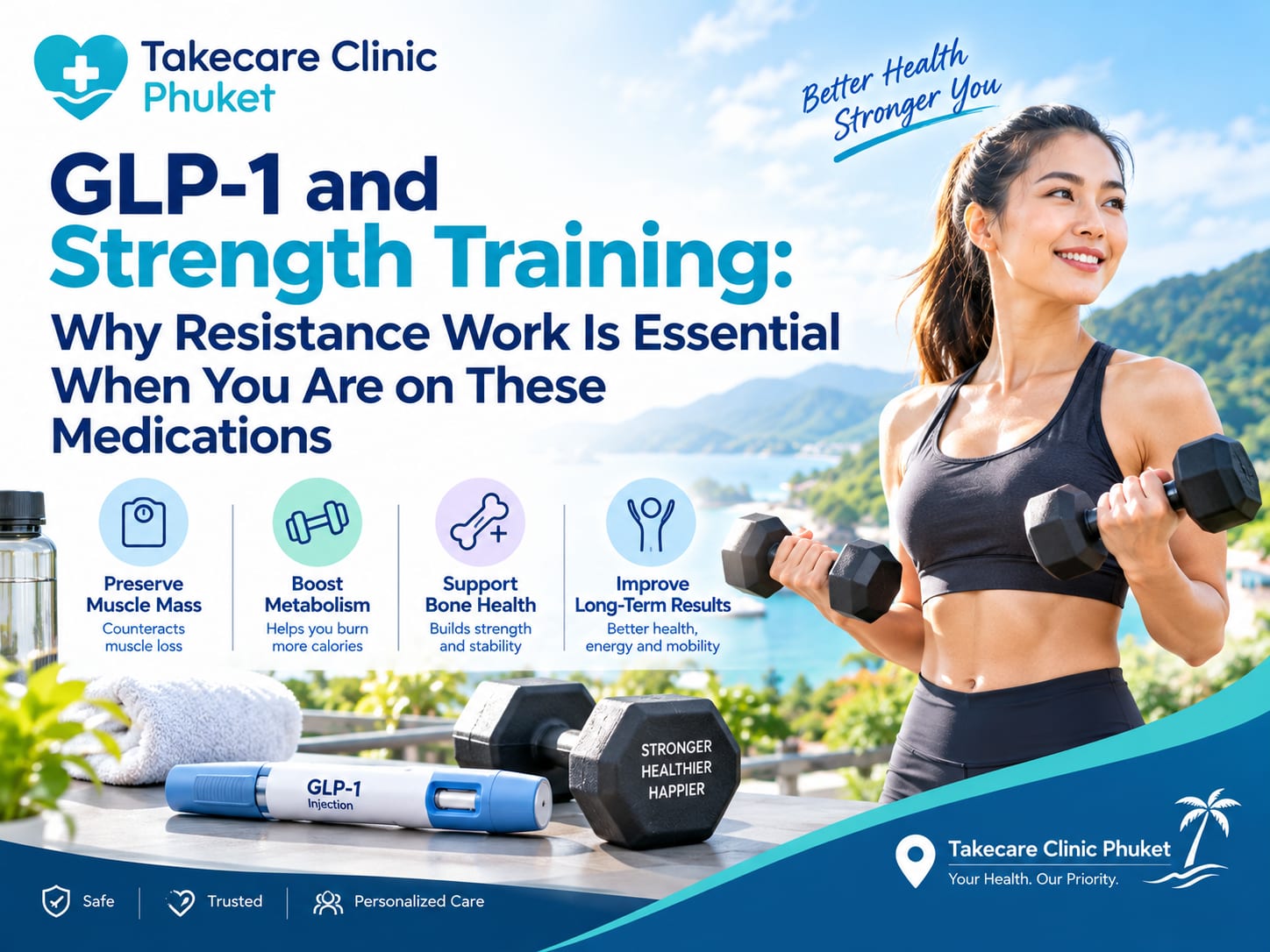
GLP-1 receptor agonists like semaglutide and tirzepatide sharply reduce appetite, and in a caloric deficit the body loses both fat and lean muscle. Resistance training is the primary tool for protecting that muscle. Without it, a significant portion of the weight you lose may come from lean body mass rather than fat, which slows your resting metabolic rate and makes long-term results harder to hold. Two to three sessions of progressive resistance training per week, combined with adequate protein, is the core strategy.
You have been on semaglutide for six weeks. The weight is coming off, which is what you wanted. But at the gym on the Chalong side, you have noticed something: the bar feels heavier than it did before, not lighter. Your appetite is gone, you are eating less than you ever have, and your body is smaller. You do not feel stronger. That is not fatigue. That is lean muscle leaving alongside the fat.
GLP-1 receptor agonists are genuinely effective weight-loss medications. What they cannot do on their own is decide where the weight comes from. In a significant caloric deficit, the body will take lean muscle alongside fat unless you give it a reason not to. That reason is resistance training. This article explains why it works, how to structure it, and what to do on the weeks when nausea or low energy makes the gym feel impossible.
How Much Muscle Can You Actually Lose on GLP-1 Medications
The scale looks good, so most people move on. But scale weight does not tell you what you lost.
Clinical data on GLP-1 medications show that a meaningful share of total weight lost can come from lean body mass, not just fat. The proportion varies by individual and is higher when no structured resistance training is in place. Lower lean mass means a slower resting metabolic rate, which makes holding the new weight harder over time. In older patients, there is also real risk to bone density and fall resistance.
Addressing this is not optional. It is the main clinical reason resistance training sits alongside the medication in evidence-based weight management, not as a bonus activity.
Why Resistance Training Is Not Optional on GLP-1
Aerobic exercise is good for your heart. It does not, however, give muscle fibres the mechanical signal they need to maintain their size. Resistance training does. Load-bearing mechanical stress is what drives the body to preserve and rebuild lean mass even while eating less.
Think of resistance work as the medical priority, not the lifestyle add-on. Cardio can complement your sessions. It cannot replace them. Structured progressive resistance training reduces lean-mass loss far more effectively than aerobic work alone.
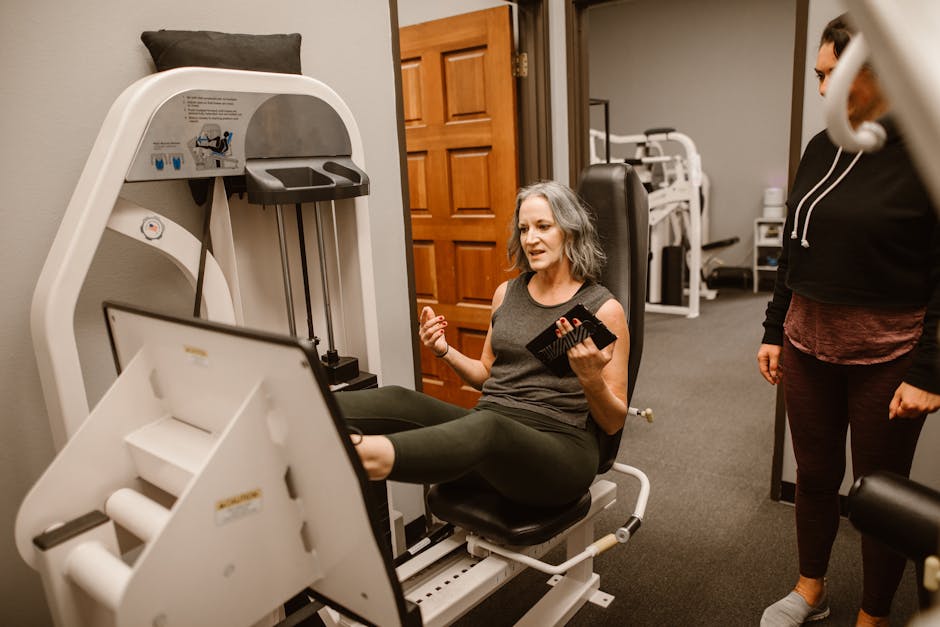
Two to three sessions per week is the standard recommendation. Compound movements such as squats, deadlifts, rows, and pressing variations work more muscle at once and produce a stronger stimulus than isolation exercises. If you are training in a hotel room in Kamala or Surin, bodyweight versions of these patterns, split squats, push-up progressions, single-leg hip hinges, still provide enough stimulus to matter. You can also ask a walk-in doctor whether your current fitness level is right for starting resistance training before you begin.

How to Structure Your Strength Sessions on GLP-1
The goal is progressive overload: doing a little more over time so the body keeps adapting. A simple model is double progression. Pick a rep range of 8 to 12, increase reps each session until you hit the top of the range, then add weight. This works whether you are in a proper gym in Phuket Town or using resistance bands at a Bang Tao villa.
Three to four compound exercises per session, two to three sets each, is enough to create the stimulus without overwhelming a body already managing a caloric deficit. Keep rest between sets at roughly two minutes, because recovery takes longer when you are under-fuelled. Track your sessions in a notebook or on your phone. One entry per session is enough.
Adjusting Training Load on Low-Energy Weeks
Some weeks on GLP-1 medications are harder than others. Nausea is common in the early weeks and after dose increases. Low energy availability, when the medication has suppressed intake more than usual, can leave you genuinely under-fuelled for training.
Do not skip the session. Reduce the load. Hold your working weight from the previous session rather than forcing a progression. Shorten the session if needed. A 20-minute session at the same weight is far better than nothing, and it maintains the muscle-preservation signal without pushing past what your body can recover from this week.
If nausea or fatigue is severe and persistent, that is worth reviewing clinically. Dose timing and titration can make a real difference to tolerance. An English-speaking doctor in Phuket at Takecare Clinic Phuket can assess this without an appointment.
The Protein Problem When You Are Never Hungry
Resistance training gives the signal. Protein provides the raw material. Both are required.
Clinical guidance for patients in significant caloric restriction points toward higher protein targets than standard dietary recommendations. Common ranges cited in the literature run from roughly 1.2 to 2.0 grams per kilogram of body weight per day for active individuals, with some expert groups recommending higher amounts when overall intake is sharply reduced or in resistance-trained individuals. The GLP-1-specific problem is that appetite suppression makes hitting these targets genuinely difficult.
Protein-first eating is the most practical strategy. Eat protein before anything else at every meal, before hunger disappears entirely. On low-appetite days, high-protein liquid options such as Greek yoghurt, protein shakes, or milk-based drinks are easier to manage than solid food. Schedule protein intake the same way you would a medication, regardless of hunger. This is the gap that makes or breaks the week-to-week results.
Training in Phuket’s Heat When You Are on GLP-1
Phuket’s heat and humidity affect training in ways that matter more when you are on a GLP-1 medication. The medication suppresses appetite, and nausea and reduced hunger can both lower fluid intake. Combine that with an outdoor session or a gym without strong air conditioning, and dehydration can develop faster than expected.
Drink water before you feel thirsty. Morning training sessions, before the heat peaks, are easier to recover from. Perceived exertion will run higher in humidity even at lower intensities, so scale your effort to the environment. For long-stay expats in Chalong or Rawai doing early morning sessions, this becomes routine. For visitors newer to the climate, it takes a week or two to calibrate.
If you want a baseline blood test and a physician check-in before starting resistance training, a blood test and health review at Takecare Clinic Phuket covers that without an appointment.
What Progress Actually Looks Like on GLP-1 With Resistance Training
The scale will not always reflect what is happening. Body recomposition, losing fat while maintaining or modestly building lean mass, is real but it does not always produce dramatic weight changes week to week. You may lose two kilograms on the scale and have actually lost four kilograms of fat while gaining two kilograms of lean tissue. That is a good outcome. The scale reported it as two kilograms.
Progress markers worth tracking alongside scale weight: how your clothes fit, how your strength numbers move in the gym, and how you feel doing daily physical tasks. These tell a more accurate story during body recomposition than weight alone.
Evidence supports that combining resistance training with GLP-1 medications leads to better preservation of lean mass and body composition than relying on the medication alone. Feeling better at week eight than week three is not a coincidence.
Getting Physician Support in Phuket
If you are on a GLP-1 medication in Phuket and you do not have a regular GP overseeing your program, that gap is worth closing. Physician-supervised weight loss means someone is reviewing your labs, checking that the dose is working, and flagging early if something is off. It also means having a doctor to call when a rough week makes you wonder whether to push through or pull back.
Takecare Clinic Phuket offers walk-in consultations for GLP-1 patients across the island, from Patong to Rawai to Phuket Town. Whether you need a prescription review, a lab check, or a conversation about structuring your training alongside your medication, you can come in without an appointment. For patients who want support without traveling to the clinic, telemedicine in Phuket is also available.
On semaglutide, tirzepatide, or another GLP-1 medication and want physician support for your weight management and training program? Takecare Clinic Phuket offers walk-in consultations across the island with no appointment needed. We can review your medication, check your labs, and give you a clear plan that covers both the prescription and the training side. Walk in or book a telemedicine call. English-speaking physician care, available from Patong to Rawai.
Frequently Asked Questions
Dr. Ponlawat Pitsuwan
Physician, Takecare Medical Clinic Phuket
a walk-in medical clinic based in Patong with no appointment needed and English-speaking physician care for the whole island. He sees tourists, expats, and residents across Phuket for weight management, GLP-1 medication oversight, chronic disease care, and physician-supervised health programs. His focus is straightforward, evidence-based care delivered in plain language.
References
- Wilding JPH, et al. Once-Weekly Semaglutide in Adults with Overweight or Obesity. New England Journal of Medicine, 2021.
- Jastreboff AM, et al. Tirzepatide Once Weekly for the Treatment of Obesity. New England Journal of Medicine, 2022.
- Lopez P, et al. Resistance training effectiveness on body composition and body weight outcomes in individuals with overweight and obesity across the lifespan: A systematic review and meta-analysis. Obesity Reviews, 2022.
- Stokes T, et al. Recent Perspectives Regarding the Role of Dietary Protein for the Promotion of Muscle Hypertrophy with Resistance Exercise Training. Nutrients, 2018.
- World Health Organization. Obesity and Overweight: Key Facts. WHO, 2024.
- Roth C, Schoenfeld BJ, Behringer M. Lean mass sparing in resistance-trained athletes during caloric restriction: the role of resistance training volume. European Journal of Applied Physiology, 2022.
The information in this article is for educational purposes only and does not constitute medical advice. It should not be used to self-diagnose or replace a consultation with a qualified physician. If you have concerns about your health, contact a licensed medical professional. For appointments at Takecare Clinic Phuket, visit takecareclinicphuket.com.
