
Clinically reviewed by Dr. Ponlawat Pitsuwan, Physician, Takecare Clinic Phuket.
Last reviewed: October 2026
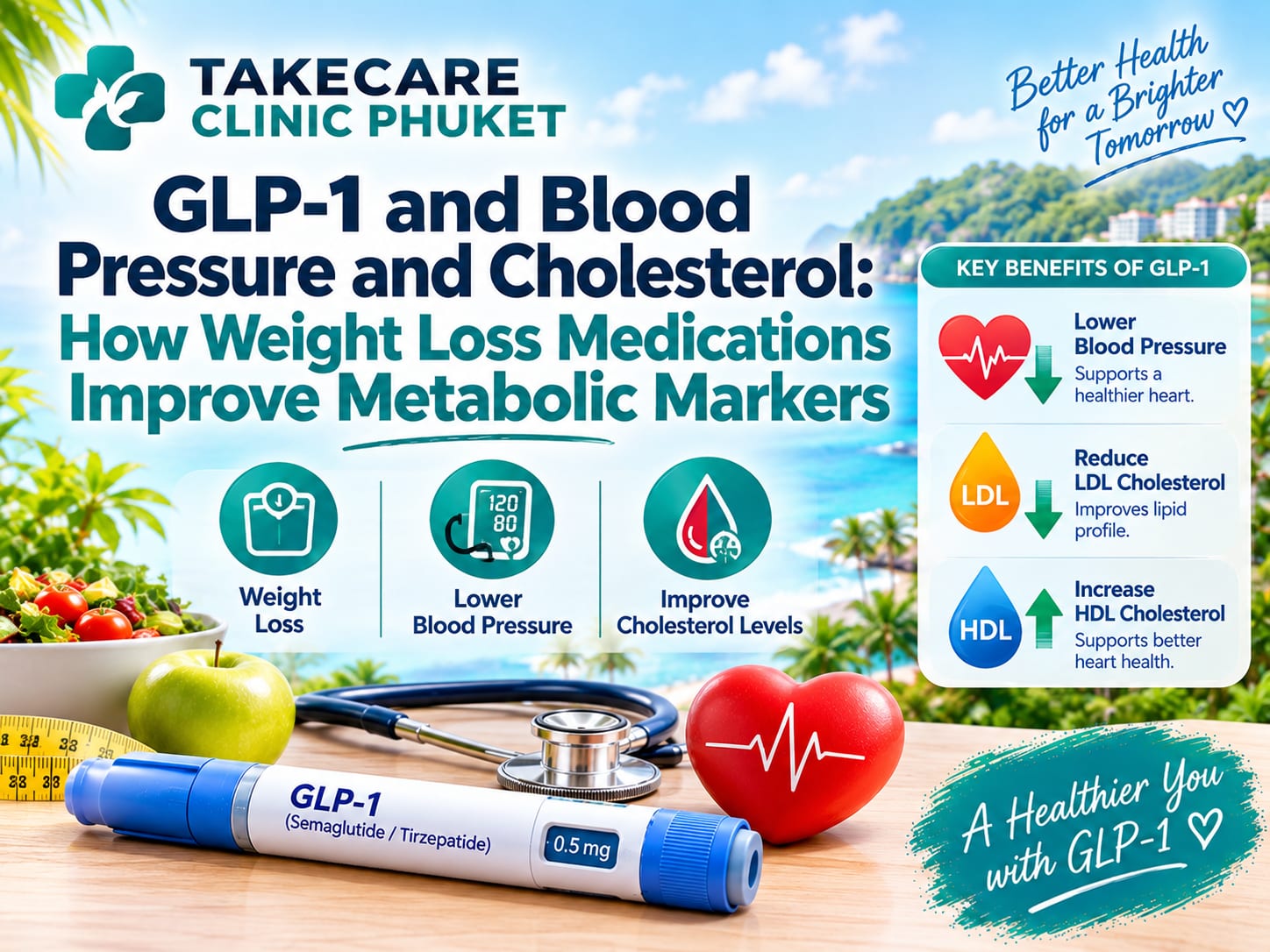
GLP-1 medications like semaglutide and tirzepatide reduce systolic blood pressure and improve lipid levels as part of broader cardiometabolic changes. The effects come partly from weight loss and partly from direct actions on blood vessels and the kidneys. Clinical trials show modest but meaningful reductions in LDL cholesterol and triglycerides, with variable effects on HDL. These improvements do not replace existing blood pressure or cholesterol medications without a physician review.
A common pattern in GLP-1 therapy is that weight moves, blood pressure may move with it, and nobody has checked. A patient may have been on a blood pressure medication for years before starting a GLP-1 injectable, and their readings may not have been reviewed since.
GLP-1 medications do more than change the number on a scale. They influence blood pressure, LDL cholesterol, and triglycerides through more than one pathway. For expats and long-stay visitors in Phuket managing cardiometabolic health without a regular GP, understanding what to monitor and when matters as much as starting the medication in the first place.

How GLP-1 Medications Lower Blood Pressure
Weight loss alone explains part of the blood pressure reduction, but not all. GLP-1 receptors are present in the kidneys. Activation increases renal sodium excretion, which reduces fluid volume and lowers pressure. There is also direct evidence of effects on vessel wall function and reduced adrenaline-like signalling that can raise blood pressure.
The practical result is a blood pressure reduction that can appear earlier than you would expect from weight loss alone. Systolic blood pressure, the top number, tends to show the most consistent change. Clinical trial data from the STEP trials with semaglutide showed mean systolic reductions in the range of approximately four to six mmHg compared with placebo, with variation across individual trials and populations. That is real, but it is not dramatic.
If you are already on an antihypertensive medication, a modest reduction from GLP-1 therapy on top of your existing pills can push your pressure lower than intended. Dizziness, light-headedness when standing, or unusual fatigue are worth paying attention to.
GLP-1 Blood Pressure and Cholesterol: What the Trials Show
The STEP trials with semaglutide and the SURPASS trials with tirzepatide both reported lipid changes alongside weight and blood sugar outcomes. The SELECT trial, which looked at cardiovascular outcomes in people with obesity and established heart disease, added important evidence about real-world risk reduction, not just marker improvement.
Triglyceride reductions are the most consistent finding across both drugs. LDL cholesterol shows modest reductions in most trials, though the effect varies by starting lipid level and degree of weight loss. HDL cholesterol, the protective type, shows smaller and less predictable increases.
These are not the lipid changes you would see with a statin. They are clinically meaningful as part of a broader picture, not as a standalone cholesterol treatment. Tirzepatide, which activates both GLP-1 and GIP receptors, showed larger reductions in triglycerides and VLDL, and a larger HDL increase, in the SURPASS-2 trial compared to semaglutide. LDL cholesterol changes were not statistically significantly different between the two drugs in that trial. Direct head-to-head trials with lipid outcomes as the primary endpoint are limited.

Managing Your Existing Medications as You Lose Weight
This is the part that creates real problems, and it is the one that gets skipped most often.
If you start GLP-1 therapy while already taking a blood pressure medication, your antihypertensive dose may need adjusting as your weight drops and your pressure falls. The same applies to diuretics, which also affect fluid and sodium balance. Going over-medicated is a genuine risk, and in Phuket’s heat, fluid losses from sweating can compound the effect further.
Statin therapy is a separate question. GLP-1 medications modestly improve LDL and triglycerides, but the reduction is generally smaller than what statin therapy achieves in patients with cardiovascular risk. Stopping a statin because your weight has improved is a decision that needs a physician and a fresh lipid panel, not just a better number on the scale. If you are wondering whether GLP-1 can replace statins or blood pressure pills for your situation, that is a clinical conversation, not a general answer.
A physician review at the eight to twelve week mark, with home blood pressure readings and a repeat lipid panel, is reasonable for anyone on existing medications who starts GLP-1 therapy.
Who Benefits Most From GLP-1 Therapy for Metabolic Markers
Patients who tend to see the clearest improvements in blood pressure and lipids are those with metabolic syndrome. That means elevated blood pressure, high triglycerides, low HDL, excess visceral fat stored around the organs, and insulin resistance, often alongside pre-diabetes or type 2 diabetes. GLP-1 medications address several of those pathways at once.
If your only concern is elevated LDL and your blood pressure and weight are normal, GLP-1 therapy is not indicated for that purpose alone. The cardiovascular benefit from the SELECT trial applied specifically to people with established heart disease and obesity. Applying that benefit to lower-risk patients without those criteria is not supported by current evidence.
For patients with existing high blood pressure or high cholesterol who are considering starting GLP-1 therapy, a baseline assessment gives you a proper starting point. That means a fasting lipid panel, blood pressure, kidney function, and HbA1c before you begin.
Monitoring Metabolic Markers in Phuket
A blood test in Phuket before you start, and again at eight to twelve weeks, covers the essentials: fasting lipid panel, fasting glucose or HbA1c, kidney function, and liver enzymes. These are not complicated tests, and they do not require a specialist hospital. Same-day results are available for most panels on a walk-in basis.
For expats in Chalong, Cherng Talay, or Bang Tao managing cardiometabolic health between trips home, ongoing monitoring every four to six months is a practical standard when you are stable on the medication. For tourists already on GLP-1 therapy who need a check-in or a prescription refill in Phuket, Takecare Clinic Phuket handles both on a walk-in basis at our Patong clinic, with no appointment needed and English-speaking physician care.
If you are new to GLP-1 treatment and want to start in Phuket, the assessment at Takecare Clinic Phuket includes a clinical history review, baseline investigations, and a prescription from a registered physician. GLP-1 injectables are classified as prescription-only medications in Thailand. A legitimate prescription from a qualified doctor is required, which is exactly what a walk-in clinic consultation provides.
If you are on GLP-1 therapy and have not had your blood pressure or cholesterol checked recently, or if you are considering starting treatment and want a full metabolic baseline first, Takecare Clinic Phuket is open for walk-in consultations in Patong with no appointment needed. We provide blood tests, prescription assessments, and ongoing monitoring for patients across the island, from Rawai to Bang Tao. English-speaking physician care, same day.
Frequently Asked Questions
Dr. Ponlawat Pitsuwan
Physician, Takecare Medical Clinic Phuket
a walk-in medical clinic based in Patong with no appointment needed and English-speaking physician care for the whole island. He sees tourists, expats, and residents across Phuket for metabolic health consultations including GLP-1 therapy assessment, blood pressure management, cholesterol monitoring, and cardiometabolic screening. His focus is straightforward, evidence-based care delivered in plain language.
References
- Lincoff AM, et al. Semaglutide and Cardiovascular Outcomes in Obesity without Diabetes. New England Journal of Medicine. 2023.
- Wilding JPH, et al. Once-Weekly Semaglutide in Adults with Overweight or Obesity. New England Journal of Medicine. 2021.
- Ludvik B, et al. Tirzepatide versus Semaglutide Once Weekly in Patients with Type 2 Diabetes (SURPASS-2). New England Journal of Medicine. 2021.
- Herat LY, et al. The Effect of Semaglutide on Blood Pressure in Patients without Diabetes: A Systematic Review and Meta-Analysis. Journal of Clinical Medicine. 2023.
- American College of Cardiology. SURPASS-2 Trial Summary. ACC Clinical Trials. 2021.
- American College of Cardiology. SELECT Trial Summary. ACC Clinical Trials. 2023.
The information in this article is for educational purposes only and does not constitute medical advice. It should not be used to self-diagnose or replace a consultation with a qualified physician. If you have concerns about your health, contact a licensed medical professional. For appointments at Takecare Clinic Phuket, visit takecareclinicphuket.com.
