
Clinically reviewed by Dr. Ponlawat Pitsuwan, Physician, Takecare Clinic Phuket.
Last reviewed: November 2026
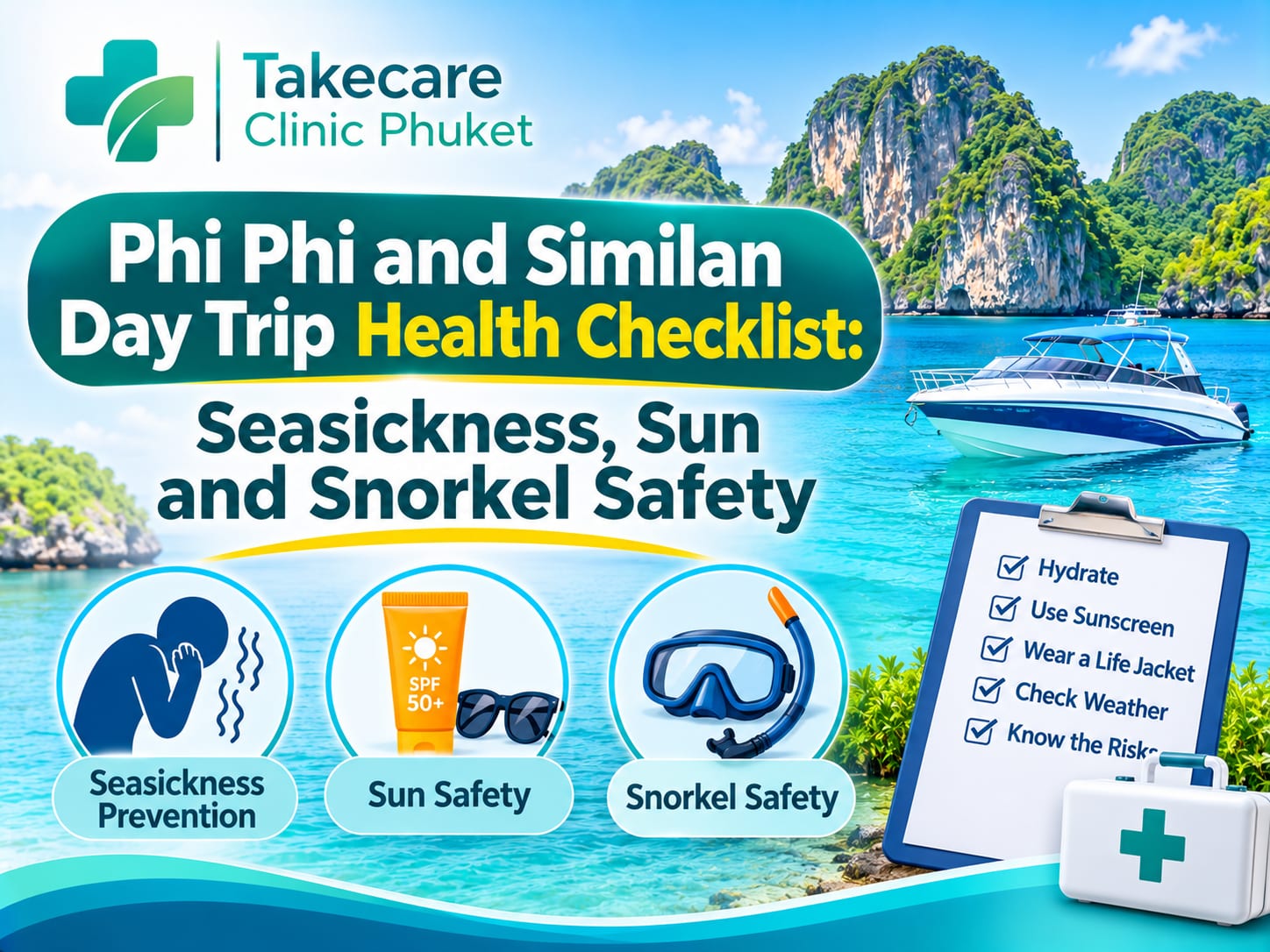
A Phi Phi island tour from Phuket is a long day on open water, in direct sun, with real marine hazards. The most common problems are seasickness, dehydration, coral cuts, and jellyfish stings. Most are preventable with the right preparation. If you return with an infected wound, signs of heat exhaustion, or a sting that is spreading, same-day walk-in care is available at Takecare Clinic Phuket in Patong with no appointment needed.
You booked the tour from Rassada Pier, the speedboat leaves at seven, and you have eight hours ahead of you: open sea, Maya Bay, a snorkel stop near Khai Island, then the long crossing home with the sun behind you. It is a great day until it is not. The people who end up at the clinic that evening did not plan to be there. They planned exactly the same day as you.
Most of what goes wrong on a Phi Phi island tour from Phuket is preventable. What is not preventable is manageable if you know what to do in the moment. This checklist covers the four things that actually send people to a doctor: motion sickness, sun and dehydration, marine injuries, and infected wounds after the fact.
Seasickness Prevention on the Phi Phi Ferry and Speedboat
The boat you are on matters more than most tour listings admit. A large ferry from Rassada Pier sits low in the water, moves slowly, and gives your inner ear time to adjust. A speedboat to Phi Phi skips across the surface at speed, with far more pitch and roll. If you have ever felt queasy on a small boat, the speedboat crossing is rougher. Plan for it.
The most reliable approach is medication taken before you board. Cinnarizine is available over the counter at pharmacies in Patong and works best when taken at least 30 minutes to an hour before departure. Promethazine theoclate is typically taken the night before travel, not an hour before. Check the leaflet for the specific product you buy, because timing differs between formulations. Neither should be taken once you are already feeling sick. Note that promethazine causes significant drowsiness and should not be used if you plan to swim, snorkel, or operate equipment. Acupressure wrist bands have limited evidence but no side effects, so there is no reason not to wear them alongside medication.
On the boat, sit in the middle where the ride is most stable, stay on deck where possible, and fix your eyes on the horizon rather than a phone screen. Looking down is the fastest way to feel unwell. If you start feeling sick, stop eating and stop looking at anything close-up.
If you have a history of significant motion sickness, heart disease, or high blood pressure, talk to a doctor before you book the tour. Speedboat conditions involve real physical impact, and that is worth knowing in advance.
Sun and Dehydration on a Full Boat Day
The UV index in Phuket runs high year-round. On open water there is no shade, no trees, and the reflection off the sea adds to your exposure. A full-day Phi Phi island tour means six to nine hours in those conditions. Visitors from northern Europe or North America are often surprised by how fast they burn and how depleted they feel by mid-afternoon.
Apply reef-safe sunscreen before you leave the hotel, not on the pier. Reapply every two hours, more often after swimming. A wide-brim hat and a UV rash guard do more than sunscreen alone. For more on sun safety on an island tour, including what to do if you develop a reaction, that is worth reading before you go.
Dehydration is the other risk most people underestimate. Salt air, heat, sweating, and alcohol from a beach stop combine to drain you faster than a day on land. Drink water consistently throughout the day. Electrolyte sachets, available at any 7-Eleven in Phuket, are worth taking along. A headache building by mid-afternoon is dehydration starting, not the beginning of a good tan.
Heat exhaustion is a real risk on a full boat day. Heavy sweating, weakness, nausea, and a throbbing headache together are the warning signs. Move to shade, lie down, and drink water with electrolytes. If the person stops sweating, becomes confused, or their skin turns hot and dry, that is heat stroke and needs emergency care.
Snorkelling Safety at Phi Phi and the Similans
Most snorkelling injuries are minor. Most also get worse than they needed to because of what people do immediately after.
Coral cuts are the most common. Reef coral carries bacteria that embed in the wound along with tiny fragments of coral itself. Rinse the wound with clean fresh water or sterile saline if available on the boat, then apply antiseptic. Do not rinse a plain cut with seawater: seawater is not sterile and can introduce additional bacteria. Even a small coral graze can become infected quickly in Phuket’s heat and humidity. Watch the wound for the first 24 to 48 hours. Redness spreading beyond the wound edge, warmth, swelling, or a fever means you need same-day assessment. For wound care after a reef injury, do not leave it another day once those signs appear.
Sea urchin spines are the other common hazard near rocky reef areas. If a spine breaks off in the skin, do not try to dig it out with a needle. Rinse the area, leave it, and get medical assessment when you return to Phuket.
Jellyfish stings vary widely in severity. For most stings in Thai waters: do not rub the area, do not rinse with fresh water, and carefully remove any visible tentacles without touching them directly. If a box jellyfish sting is suspected, pour vinegar over the area if it is available on the boat. For other jellyfish species, vinegar is not universally recommended and may not help or may worsen the sting depending on the species. When in doubt, rinse with seawater, not fresh water. If the sting covers a large area, is on the face or neck, or the person develops difficulty breathing or feels faint, that is an allergic reaction and needs urgent attention. For jellyfish sting treatment, the right next step depends on severity.
Box jellyfish have been reported in Thai waters, including near Bamboo Island close to Phi Phi. They are not common, but they are worth knowing about. A box jellyfish sting is significantly more painful than a typical moon jellyfish sting and can cause serious systemic symptoms. Treat any sting that feels unusually severe with the same caution as an allergic reaction.
Weak swimmers should wear a life jacket for snorkelling, not just the boat crossing. Life jackets are provided on every licensed tour and there is no reason not to use one. A poorly fitting snorkel mask fogs up, causes panic, and leads to water ingestion. Test the fit before you enter the water, not in it.
What to Pack for a Phi Phi Island Tour from Phuket
Keep it practical. Motion sickness tablets taken before you board, reef-safe sunscreen, a UV rash guard or long-sleeve shirt, a wide-brim hat, electrolyte sachets, a dry bag for your phone and documents, and a copy of your travel insurance details. If you take regular prescription medication, carry it in your dry bag, not a bag that might get wet or left on the boat.
For the snorkel stop: water shoes if you are heading toward rocky reef, and a small first aid kit with antiseptic wipes and a clean dressing for any cuts sustained on the reef or boat deck. Reading a health checklist for a Phuket island tour before you leave means you are not figuring this out at the pier.
If you have a chronic condition, carry your medication information in English. Bring your own records. It saves time if you need a doctor on the island or when you return.
Getting Help on the Islands and After You Return to Phuket
Medical facilities on Phi Phi are limited. There is a small health station on Ko Phi Phi Don, but it has no surgical or imaging capacity. For anything beyond a minor graze, the right move is to stabilise, get back to Phuket, and see a doctor the same evening.
The Similans are even more remote. The nearest hospital from the Similan Islands National Park is in Phang Nga. If you are on a liveaboard out of Phuket and something goes wrong, your captain should have emergency contacts. Know your travel insurance number before you depart, not when you need it.
Most returning day-trippers arrive at Rassada Pier or Chalong Pier by late afternoon. Takecare Clinic Phuket is a walk-in clinic in Patong with no appointment needed and English-speaking physician care available for reef wounds, dehydration, skin reactions, and anything else that developed during the day. You do not need to wait until the next morning.
Coral bacteria move quickly in this heat. If a wound has been getting worse over 24 to 48 hours, that is not a wound to monitor for another day. Same-day assessment is the right call.
Just back from a Phi Phi or Similan day trip and not feeling right? Takecare Clinic Phuket is a walk-in medical clinic in Patong with English-speaking physicians and no appointment needed. We see returning day-trippers for reef wound infection, dehydration, jellyfish stings, sunburn, and any other post-tour concern. Walk in the same evening you return. Find us at 34/14 Prachanukhro Rd, Kathu District, Patong, or visit takecareclinicphuket.com.
Frequently Asked Questions
Dr. Ponlawat Pitsuwan
Physician, Takecare Medical Clinic Phuket
a walk-in medical clinic based in Patong with no appointment needed and English-speaking physician care available across the island. He sees tourists, expats, and residents for travel-related illness, marine injuries, wound care, and post-tour concerns including reef cuts, jellyfish stings, dehydration, and sun-related conditions following island day trips. His focus is straightforward, evidence-based care delivered in plain language.
References
- Divers Alert Network. Marine Envenomations: Jellyfish and Hydroid Stings. DAN Alert Diver.
- Australian Marine Stinger Advisory Services. Treatment of jellyfish stings. stingeradvisor.com.
- The Thaiger. Tourists warned after box jellyfish stings near Bamboo Island. thethaiger.com.
- World Health Organization. Drowning and water safety. WHO Fact Sheets.
- NHS. Motion sickness. nhs.uk.
The information in this article is for educational purposes only and does not constitute medical advice. It should not be used to self-diagnose or replace a consultation with a qualified physician. If you have concerns about your health, contact a licensed medical professional. For appointments at Takecare Clinic Phuket, visit takecareclinicphuket.com.
