
Clinically reviewed by Dr. Ponlawat Pitsuwan, Physician, Takecare Clinic Phuket.
Last reviewed: October 2026
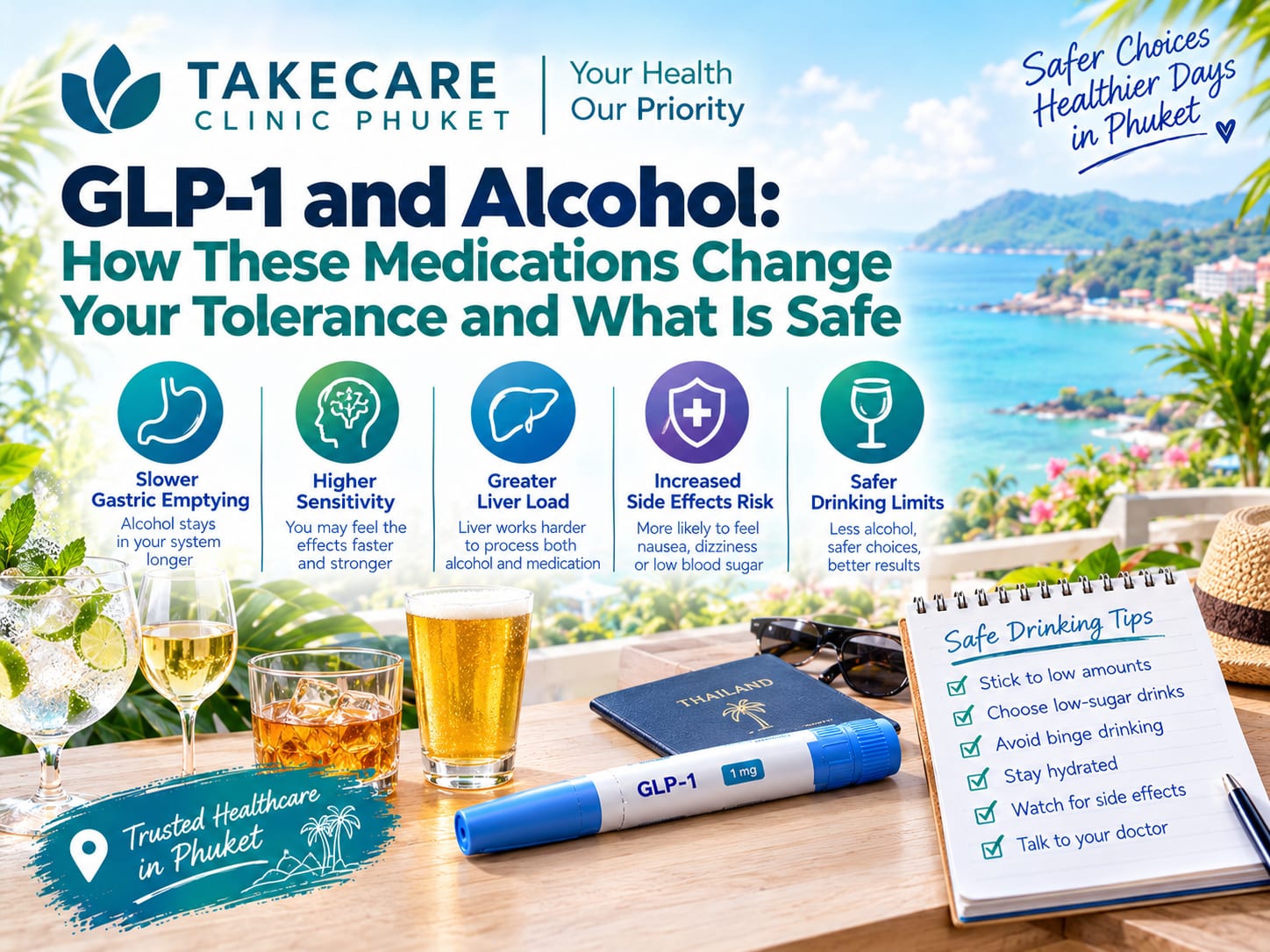
GLP-1 receptor agonists like semaglutide and tirzepatide slow digestion, which changes how your body absorbs alcohol. One drink can feel like two. Phuket’s heat adds dehydration risk on top of that. There is no hard ban on alcohol in the prescribing information, but drinking the same way you did before starting these medications is likely to cause problems.
You have been on Ozempic or Wegovy for a few months back home, things are going well, and now you are in Phuket for two weeks. The Bangla Road nights, the sunset beach clubs in Surin, the villa dinners in Rawai, and the question nobody tells you to ask your doctor before you fly: does this medication change what happens when I drink? The answer is yes, and knowing the specifics before your first sundowner matters more than reading it after.
GLP-1 drugs slow how fast food leaves your stomach and change how your brain responds to reward signals, including alcohol. That does two things most people do not expect. It makes alcohol hit faster, and for some patients, it reduces the desire to drink at all. Neither effect is guaranteed, and neither cancels out the real risks of mixing these medications with alcohol in a hot climate where you are likely already drinking more than usual.
How GLP-1 Changes the Way Your Body Processes Alcohol
GLP-1 receptor agonists, including semaglutide and tirzepatide, slow gastric emptying. Alcohol is mostly absorbed in the small intestine, so anything that delays transit changes when your blood alcohol peaks and how strong that peak feels.
The practical result: alcohol does not disappear, it is just delayed. When it finally reaches the bloodstream, the effect can feel more concentrated than expected. Most people also eat less on GLP-1 medications, which means less food in the stomach to slow absorption once alcohol does arrive.
The timing shifts too. You may feel fine after drink two and then noticeably impaired twenty minutes later. That mismatch is where the real risk sits.
Why Your Alcohol Tolerance May Feel Lower on GLP-1
A patient who previously managed three glasses of wine without issue finds that one and a half now does the same job. There are a few reasons for this.
Smaller portions mean less food to blunt the effect. Slowed gastric emptying makes the timing of alcohol entry unpredictable. Reduced caloric intake leaves the body with less fuel for metabolising alcohol. None of these appear as a specific warning on a product label, but they follow directly from how these medications work.
The point is not that alcohol is forbidden. It is that your previous baseline is no longer a reliable guide. Start lower than you think you need to, and pace more carefully than usual.

How GLP-1 Medications Affect Your Desire to Drink
Some patients notice they simply want to drink less once they start GLP-1 therapy. This is not imagined. A 2025 randomized trial published in JAMA Psychiatry found that semaglutide reduced alcohol cravings and drinks per drinking day in adults with alcohol use disorder. The proposed mechanism involves GLP-1 receptors in brain reward areas connected to dopamine signalling.
This does not mean GLP-1 drugs treat alcohol use disorder. They are not approved for that, and the research is at an early stage. But if you have noticed reduced interest in drinking since starting your medication, that is a recognised effect, not placebo.
Side Effects That Overlap: Why Alcohol Makes GLP-1 Symptoms Worse
Nausea, vomiting, and acid reflux are among the most common side effects of GLP-1 medications, especially in the first weeks or after a dose increase. Alcohol aggravates all three. A stomach already dealing with slowed emptying does not need the additional irritation.
Dehydration is the compounding factor specific to Phuket. A full day in 34-degree heat, some hours on a boat from Chalong pier or on a beach in Kata, and a few drinks in the evening creates a dehydration scenario that moves faster than most visitors from Northern Europe or North America expect. GLP-1-related vomiting on top of that can tip someone from uncomfortable to genuinely unwell quickly. This is also the point where nausea can mimic early signs of food poisoning, so if you are unsure which is driving your symptoms, get assessed rather than waiting it out.
Hypoglycemia Risk: When Alcohol Becomes Dangerous on GLP-1
For most patients on GLP-1 monotherapy, meaning semaglutide or tirzepatide alone, the risk of low blood sugar is low. The danger rises sharply if you are also taking insulin or a sulfonylurea, a class of diabetes medication that stimulates insulin release regardless of what your blood sugar is doing.
Alcohol lowers blood sugar on its own. Combine that with a sulfonylurea or insulin, and the hypoglycemia risk becomes real. Symptoms to know: shaking, sudden confusion, sweating, pale skin, or loss of consciousness. These need immediate attention, not a wait-and-see approach.
If you are not sure which diabetes medications you are on or how they interact with alcohol, that is worth clarifying before a night out. An English-speaking doctor in Phuket at Takecare Clinic Phuket can review your medication list and give you a clear answer without an appointment.
Specific Risks by Drug: Ozempic, Wegovy, Mounjaro, and Trulicity
The alcohol interaction evidence is strongest for semaglutide, which covers both Ozempic and Wegovy. The gastric emptying effect and the craving-reduction data are both based predominantly on semaglutide studies.
Tirzepatide, sold as Mounjaro, acts on both GLP-1 and GIP receptors. Clinical data on its specific interaction with alcohol is more limited. The GI side effects of tirzepatide can be pronounced, so the practical caution around drinking still applies fully.
Dulaglutide, sold as Trulicity, has a specific prescribing-information note regarding gastroparesis, a condition where stomach emptying is severely delayed. If you have any history of gastroparesis, discuss alcohol use with your prescribing doctor directly before drinking.
None of these drugs carry a blanket alcohol prohibition in their prescribing information. But no contraindication does not mean no risk. It means the risk is manageable with the right information.
Practical Safety Guidelines for Drinking on Holiday in Phuket on GLP-1
The Phuket context is specific. You are likely drinking more than your usual weeknight amount, in heat, possibly on a boat or at an outdoor venue, with food that differs from what you eat at home. Each of those factors adds to the base risk.
Eat a proper meal before drinking, not a shared starter. Give more time between drinks than you normally would. Keep water in hand throughout. One drink may genuinely feel like two, so start there before ordering another round.
Know where to go if something goes wrong. Takecare Clinic Phuket is a walk-in clinic in Patong with no appointment needed and English-speaking physician care. For anything severe, call 1669 for emergency services. For everything short of that, walk in. If you need a medication review before a beach club night, a prescription refill in Phuket is available at the clinic without needing to track down your home GP first.
Red-Flag Symptoms That Need Same-Day Care
Most alcohol-related discomfort on GLP-1 resolves with rest, fluids, and stopping drinking. Some does not.
Seek same-day care for persistent vomiting that prevents you from keeping fluids down. Shaking, confusion, sweating, or loss of consciousness may indicate hypoglycemia and need immediate attention. Severe upper abdominal pain radiating toward the back can indicate pancreatitis, a rare but serious complication associated with GLP-1 use. Signs of significant dehydration, including no urination for several hours, extreme dizziness, or very dark urine, also need clinical assessment.
Pancreatitis is rare on GLP-1 drugs, but alcohol is an independent risk factor for it. The combination is not something to push through.
Getting GLP-1 Guidance at a Walk-In Clinic in Phuket
If you are managing a GLP-1 prescription while visiting or living in Phuket and have questions your home doctor has not answered, you do not need to wait. Takecare Clinic Phuket sees patients from across the island, from Surin and Bang Tao down to Rawai and Chalong, for medication reviews, prescription continuity, and questions exactly like this one.
Bring your medication, your current dose, and a list of anything else you are taking. A doctor can review your full picture and give you a specific answer rather than a generic drink-in-moderation response that leaves you guessing. For patients who cannot make it to the clinic, a doctor on call service is available for hotel visits across the island.
On GLP-1 medication and unsure about drinking in Phuket? Takecare Clinic Phuket is open for walk-in visits in Patong with no appointment needed. English-speaking physicians can review your medication history, advise on safe limits for your specific drug and dose, and manage any symptoms that concern you. We see patients from Patong, Kata, Karon, Rawai, Surin, Bang Tao, Chalong, and across the whole island.
Frequently Asked Questions
Dr. Ponlawat Pitsuwan
Physician, Takecare Medical Clinic Phuket
a walk-in medical clinic based in Patong with no appointment needed and English-speaking physician care for the whole island. He sees tourists, expats, and residents across Phuket for medication reviews, GLP-1 prescription management, chronic disease care, and alcohol-related health concerns. His focus is straightforward, evidence-based care delivered in plain language.
References
- Hendershot CS, Bremmer MP, Paladino MB, et al. Once-Weekly Semaglutide in Adults With Alcohol Use Disorder: A Randomized Clinical Trial. JAMA Psychiatry. 2025;82(4):395-405.
- Ozempic (semaglutide) Prescribing Information. U.S. Food and Drug Administration, 2025.
- Trulicity (dulaglutide) Prescribing Information. U.S. Food and Drug Administration, 2026.
- National Institute on Alcohol Abuse and Alcoholism. Harmful Interactions: Mixing Alcohol with Medicines. NIAAA, 2014.
- Sodhi M, Rezaeianzadeh R, Kezouh A, Etminan M. Risk of Gastrointestinal Adverse Events Associated With Glucagon-Like Peptide-1 Receptor Agonists for Weight Loss. JAMA. 2023;330(18):1795-1797.
The information in this article is for educational purposes only and does not constitute medical advice. It should not be used to self-diagnose or replace a consultation with a qualified physician. If you have concerns about your health, contact a licensed medical professional. For appointments at Takecare Clinic Phuket, visit takecareclinicphuket.com.
