
Clinically reviewed by Dr. Ponlawat Pitsuwan, Physician, Takecare Clinic Phuket.
Last reviewed: October 2026
GLP-1 receptor agonists like semaglutide and liraglutide reduce the risk of heart attack and stroke in people with high cardiovascular risk. Large clinical trials show that a significant portion of this protection works independently of weight loss. If you have established heart disease, type 2 diabetes, or obesity with cardiovascular risk factors, a physician assessment can determine whether this class of medication is appropriate for you.
You have been living in Laguna for two years. You manage your weight, your type 2 diabetes is reasonably controlled, and your cardiologist back home started you on a statin before you left. Now you are here full-time, your GP is on another continent, and you have been reading about semaglutide as something that may actually protect your heart, not just reduce your weight. You want to know if that is real, and whether you can get a proper assessment in Phuket without flying home.
The cardiovascular evidence is real. And the detail matters. The heart protection shown in clinical trials is not simply a side effect of losing weight. There is a direct effect on the cardiovascular system that researchers have now quantified. Here is what the evidence actually says, who it applies to, and what a GLP-1 consultation in Phuket looks like in practice.

What the Clinical Trials Actually Show About GLP-1 Cardiovascular Benefit
The two trials most cited here are LEADER for liraglutide and SELECT for semaglutide. Both were large, long-term studies in people with high cardiovascular risk.
LEADER showed that liraglutide reduced major adverse cardiovascular events, meaning heart attack, stroke, or cardiovascular death, compared to placebo in people with type 2 diabetes. SELECT showed the same for semaglutide in people with obesity and established cardiovascular disease, but without diabetes at enrolment.
Here is the part that changes the clinical argument. A prespecified analysis of SELECT data published in The Lancet found that reduction in waist circumference accounted for roughly one-third of semaglutide’s MACE reduction. Weight change itself showed no linear association with later cardiovascular events. The remaining benefit came from pathways that operate independently of the amount of weight a patient loses.
That is not a minor footnote. It means this drug is doing cardiovascular work by mechanisms that have nothing to do with the number on the scale.
How GLP-1 Medications Protect the Heart Directly
GLP-1 receptors are present in cardiac and vascular tissue, not just in the pancreas and gut. When these receptors are activated, several things benefit the cardiovascular system directly.
Endothelial function improves. The endothelium is the thin lining inside your blood vessels. GLP-1 receptor agonists improve flow-mediated dilation, which is a measure of how well arteries respond to increased blood flow. Poor endothelial function is an early sign of atherosclerosis, the process where plaque builds up inside artery walls.
Systemic inflammation falls. Inflammatory markers linked to plaque progression are reduced with GLP-1 therapy. Lower inflammation means less pressure on arterial walls and a lower risk of plaque rupture, which is what causes most heart attacks.
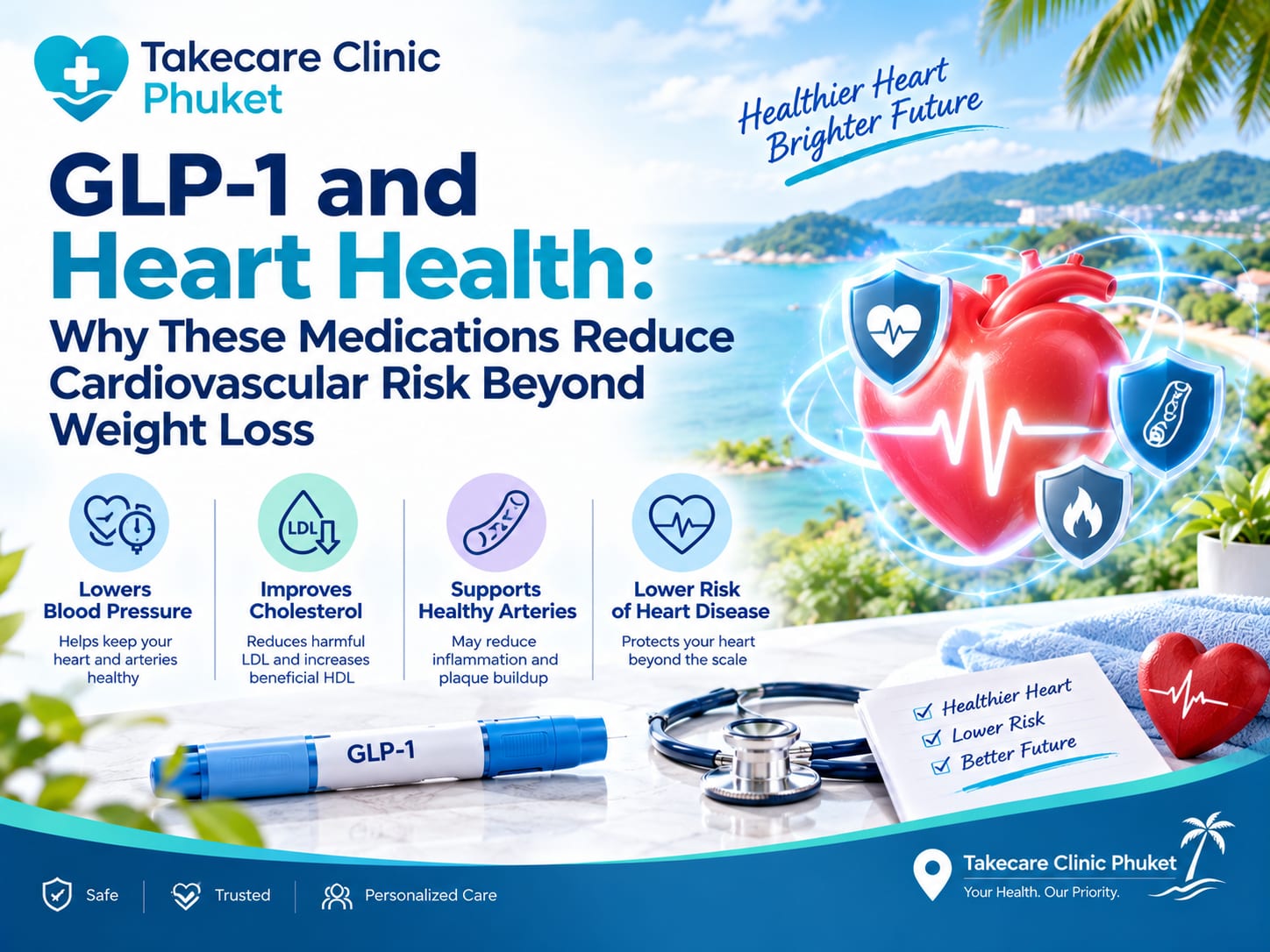
Blood pressure and lipid levels also improve modestly. These effects can occur before significant weight loss has taken place.

Who Benefits Most, and Who Needs Assessment First
The evidence is strongest for one group: people with established cardiovascular disease who also have type 2 diabetes or obesity. This is the population the major trials enrolled. If you have had a heart attack, a stroke, or significant coronary artery disease, and you carry excess weight or have type 2 diabetes, the trial data applies directly to you.
The picture is less certain for people without established heart disease who want GLP-1 treatment for primary prevention. That does not mean there is no benefit. It means the hard endpoint data is not yet as robust for that group.
Heart failure and atrial fibrillation are areas where GLP-1 data is accumulating, though decisions here require careful clinical review.
Who needs caution before starting? Anyone with a personal or family history of medullary thyroid carcinoma, anyone with a history of pancreatitis, and anyone currently pregnant. A physician needs to review your full cardiac history and current medications before you begin. This is not a medication to start based on a conversation at a pharmacy counter.
GLP-1 and Heart Health for Expats and Long-Stay Residents in Phuket
This is where the practical question becomes specific. You may already be on semaglutide, started at a clinic in the UK, Australia, or Europe. You are now in Phuket for months, perhaps permanently, and your prescription is running out. Or you are newly considering starting, but navigating a Thai hospital system for what feels like a non-emergency medication feels overwhelming.
GLP-1 medications are available in Thailand. They require a physician consultation, which is a reasonable requirement given the contraindications and cardiovascular implications. What they do not require is a GP referral or an appointment made weeks in advance.
At Takecare Clinic Phuket, you can walk in, sit with an English-speaking doctor in Phuket, and have your cardiovascular risk and medication history reviewed the same day. If you are already on a GLP-1 and need continuity, bring your prescription or packaging. If you are starting fresh, the evidence and your clinical picture are reviewed together.
For long-stay residents across Cherng Talay, Bang Tao, and Laguna managing chronic conditions without a home GP, this kind of accessible ongoing care matters more than most acute visits. A cardiovascular risk screen and blood test in Phuket are typically part of any GLP-1 assessment, and you can arrange both without a separate referral.
Starting GLP-1 Treatment in Phuket: What to Expect
The first consultation is a clinical assessment. A physician reviews your cardiac history, current medications, fasting glucose and lipid values if available, and your BMI and risk profile.
If you are clinically appropriate, a starting dose and titration plan are discussed. GLP-1 therapy is a long-term commitment. The cardiovascular benefits seen in the major trials emerged over years of continuous use, not weeks. For expats and long-stay residents, that means establishing ongoing care here rather than relying on a single consultation.
For people passing through Phuket on a longer trip, perhaps three months in Rawai or a season in Surin, the conversation is a little different. A prescription refill in Phuket and documentation for continuity when you leave can both be arranged at the same visit.
Takecare Clinic Phuket is open for walk-in appointments at 34/14 Prachanukhro Road, Kathu District, Patong. No appointment needed. Physician care is available for patients across the whole island, from Phuket Town to Nai Harn.
If you are managing cardiovascular risk or considering GLP-1 medication, Takecare Clinic Phuket offers walk-in physician consultations with no appointment needed. English-speaking doctors can assess your cardiovascular risk, review your current medications, and advise on whether GLP-1 therapy is right for your situation. We see patients from across Phuket, including Patong, Laguna, Cherng Talay, Bang Tao, Kata, Rawai, and Phuket Town. Walk in or contact us to find out more.
FAQ
Dr. Ponlawat Pitsuwan
Physician, Takecare Medical Clinic Phuket
a walk-in medical clinic based in Patong with no appointment needed and English-speaking physician care for the whole island. He sees tourists, expats, and residents across Phuket for cardiovascular risk assessment, chronic disease management, and GLP-1 medication consultations. His focus is straightforward, evidence-based care delivered in plain language.
References
- Lincoff AM, Brown-Frandsen K, Colhoun HM, et al. Semaglutide and Cardiovascular Outcomes in Obesity without Diabetes (SELECT). New England Journal of Medicine. 2023;389:2221-2232.
- Marso SP, Daniels GH, Brown-Frandsen K, et al. Liraglutide and Cardiovascular Outcomes in Type 2 Diabetes (LEADER). New England Journal of Medicine. 2016;375:311-322.
- Deanfield J, Lincoff AM, Kahn SE, et al. Adiposity-independent effects of semaglutide on cardiovascular risk: a prespecified analysis of the SELECT trial. The Lancet. 2025;406.
- Marx N, Federici M, Schütt K, et al. 2023 ESC Guidelines for the management of cardiovascular disease in patients with diabetes. European Heart Journal. 2023;44(39):4043-4140.
- Sattar N, Lee MMY, Kristensen SL, et al. Cardiovascular, mortality, and kidney outcomes with GLP-1 receptor agonists in patients with type 2 diabetes: a systematic review and meta-analysis of randomised trials. Lancet Diabetes and Endocrinology. 2021;9(10):653-662.00203-5/fulltext)
The information in this article is for educational purposes only and does not constitute medical advice. It should not be used to self-diagnose or replace a consultation with a qualified physician. If you have concerns about your health, contact a licensed medical professional. For appointments at Takecare Clinic Phuket, visit takecareclinicphuket.com.
