
Clinically reviewed by Dr. Ponlawat Pitsuwan, Physician, Takecare Clinic Phuket.
Last reviewed: October 2026
GLP-1 receptor agonists like semaglutide (Ozempic, Wegovy) and tirzepatide (Mounjaro) slow the movement of food through your gut. This is part of how they work, but it also means your bowel can slow down too. Constipation is a recognised side effect, most common in the first few weeks of treatment or after a dose increase. For most people it improves with time and simple measures. Red flags like no bowel movement for five or more days, severe abdominal pain, or inability to pass gas need same-day medical attention.
You packed your GLP-1 pen for a two-week stay in Phuket. The medication is working, appetite is down, the beach is great. Then by day four, nothing. Your gut has stopped.
GLP-1 medications deliberately slow the rate your stomach empties and reduce gut movement overall, and Phuket’s climate makes this worse in ways that are easy to miss. GLP-1 medications deliberately slow the rate your stomach empties and reduce gut movement overall. That is a core part of how they reduce appetite. The side effect is that everything else slows too, including your bowel. This article explains why it happens, what to do about it in a clear step-by-step way, and exactly when it stops being something you manage at home.

Why GLP-1 Medications Slow Your Gut
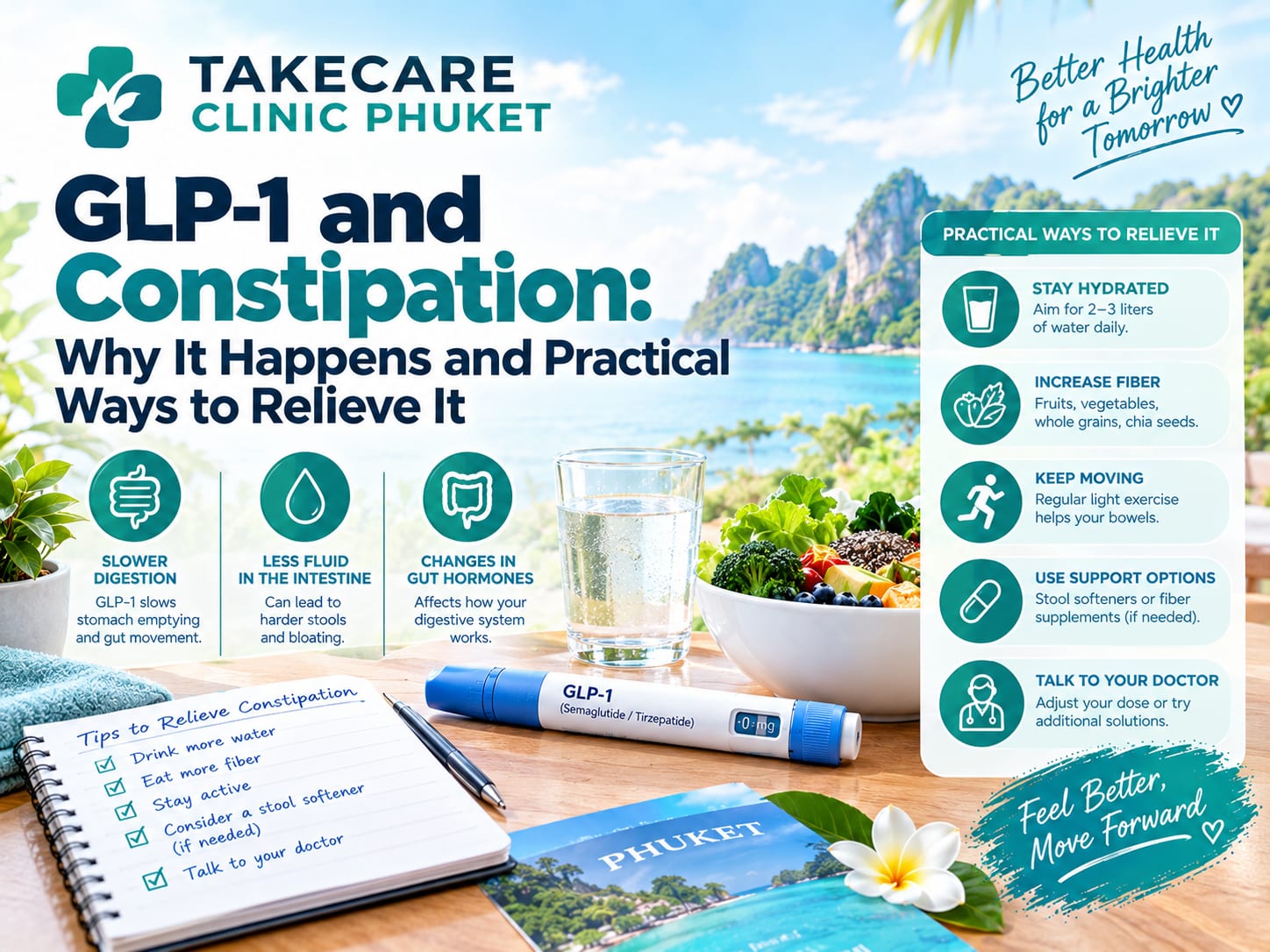
GLP-1 receptor agonists slow gastric emptying and reduce the muscle contractions that push contents along your intestine. Stool spends longer in your gut, more water gets absorbed from it, and it becomes harder and more difficult to pass.
This effect is strongest when you first start the medication and after each dose increase. Your body adapts for most people. The first weeks and the step-up weeks are when GLP-1 constipation tends to peak.
Semaglutide (Ozempic, Wegovy) and tirzepatide (Mounjaro) both slow gut movement through slightly different receptor pathways. The Wegovy prescribing information lists constipation as occurring in roughly one in four patients at the 2.4 mg dose. Check your own medication’s prescribing information for the specific figure relevant to your dose and formulation.
Why GLP-1 Constipation Can Be Worse in Phuket’s Climate
Dehydration is the fastest way to make constipation worse. In Phuket’s heat and humidity, your body loses fluid quickly even sitting on a beach or walking between Kata and Karon. If you are not actively replacing it, your gut gets the least of what is left, and stool hardens.
Add a holiday diet to this. Most visitors eat less fibre in Phuket than they do at home: hotel breakfasts, beach club lunches, Patong restaurant dinners. White rice, fried food, refined carbohydrates. Alcohol dehydrates further. A GLP-1 medication slowing your gut on top of all of that is a reliable recipe for a difficult week.
Aim for at least two litres of water daily. On days with strong sun, beach time, or physical activity, drink more. This is not general wellness advice. Hydration is a direct intervention for GLP-1 constipation.

Recognising Symptoms and Red Flags
Typical GLP-1 constipation feels like infrequent, hard stools with some abdominal bloating. It is uncomfortable but manageable at home with the steps below.
These symptoms need same-day medical attention: no bowel movement for five or more days, severe or worsening abdominal pain, inability to pass gas, abdominal swelling, vomiting, or fever. The FDA updated the semaglutide prescribing label to include intestinal obstruction as a potential risk. Fecal impaction, where stool becomes too hard and compacted to pass on its own, is another uncommon but serious complication of prolonged constipation.
Neither is common. But both can look like ordinary constipation until they do not. If you have those red-flag symptoms in Phuket, do not manage this at home. Walk into Takecare Clinic Phuket without an appointment for same-day, English-speaking care.
A Stepwise Relief Protocol for GLP-1 Constipation
Start here. This is the order I would take you through it clinically.
Step one is hydration and fibre. Two litres of water daily minimum. Add soluble fibre gradually: oats, fruit, psyllium husk. Do not dramatically increase fibre without increasing water, or bloating gets worse. Gentle movement helps. A walk along the Rawai beachfront counts.
Step two is an osmotic laxative. Polyethylene glycol (sold as MiraLAX or similar generics) draws water into the bowel and softens stool. It is available at pharmacies across Phuket and is the first-line option most prescribers recommend for GLP-1 constipation.
Step three is a stool softener. Docusate sodium softens stool by adding moisture. It is a gentle daily option that can run alongside steps one and two. Useful when stool is hard but movement is still occurring.
Step four is a stimulant laxative for short-term use. Senna or bisacodyl can be used briefly if the above are not enough. Regular use of stimulant laxatives over weeks can reduce your bowel’s natural response over time, so treat these as short-term support only.
Step five is a conversation with a prescriber. If constipation is severe, persists beyond several weeks, or is not responding to the above, this is about your dose. Slowing the escalation schedule often resolves the problem. Do not stop your medication without speaking to a doctor first.
Managing GLP-1 Constipation as a Traveller or Expat in Phuket
Being away from your home prescriber complicates this. You cannot easily call your GP from a Surin beach villa. Pharmacies in Phuket stock osmotic laxatives, stool softeners, and stimulant laxatives at most branches including those in Patong, Kata, and Chalong. You can start steps two and three without a prescription.
What you cannot do safely at a pharmacy is get examined or have someone assess whether your symptoms are still in the manageable zone. If you are uncertain, or if things are getting worse, an English-speaking doctor in Phuket can see you the same day. This matters most for expats on long-stay GLP-1 programmes who need ongoing management rather than one-off holiday support.
If you have run out of your GLP-1 pen or need a dose review mid-trip, prescription support in Phuket is available without the wait you would face at a large hospital. For any gut symptoms you are not sure about, a gastritis or abdominal review at the clinic is a straightforward option.
When GLP-1 Constipation Needs Emergency Care
Review the red flags one more time. Five or more days without a bowel movement. Severe abdominal pain that is getting worse. No gas passing. Vomiting. Fever. Visible abdominal swelling.
Any one of these on its own is enough to come in. Two or more and you should not wait. At Takecare Clinic Phuket, a physician can examine you, assess for serious causes, and determine whether you need imaging or referral. The clinic is based in Patong and serves the whole island. If you are in Rawai, Chalong, Bang Tao, or Phuket Town, same-day access is available.
If you cannot get to the clinic, the emergency doctor service can come to you.
Concerned about GLP-1 constipation in Phuket? If your bowel has not moved in several days, symptoms are getting worse, or you have any red-flag signs listed above, come in. Takecare Clinic Phuket is a walk-in clinic in Patong with no appointment needed and English-speaking physician care. The clinic sees patients across the whole island for GLP-1 side effect management, medication reviews, and same-day urgent concerns. Walk in or visit takecareclinicphuket.com.
Frequently Asked Questions
Dr. Ponlawat Pitsuwan
Physician, Takecare Medical Clinic Phuket
a walk-in medical clinic based in Patong with no appointment needed and English-speaking physician care for the whole island. He sees tourists, expats, and residents across Phuket for GLP-1 medication side effects, ongoing medication management, and general health concerns. His focus is straightforward, evidence-based care delivered in plain language.
References
- U.S. Food and Drug Administration. Wegovy (semaglutide) Prescribing Information. Current label (2026).
- Lilly USA. Mounjaro (tirzepatide) Prescribing Information. Eli Lilly and Company.
- Jastreboff AM, et al. Tirzepatide Once Weekly for the Treatment of Obesity. New England Journal of Medicine. 2022;387(3):205-216.
- Davies M, et al. Semaglutide 2.4 mg once a week in adults with overweight or obesity, and type 2 diabetes (STEP 2): a randomised, double-blind, placebo-controlled, phase 3 trial. Lancet. 2021;397(10278):971-984.
- DiaTribe. FDA Updates Ozempic Label With Warning for Intestinal Blockages. 2023.
The information in this article is for educational purposes only and does not constitute medical advice. It should not be used to self-diagnose or replace a consultation with a qualified physician. If you have concerns about your health, contact a licensed medical professional. For appointments at Takecare Clinic Phuket, visit takecareclinicphuket.com.
