
Clinically reviewed by Dr. Ponlawat Pitsuwan, Physician, Takecare Clinic Phuket.
Last reviewed: October 2026
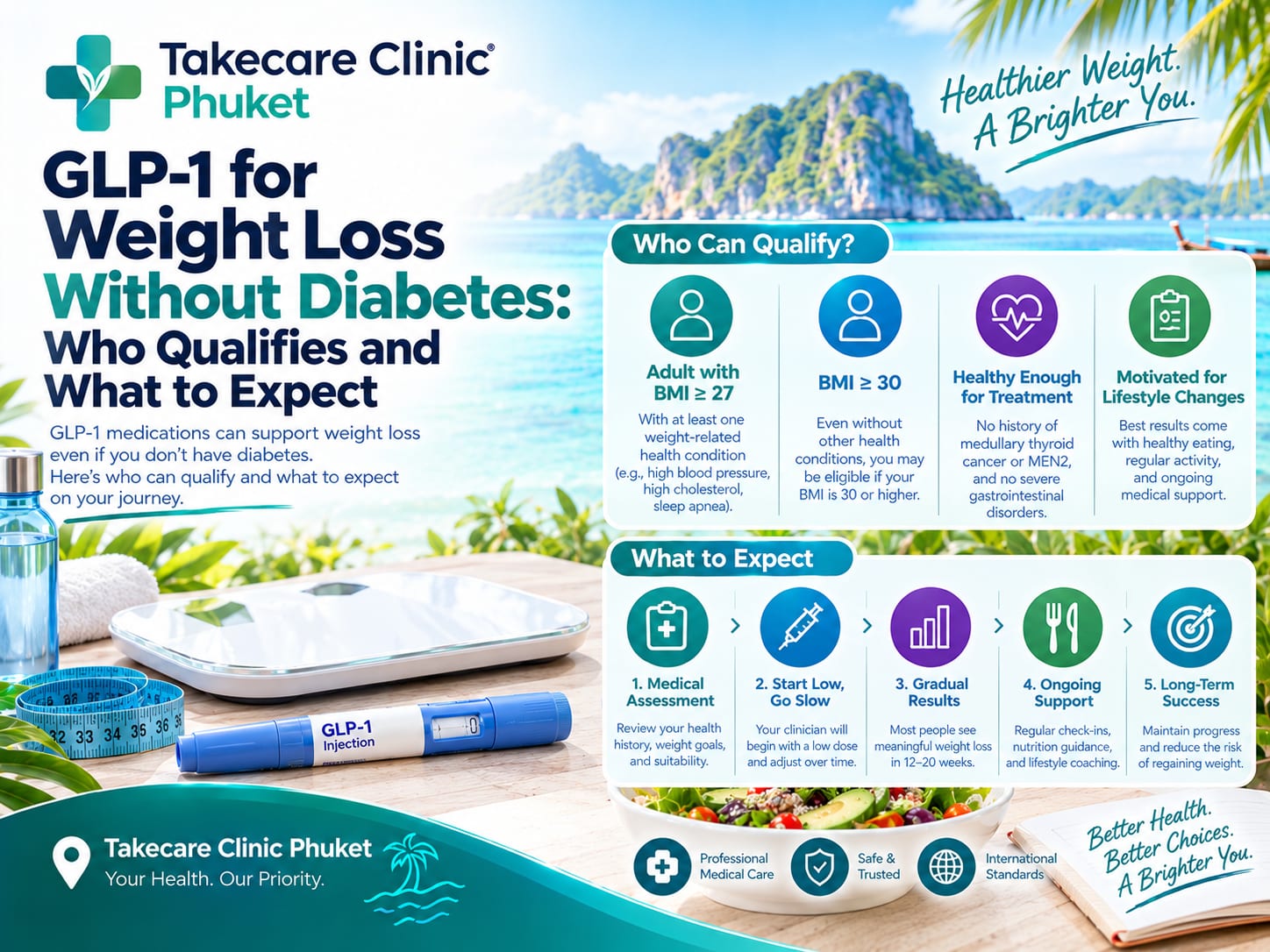
GLP-1 medications like semaglutide and tirzepatide are prescribed for obesity and weight-related health conditions regardless of whether you have diabetes. You may qualify with a BMI of 30 or higher, or a BMI of 27 or higher if you also have a weight-related condition such as high blood pressure or high cholesterol. A physician can assess your eligibility and review contraindications during a walk-in consultation at Takecare Clinic Phuket.
A common question at weight management consultations is whether a diabetes diagnosis is needed to qualify for GLP-1 therapy.
She did not. GLP-1 medications are prescribed for obesity without diabetes, and the consultation to find out if you qualify takes one visit. But there are real eligibility criteria, real contraindications, and a realistic timeline worth understanding before you start.

Why GLP-1 Medications Work for Obesity, Not Just Diabetes
GLP-1 is a hormone your gut releases after eating. It tells your brain you are full, slows how fast food leaves your stomach, and reduces appetite. None of that requires diabetes to be present.
Many people with obesity also have insulin resistance, where the body struggles to use insulin properly even without a diabetes diagnosis. GLP-1 medications reduce visceral fat, the deep abdominal fat that carries the highest cardiovascular risk. Patients on these medications consistently report thinking about food less, feeling full faster, and eating smaller portions without feeling deprived.
This is why GLP-1 therapy is now a recognised medical treatment for obesity in its own right, not a diabetes drug repurposed for weight loss.
The BMI and Comorbidity Criteria for GLP-1 Eligibility
A BMI of 30 or above qualifies on its own. A BMI of 27 or above qualifies if you also have at least one weight-related condition. High blood pressure, high cholesterol, obstructive sleep apnoea, cardiovascular disease, and prediabetes are the conditions most commonly accepted under current prescribing guidelines.
If you are an expat or long-stay visitor without recent bloodwork, that is not a barrier. Takecare Clinic Phuket can run a blood test to check lipids, blood sugar, and blood pressure the same day as your consultation, so you are not starting from guesswork.
The physician will also screen for contraindications at the same visit, which matters more than the BMI number alone.
Semaglutide and Tirzepatide for Non-Diabetic Obesity
Two medications dominate this space. Semaglutide at the weight-management dose is a GLP-1 receptor agonist. Tirzepatide activates both the GLP-1 pathway and a second related pathway called GIP. Both are weekly injections.
In the STEP trials, semaglutide at 2.4 mg weekly produced average weight loss of around 15% of body weight at 68 weeks in people without diabetes. In the SURMOUNT trials, tirzepatide produced average losses of around 20 to 22% at similar timepoints. Those are trial averages, not guarantees. Individual results depend on adherence, diet, and activity.
The practical question in Phuket is availability. What is stocked locally can vary. A physician at Takecare Clinic Phuket can advise which formulation is currently available and appropriate for your situation.
What to Expect in the First Weeks of GLP-1 Therapy
Both medications use a step-up dosing protocol. You start at a low dose and increase gradually over several weeks. Most of the nausea and digestive side effects happen when the dose goes up too fast, so this is not optional.
In the first few weeks, you will likely notice reduced appetite before you see any meaningful change on the scale. Nausea is common early on, especially after eating too much or too quickly. Small, low-fat meals help considerably.
Meaningful weight loss takes months, not weeks. Expecting visible results in two weeks is the most common reason patients lose confidence in a treatment that is actually working. Full effect in clinical trials was measured after over a year of continuous use.
Side Effects and Risks You Should Know
Nausea, vomiting, diarrhoea, and constipation are the most common side effects. They are most pronounced during dose increases and usually settle as your body adjusts.
Gallbladder problems, including gallstones, are a recognised risk with rapid weight loss on GLP-1 therapy. Severe right-sided abdominal pain needs same-day assessment. If you experience persistent severe abdominal pain that radiates to your back with vomiting, that is a possible sign of pancreatitis and needs urgent evaluation. Do not wait on that one.
Hair thinning can occur with rapid weight loss and is usually temporary. Injection site reactions are common and mild.
Who Should Not Take GLP-1 Medications for Weight Loss
A personal or family history of medullary thyroid carcinoma, a specific type of thyroid cancer, is an absolute contraindication. So is a condition called multiple endocrine neoplasia type 2 (MEN2). If either applies, GLP-1 therapy is not appropriate regardless of BMI.
A history of pancreatitis is a reason for caution. The FDA label for semaglutide lists it as a warning rather than a formal contraindication, but the physician will review your history and may advise against use if you have had pancreatitis. Pregnancy and breastfeeding rule these medications out entirely. Severe gastroparesis, a condition where the stomach empties very slowly, is another reason to avoid them.
The physician will ask about all of these at your consultation. They are not formalities.
Starting GLP-1 Therapy in Phuket as a Tourist, Expat, or Resident
This is where the Phuket situation differs from what a UK or US article will tell you. There is no insurer to navigate, no step-therapy requirement, and no waiting list. If you meet the clinical criteria and have no contraindications, the process is straightforward. You can find out who qualifies for GLP-1 weight loss medication and book or walk in without an appointment.
For long-stay expats and residents, ongoing care and prescription refills are manageable through a walk-in clinic. Takecare Clinic Phuket sees patients from across the island, including Chalong, Rawai, Bang Tao, Cherng Talay, and Phuket Town, not just Patong. Once your care is established, a refill visit does not require a full new consultation each time.
For tourists on a shorter stay, the honest conversation is about continuity. Starting a weekly injection in week one of a two-week holiday with no plan for continued supply at home is not a good start. Come in early in your stay. An English-speaking doctor at Takecare Clinic Phuket can help you plan a handover to your home provider before your first dose.
What Happens When You Stop GLP-1 Medication
This is the part most patients ask about too late. GLP-1 therapy is not a short course like antibiotics. When you stop, appetite returns toward baseline. Clinical trials show that most patients regain a significant portion of lost weight within a year of stopping.
That does not mean the medication has failed. It means obesity has a biological component that requires ongoing management for many people, the same way blood pressure medication requires continuous use to hold its effect.
A physician can help you plan what stopping looks like, and whether lifestyle changes made during treatment are enough to sustain results on their own.
Considering GLP-1 therapy for weight management in Phuket? Takecare Clinic Phuket offers walk-in consultations with no appointment needed. An English-speaking physician can assess your BMI, review your medical history, arrange baseline bloodwork on the same visit if needed, and advise on which options are currently available. We see patients from across the island, including Patong, Kata, Rawai, Chalong, Bang Tao, and Phuket Town. Come in and get a clear answer the same day.
Frequently Asked Questions
Dr. Ponlawat Pitsuwan
Physician, Takecare Medical Clinic Phuket
a walk-in medical clinic in Patong with English-speaking physician care available to patients across the island. He sees tourists, expats, and residents for weight management consultations, GLP-1 therapy assessment, chronic disease management, and preventative care. His approach is evidence-based and delivered in plain language.
References
- Wilding JPH, et al. Once-Weekly Semaglutide in Adults with Overweight or Obesity. New England Journal of Medicine. 2021.
- Jastreboff AM, et al. Tirzepatide Once Weekly for the Treatment of Obesity. New England Journal of Medicine. 2022.
- Garvey WT, et al. Two-year effects of semaglutide in adults with overweight or obesity: the STEP 5 trial. Nature Medicine. 2022.
- US Food and Drug Administration. Wegovy (semaglutide) Prescribing Information. 2026.
- Wilding JPH, et al. Weight regain and cardiometabolic effects after withdrawal of semaglutide: The STEP 1 trial extension. Diabetes, Obesity and Metabolism. 2022.
- World Health Organization. Obesity and overweight fact sheet. 2024.
The information in this article is for educational purposes only and does not constitute medical advice. It should not be used to self-diagnose or replace a consultation with a qualified physician. If you have concerns about your health, contact a licensed medical professional. For appointments at Takecare Clinic Phuket, visit takecareclinicphuket.com.
