
Clinically reviewed by Dr. Ponlawat Pitsuwan, Physician, Takecare Clinic Phuket.
Last reviewed: October 2026
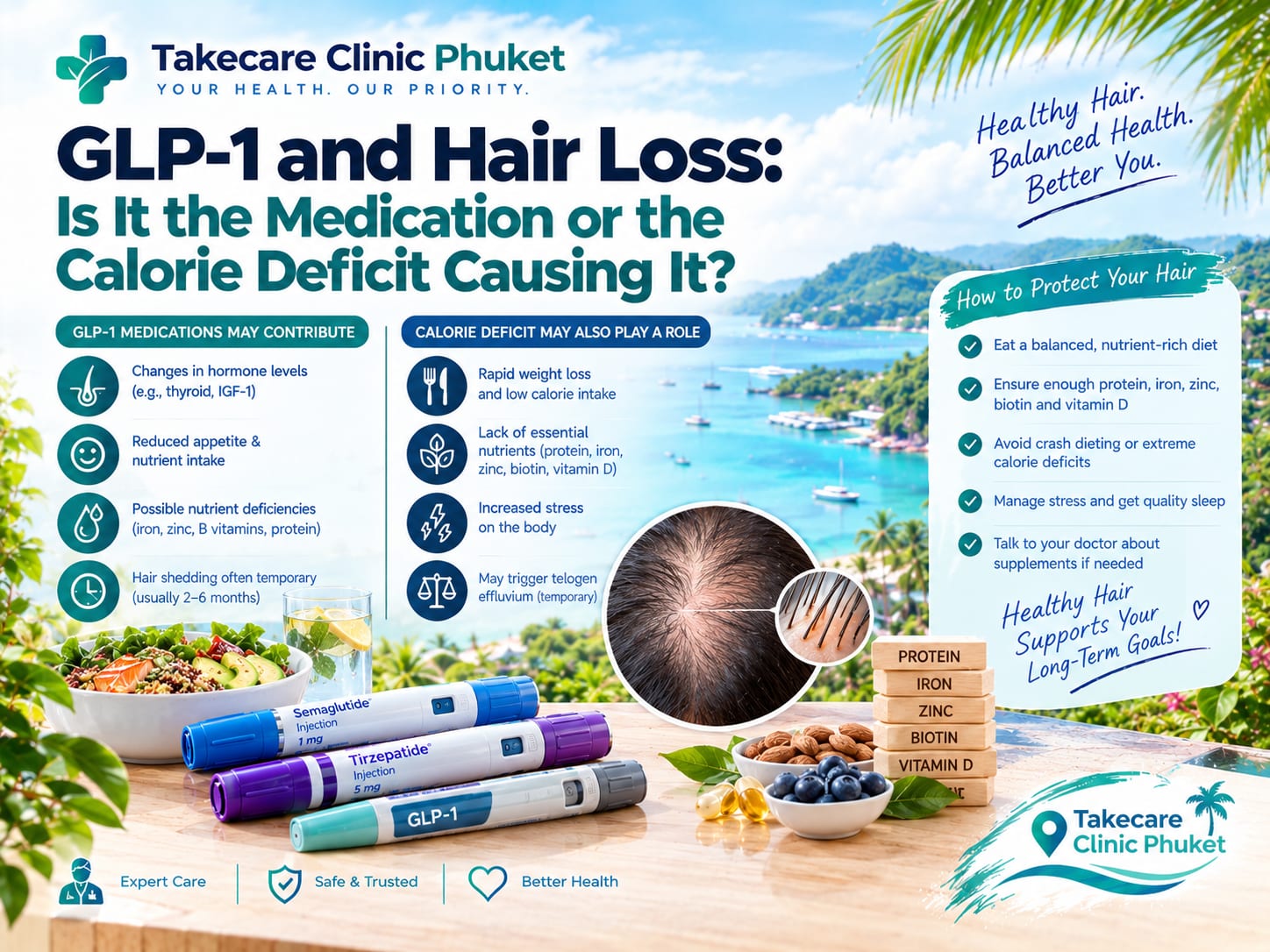
Hair loss on GLP-1 medications like semaglutide or tirzepatide is usually telogen effluvium, a form of diffuse shedding triggered by rapid weight loss and calorie restriction, not a direct toxic effect of the drug. It typically starts two to three months after beginning treatment and usually resolves within six to twelve months once weight stabilises and nutritional deficits are corrected. A blood panel checking ferritin, zinc, vitamin D, B12, and thyroid function can identify treatable deficiencies that are making the shedding worse.
You are three months into semaglutide. The weight is coming off well. Then, somewhere around the time you are settling into your long-stay rental in Chalong or picking up your second prescription refill in Phuket Town, you notice it in the shower drain. More hair than you expect. More than last month. You start searching at midnight and land on contradictory answers.
The honest answer is that your calorie deficit is almost certainly doing most of the damage here, not the medication itself. If you are managing a GLP-1 prescription without a regular GP in Phuket, knowing what to check and when to act matters.

Why Rapid Weight Loss Is the Most Likely Cause of GLP-1 Hair Loss
Hair follicles are sensitive to metabolic stress. When your body loses weight quickly, follicles can shift from an active growing phase into a resting phase. The hair does not fall out straight away. It falls out two to three months later, which is why the timing feels disconnected from anything you did. This pattern is called telogen effluvium.
GLP-1 medications suppress appetite significantly. That is the point. But many people end up eating far less than their body needs for micronutrient intake, even when total protein looks adequate. Depletion of iron, zinc, vitamin D, and B12 compounds the follicle stress. This is where the calorie deficit becomes more than just a calorie story.
The shedding pattern matters too. Telogen effluvium causes thinning across the whole scalp, not a receding hairline or bald patches. If it looks like overall thinning and it started roughly two to four months after beginning GLP-1 therapy or having a significant dose increase, that timeline fits.
Could the Drug Itself Be to Blame?
Possibly, but it is not the main driver for most people. A 2024 pharmacovigilance study found a statistically elevated rate of hair loss reports in GLP-1 users compared to certain other drug classes. So it is not purely a diet story.
What the data does not show is a clear direct mechanism on hair follicles. There is no established pathway by which semaglutide or tirzepatide directly damages follicles. The prevailing clinical view is that the signal reflects the combination of rapid weight loss, calorie restriction, and micronutrient depletion that comes with effective GLP-1 treatment. That distinction matters because it tells you what to actually fix.

Who Is at Highest Risk of GLP-1 Hair Loss
Not everyone on GLP-1 therapy loses noticeable amounts of hair. The speed of initial weight loss is the clearest driver. The faster the loss in the first few months, the stronger the follicle stress signal.
Men with a family history of androgenetic alopecia, the genetic pattern of hair thinning, appear to face a compounded risk. If you already had a receding hairline before starting GLP-1 therapy, that is worth discussing with a clinician before you attribute everything to the new medication.
Pre-existing iron deficiency is another major amplifier. Serum ferritin, the stored form of iron, is the most predictive blood marker for diet-related shedding. Many patients starting a GLP-1 medication already have borderline ferritin levels, and a reduced-calorie diet without careful planning accelerates that depletion further.
What Blood Tests to Get and When
If your hair has been shedding for more than six to eight weeks and you are on a GLP-1 medication, a blood panel is worth doing. You are looking for deficiencies that are worsening the shedding and can be directly treated.
The panel I recommend covers serum ferritin, zinc, vitamin D (25-OH), vitamin B12, thyroid function (TSH and fT4), and a full blood count. Thyroid dysfunction is an independent cause of diffuse hair loss and needs to be ruled out separately from the nutritional picture. You cannot pick the right fix without knowing which deficiency is actually present.
One practical note: if you are already taking high-dose biotin supplements, tell the clinician before your blood draw. High-dose biotin interferes with certain thyroid blood test results and can produce misleading readings.
At Takecare Clinic Phuket, you can walk in for a blood test in Phuket with no appointment needed, and results are typically ready same-day or next-day for most of these markers.
What Actually Helps With GLP-1 Hair Loss
Start with protein. Adequate protein intake is the most evidence-supported dietary step for reducing telogen effluvium severity during weight loss. The challenge on GLP-1 therapy is that appetite suppression can make hitting a protein target feel impossible. Prioritise protein at each meal before anything else on the plate.
Correct identified deficiencies based on your blood results, not on what you read on a supplement label. Ferritin levels below the threshold your clinician identifies warrant iron supplementation. Zinc, B12, and vitamin D shortfalls are correctable with targeted supplementation, but supplementing all of them without a panel wastes time and is not always safe.
Pace of weight loss matters too. Faster dose increases mean steeper early weight loss, which means stronger follicle stress. If shedding is significant, discuss titration pace with whoever prescribed your GLP-1. Do not adjust your dose on your own.
The other thing worth knowing: this type of hair loss is non-scarring. The follicles are not being permanently damaged. Once the metabolic stress resolves and nutritional gaps close, regrowth follows.
Managing Your GLP-1 Prescription in Phuket Without a Home GP
If you are a long-stay expat in Chalong, working remotely from a Bang Tao villa, or on an extended stay in Rawai or Kamala, you may not have a GP at home who is tracking your GLP-1 prescription or monitoring your bloods.
That gap is manageable here. An English-speaking doctor in Phuket can assess your hair loss pattern, order the relevant blood panel, review your current dose and diet, and set up a monitoring plan. If you cannot get to the clinic in person, telemedicine in Phuket is an option for an initial consultation before deciding whether bloods are needed. Prescription refills in Phuket are also available for patients who need continuity of care without flying home.
Do not stop your GLP-1 medication without a medical review. The shedding is almost always addressable without discontinuation.
Noticing diffuse hair shedding on semaglutide or tirzepatide? Takecare Clinic Phuket offers walk-in blood testing with no appointment needed. An English-speaking doctor can assess your hair loss, check ferritin, zinc, vitamin D, and thyroid function, and help you keep your GLP-1 treatment on track. We see patients across Phuket including Patong, Chalong, Rawai, Bang Tao, and Kamala. Visit takecareclinicphuket.com or come in to 34/14 Prachanukhro Rd, Kathu District, Patong.
Frequently Asked Questions
Dr. Ponlawat Pitsuwan
Physician, Takecare Medical Clinic Phuket
a walk-in medical clinic based in Patong with English-speaking physician care for the whole island and no appointment needed. He sees tourists, expats, and residents across Phuket for chronic disease management including GLP-1 prescriptions, nutritional deficiency assessment, and ongoing care for patients without a regular GP in Thailand.
References
- Almohanna HM, Ahmed AA, Tsatalis JP, Tosti A. The Role of Vitamins and Minerals in Hair Loss: A Review. Dermatology and Therapy. 2019;9(1):51-70.
- Dai Y, et al. GLP-1 Receptor Agonists and Alopecia: A Systematic Review and Meta-analysis. Skin Appendage Disorders. 2026.
- U.S. Food and Drug Administration. The FDA Warns that Biotin Can Significantly Interfere with Lab Tests. FDA Safety Communication. 2017.
- Alopecia as an Emerging Adverse Effect Associated With Glucagon-Like Peptide-1 (GLP-1) Receptor Agonists for Weight Loss: A Scoping Review. PMC. 2025.
The information in this article is for educational purposes only and does not constitute medical advice. It should not be used to self-diagnose or replace a consultation with a qualified physician. If you have concerns about your health, contact a licensed medical professional. For appointments at Takecare Clinic Phuket, visit takecareclinicphuket.com.
