
Clinically reviewed by Dr. Ponlawat Pitsuwan, Physician, Takecare Medical Clinic Phuket.
Last reviewed: October 2026
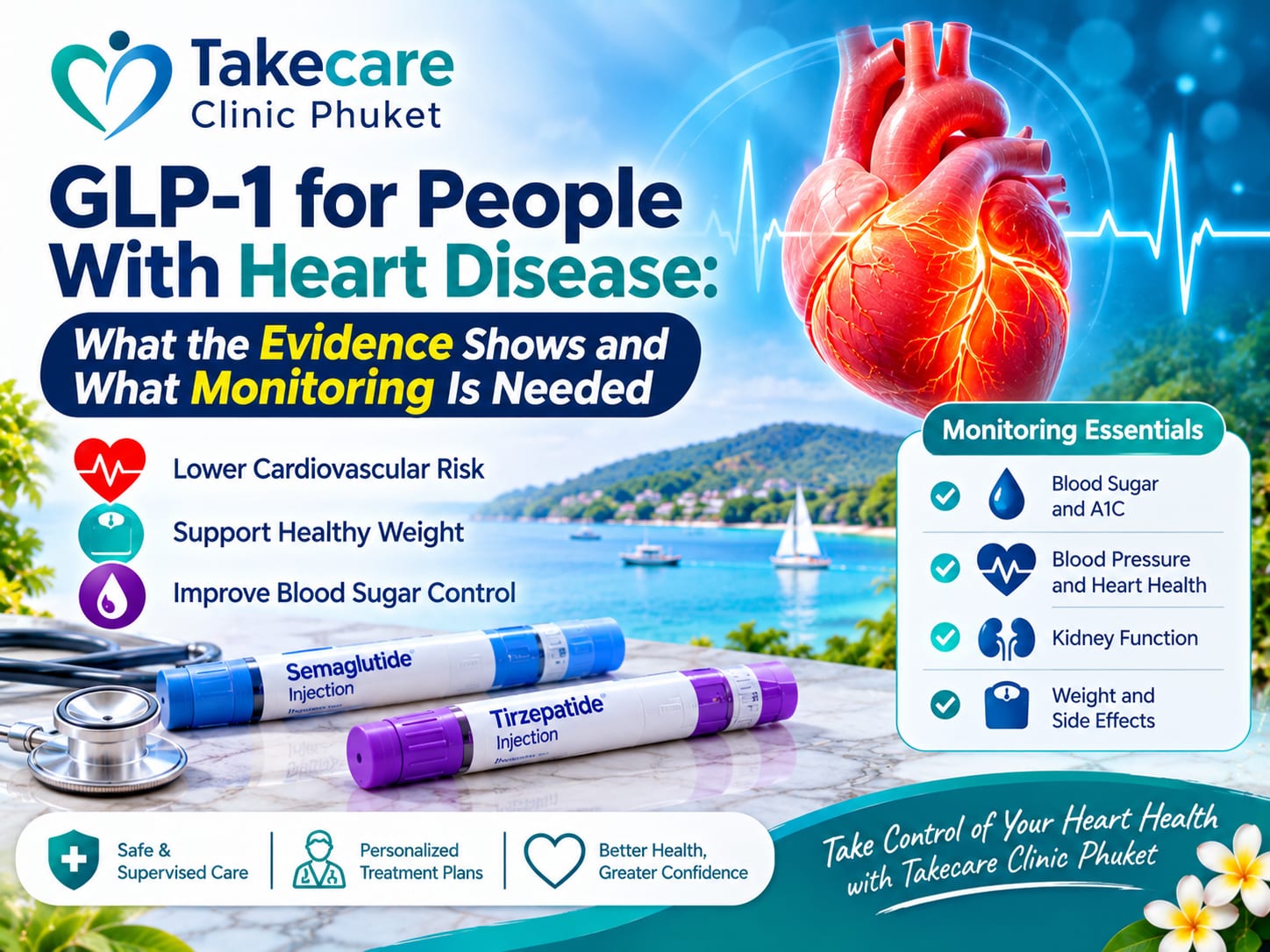
GLP-1 receptor agonists, a class that includes semaglutide and liraglutide, have shown a meaningful reduction in major cardiovascular events in large trials involving people with established heart disease or high cardiovascular risk. The benefit is strongest for atherosclerotic heart disease. Evidence in heart failure varies depending on the type. These drugs also require specific monitoring while you are on them, including blood pressure, resting heart rate, kidney function, and lipids.
Many people managing a heart condition in Phuket are doing so at a distance from their usual cardiologist. Some are long-stay expats running a six-month supply down to the last pen. Some arrive off a liveaboard out of Chalong with a medication bag lighter than planned. The key questions are usually the same: what does this drug actually do to my heart, and what does a doctor need to check while taking it?
The cardiovascular evidence for this class is stronger than most patients expect. Several large trials have shown real reductions in heart attacks, strokes, and cardiovascular death in people with established heart disease. But the benefit is not the same across every cardiac condition. The monitoring requirements are specific. And there are patients who should not start one without specialist input first. This article covers what the evidence shows, what we check, and what to do if your supply runs out here in Phuket.

What the Major Trials Actually Found About GLP-1 and Heart Disease
The LEADER trial tested liraglutide in people with type 2 diabetes and high cardiovascular risk. The SUSTAIN-6 trial tested semaglutide in the same population. Both showed meaningful reductions in major adverse cardiovascular events, meaning the combined rate of heart attack, stroke, and cardiovascular death.
The SELECT trial went further. It tested semaglutide in people with existing cardiovascular disease who did not have diabetes, and found a significant reduction in those same events over several years. That result matters because it shows the cardiac benefit is not simply a byproduct of lowering blood sugar.
The SOUL trial, studying oral semaglutide in people with type 2 diabetes and established cardiovascular disease or chronic kidney disease, also showed benefit. Across these trials, the direction is consistent: in people with established atherosclerotic cardiovascular disease, GLP-1 receptor agonists reduce the risk of serious cardiac events.
How GLP-1s Protect the Heart
The benefit goes beyond weight loss, though weight loss helps. GLP-1 drugs lower blood pressure, reduce visceral fat (the deep fat stored around organs that drives inflammation), and appear to have direct anti-inflammatory effects on blood vessel walls. These combined effects reduce the cardiometabolic risk that drives heart attacks and strokes.
GLP-1s also modestly raise resting heart rate. This is not dangerous in most people, but it needs tracking, particularly in patients with certain arrhythmias or those already on medications that affect heart rate.
Heart Failure: Where the Evidence Is Stronger and Where It Is Not
This is where patients often get a misleading picture. Heart failure is not one condition. The two main types behave differently, and the GLP-1 evidence reflects that.
Heart failure with preserved ejection fraction, or HFpEF, is the type where the heart muscle is stiff and does not relax properly. The STEP-HFpEF trial tested semaglutide in people with HFpEF who also had obesity. It showed meaningful improvements in symptoms, exercise capacity, and quality of life. The evidence here is genuinely encouraging.
Heart failure with reduced ejection fraction, or HFrEF, is where the heart muscle is weak and does not pump strongly enough. The evidence for GLP-1s in HFrEF is currently weaker and less consistent. If you have HFrEF, a conversation with your cardiologist before starting a GLP-1 is not optional.
Who Should Use Caution or Avoid GLP-1s With a Heart Condition
Some patients should not start a GLP-1 without careful specialist review. A personal or family history of medullary thyroid carcinoma or multiple endocrine neoplasia type 2 (MEN 2) is an absolute contraindication based on current prescribing guidelines.
A history of pancreatitis is a strong caution. So is severe gastroparesis, which is a condition where the stomach empties too slowly. Patients with unstable heart failure or a recent acute coronary syndrome, meaning a very recent heart attack or episode of unstable angina, need cardiology input before starting. Planned surgery involving heavy sedation is another reason to discuss timing with your surgeon and prescriber.
If you are unsure whether any of these apply to you, a physician can help you work through them at an English-speaking doctor in Phuket consultation before anything is prescribed.
What Monitoring Is Needed While Taking a GLP-1 With Heart Disease
This is a common question for long-stay expats managing a chronic condition without a regular GP in Phuket. The monitoring list is not complicated, but it needs to happen consistently.
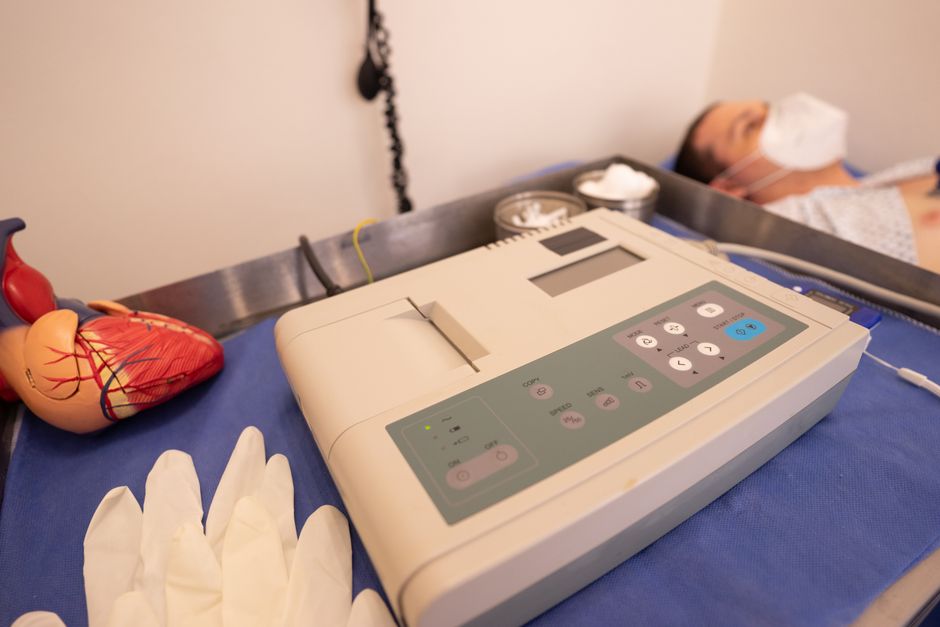
Blood pressure and resting heart rate should be checked at each visit. GLP-1s lower blood pressure, which is usually a benefit, but if you are already on antihypertensive drugs, your dose may need adjusting. Heart rate tends to rise modestly, which matters more in some patients than others.
Your lipid panel (cholesterol and triglycerides) and kidney function tests (eGFR and creatinine) should be reviewed at baseline and then periodically. Weight matters too, since it tells us whether the drug is working. If you have diabetes, HbA1c needs monitoring to make sure glucose control is not shifting too far in either direction. Any new cardiac symptoms, palpitations, chest pain, unusual breathlessness, or ankle swelling, warrant same-day assessment rather than waiting for a scheduled review.
If you need a monitoring blood panel while you are in Phuket, blood tests at Takecare Clinic can be arranged the same day with no appointment needed.
What Happens If You Stop Taking a GLP-1
This matters most for visitors and long-stay residents who run out of supply mid-trip. Current evidence suggests that the cardiovascular benefits reduce after stopping GLP-1 therapy. For most patients this is not an acute emergency, but for someone with established heart disease an unplanned gap is not trivial.
Do not stop without speaking to a doctor if you have established cardiovascular disease. If your supply has run out in Phuket, a prescription refill assessment at Takecare Clinic Phuket can help bridge the gap while you arrange continuity with your home prescriber.
Getting GLP-1 Care and Monitoring in Phuket
Managing a cardiac condition while travelling or living long-term in Phuket is something many of our patients navigate. Some arrive with a cardiology letter and a full supply. Others arrive without either and need a physician to assess whether continuing or starting a GLP-1 is appropriate given their current health.
Walk-in physician appointments at Takecare Clinic Phuket include a review of your cardiac history, current medications, and baseline observations. If you need bloodwork, it can be arranged the same day. If your situation needs specialist cardiology input beyond what a walk-in clinic can offer, we will say so clearly and help you identify the right next step.
If a symptom concerns you while you are on a GLP-1 here, chest tightness, a fast irregular pulse, or new breathlessness, use the is it safe to take GLP-1 with a heart condition emergency service rather than waiting it out.
Takecare Clinic Phuket offers same-day walk-in physician consultations with no appointment needed. If you are managing a heart condition and taking a GLP-1, or considering starting one while in Phuket, we can review your cardiac history, check your current observations, arrange same-day bloodwork including lipid panel and kidney function, and advise on prescription continuity if your supply has run out. Walk in or contact us directly at takecareclinicphuket.com.
Frequently Asked Questions
Dr. Ponlawat Pitsuwan
Physician, Takecare Medical Clinic Phuket
a walk-in medical clinic based in Patong with no appointment needed and English-speaking physician care for the whole island. He sees tourists, expats, and residents across Phuket for ongoing chronic condition management, including cardiovascular risk assessment and GLP-1 therapy review. His focus is straightforward, evidence-based care delivered in plain language.
References
- Marso SP, et al. Liraglutide and Cardiovascular Outcomes in Type 2 Diabetes (LEADER Trial). N Engl J Med 2016;375:311-322.
- Marso SP, et al. Semaglutide and Cardiovascular Outcomes in Patients with Type 2 Diabetes (SUSTAIN-6). N Engl J Med 2016;375:1834-1844.
- Lincoff AM, et al. Semaglutide and Cardiovascular Outcomes in Obesity without Diabetes (SELECT Trial). N Engl J Med 2023;389:2221-2232.
- Kosiborod MN, et al. Semaglutide in Patients with Heart Failure with Preserved Ejection Fraction and Obesity (STEP-HFpEF). N Engl J Med 2023;389:1069-1084. doi:10.1056/NEJMoa2306963
- McGuire DK, et al. Oral Semaglutide and Cardiovascular Outcomes in High-Risk Type 2 Diabetes (SOUL Trial). N Engl J Med 2025. doi:10.1056/NEJMoa2501006
- Xie Y, Choi T, Al-Aly Z. Cardiovascular outcomes associated with GLP-1 receptor agonist use and discontinuation. BMJ Medicine 2026.
The information in this article is for educational purposes only and does not constitute medical advice. It should not be used to self-diagnose or replace a consultation with a qualified physician. If you have concerns about your health, contact a licensed medical professional. For appointments at Takecare Clinic Phuket, visit takecareclinicphuket.com.
