
Clinically reviewed by Dr. Ponlawat Pitsuwan, Physician, Takecare Clinic Phuket.
Last reviewed: November 2026
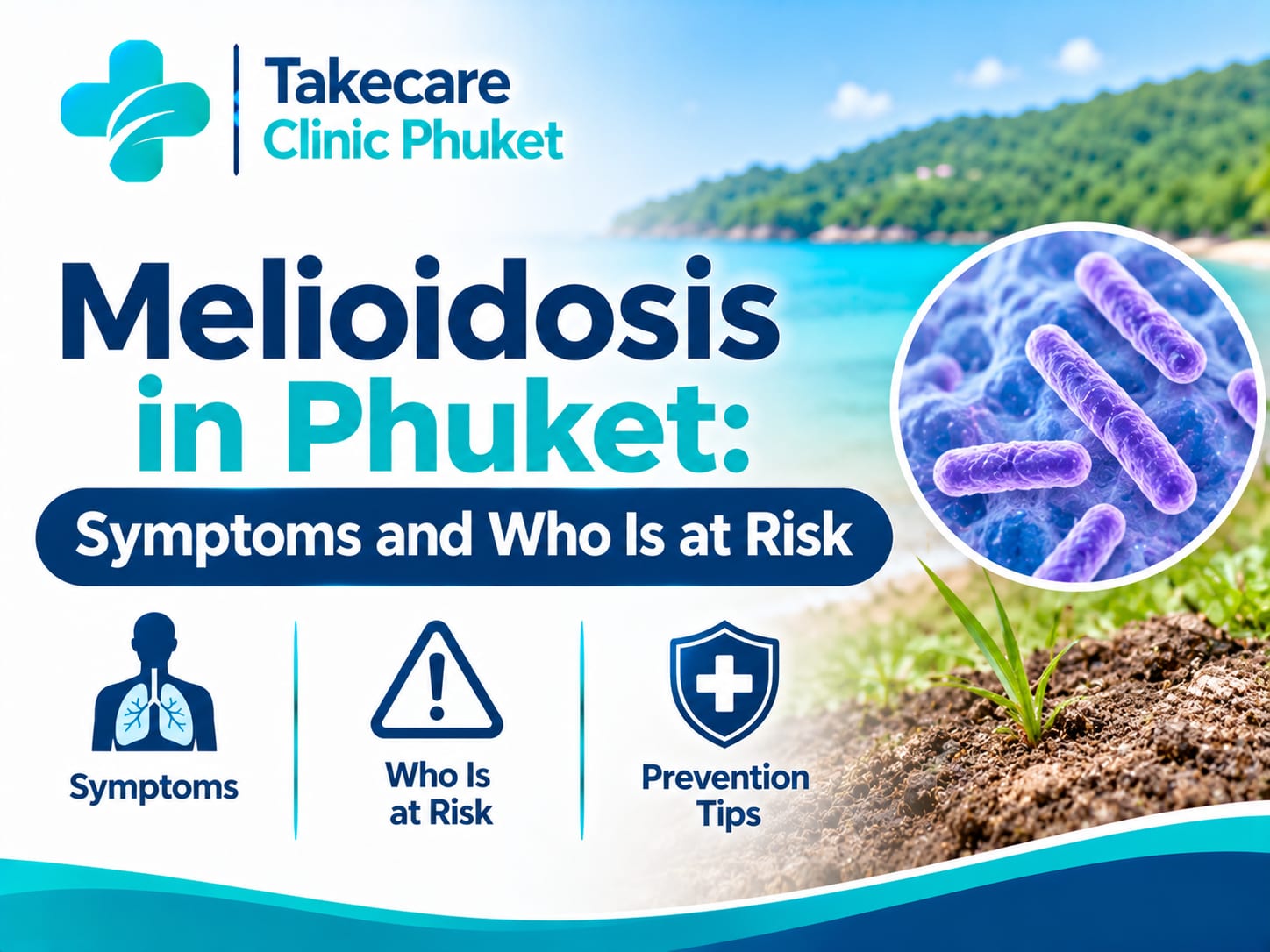
Melioidosis is a bacterial infection found in soil and surface freshwater across Phuket and the wider tropical region. It is curable with antibiotics, but it can progress quickly in people with diabetes or weakened immune systems. Symptoms can appear months or even years after exposure. If you have had contact with soil or floodwater in Phuket and you feel unwell, see a doctor the same day.
You spent the morning at a property in Chalong, clearing mud from the garden after an overnight downpour. No gloves, no boots, just an ordinary morning’s work. Three weeks later you have a fever you cannot explain. It has been going on for four days, your chest feels heavy, and paracetamol is not helping. You are not thinking about bacteria in the soil. Most people are not.
Melioidosis is not a household name, but it is a real and established risk in Phuket, particularly during and after the rainy season. It is sometimes called the "great mimicker" because its symptoms look like pneumonia, tuberculosis, or septicaemia. That similarity is exactly what gets people into trouble. They treat the wrong thing, or they wait too long. If you are in a higher-risk group, knowing what to watch for makes a real difference.
What Melioidosis Is and Where It Comes From in Phuket
The bacterium responsible, Burkholderia pseudomallei, lives in soil and surface freshwater across Southeast Asia. It enters the body through broken skin, by breathing in contaminated dust or soil particles, or by swallowing contaminated water. Person-to-person spread is not a practical concern.
Phuket sits within an endemic region, meaning the bacteria is present here as a baseline, not as an occasional imported case. Research based at Vachira Phuket Hospital has documented cases concentrated in the rainy season, when heavy rainfall stirs bacteria up from deeper soil layers and spreads it through floodwater and surface runoff. The months from May through October carry the highest environmental load.
The "great mimicker" label is well earned. This infection can present as a chest infection, an abscess, a blood infection, or a localised skin problem. It looks enough like other tropical illnesses that it is frequently missed on first presentation. Telling your doctor where you have been and what you have been doing outdoors is as important as describing your symptoms.
Who Is at Highest Risk
Most healthy adults exposed to small amounts of the bacteria clear it without knowing it happened. The people who get seriously ill almost always have an underlying condition that affects their immune response.
Diabetes is the most significant risk factor seen in Thai melioidosis cases. If you are managing diabetes in Phuket, whether as a long-stay expat or a visitor who has not had a check in some time, that context matters when thinking about soil and water exposure. A blood test at Takecare Clinic Phuket is worth arranging if you are overdue for a diabetes or blood sugar review.
Other risk factors include kidney disease, liver disease, cancer, long-term steroid use, and immunosuppressant medication. Heavy alcohol use is also associated with more severe outcomes.
Open wounds raise the risk considerably. A reef cut from Kata or Karon that has not fully healed, road rash from a scooter accident on the Patong hill roads, or a puncture wound from a Phi Phi day trip all create a direct route for soil bacteria to enter the body. Covering open wounds before any contact with soil, mud, or freshwater is straightforward and genuinely protective. Footwear matters too, particularly during rainy season when flooded footpaths across residential areas from Thalang to Rawai become a routine exposure point.

Symptoms of Melioidosis
The range is wide. Some people develop a sudden high fever with pneumonia-like symptoms within days. Others develop a localised skin abscess. A smaller number develop septicaemia, a serious blood infection that progresses rapidly and needs urgent hospital care.
Symptoms to take seriously include fever that does not settle within two to three days, chest pain or difficulty breathing, skin sores or abscesses that appear without a clear cause, and joint pain or muscle aches alongside fever. Any persistent fever symptoms that do not respond to basic treatment deserve clinical assessment, not more waiting.
The incubation window is unusually wide. In travellers with an acute presentation, symptoms typically appear within one to three weeks of exposure, though the range is wide. In people with dormant infection, it may be months or years before they feel anything. This matters for long-stay expats and anyone who lived in Phuket and later returns home. If you become unwell months after leaving Thailand, tell your doctor about your time here. That history changes the picture entirely.
Diagnosis and Treatment for Melioidosis in Phuket
No rapid bedside test exists for melioidosis the way one does for dengue. Diagnosis relies on culturing the bacteria from a clinical sample: blood, urine, sputum, or a wound swab. Because culture takes time, treatment is usually started based on clinical suspicion while results are pending.
Treatment follows two phases. The first is an intravenous antibiotic phase using ceftazidime or meropenem, given in hospital. The second is a long oral eradication phase using co-trimoxazole, taken for at least three months after discharge. That second phase is not optional. Co-trimoxazole is not suitable for everyone: people with a sulfa allergy, G6PD deficiency, or severe kidney or liver impairment should tell their doctor before starting it. Stopping the oral course early is the main reason people relapse.
If you are in Phuket and concerned about exposure, an English-speaking doctor at Takecare Clinic Phuket can assess your symptoms, take a thorough history of your outdoor activities, and arrange samples the same day. Early presentation gives treatment the best chance. For expats managing an ongoing prescription after hospital discharge, prescription continuity is something we handle regularly for patients on long-course oral antibiotics.
Come in if something does not feel right. If you have a fever that is not settling, an unexplained abscess, or you have had recent contact with soil or floodwater in Phuket, do not wait it out. Takecare Clinic Phuket is a walk-in clinic in Patong with no appointment needed and English-speaking physician care. We can assess your symptoms, take a full activity history, and arrange same-day testing. Walk in any time.
Frequently Asked Questions
Dr. Ponlawat Pitsuwan
Physician, Takecare Medical Clinic Phuket
a walk-in medical clinic based in Patong with no appointment needed and English-speaking physician care for the whole island. He sees tourists, expats, and residents across Phuket for fever assessment, tropical disease evaluation, and ongoing management of infections including melioidosis and other soil- and water-acquired conditions. His focus is straightforward, evidence-based care delivered in plain language.
References
- Wiersinga WJ, Currie BJ, Peacock SJ. Melioidosis. New England Journal of Medicine. 2012;367(11):1035-1044.
- Centers for Disease Control and Prevention. Melioidosis: information for clinicians. CDC.
- Limmathurotsakul D, Golding N, Dance DA, et al. Predicted global distribution of Burkholderia pseudomallei and burden of melioidosis. Nature Microbiology. 2016;1:15008.
- Meumann EM, et al. Treatment of melioidosis. Infectious Disease Clinics of North America. 2023; doi:10.1186/s12941-023-00620-z
The information in this article is for educational purposes only and does not constitute medical advice. It should not be used to self-diagnose or replace a consultation with a qualified physician. If you have concerns about your health, contact a licensed medical professional. For appointments at Takecare Clinic Phuket, visit takecareclinicphuket.com.
