Clinically reviewed by Dr. Ponlawat Pitsuwan, Physician, Takecare Clinic Phuket. Last reviewed: September 2026
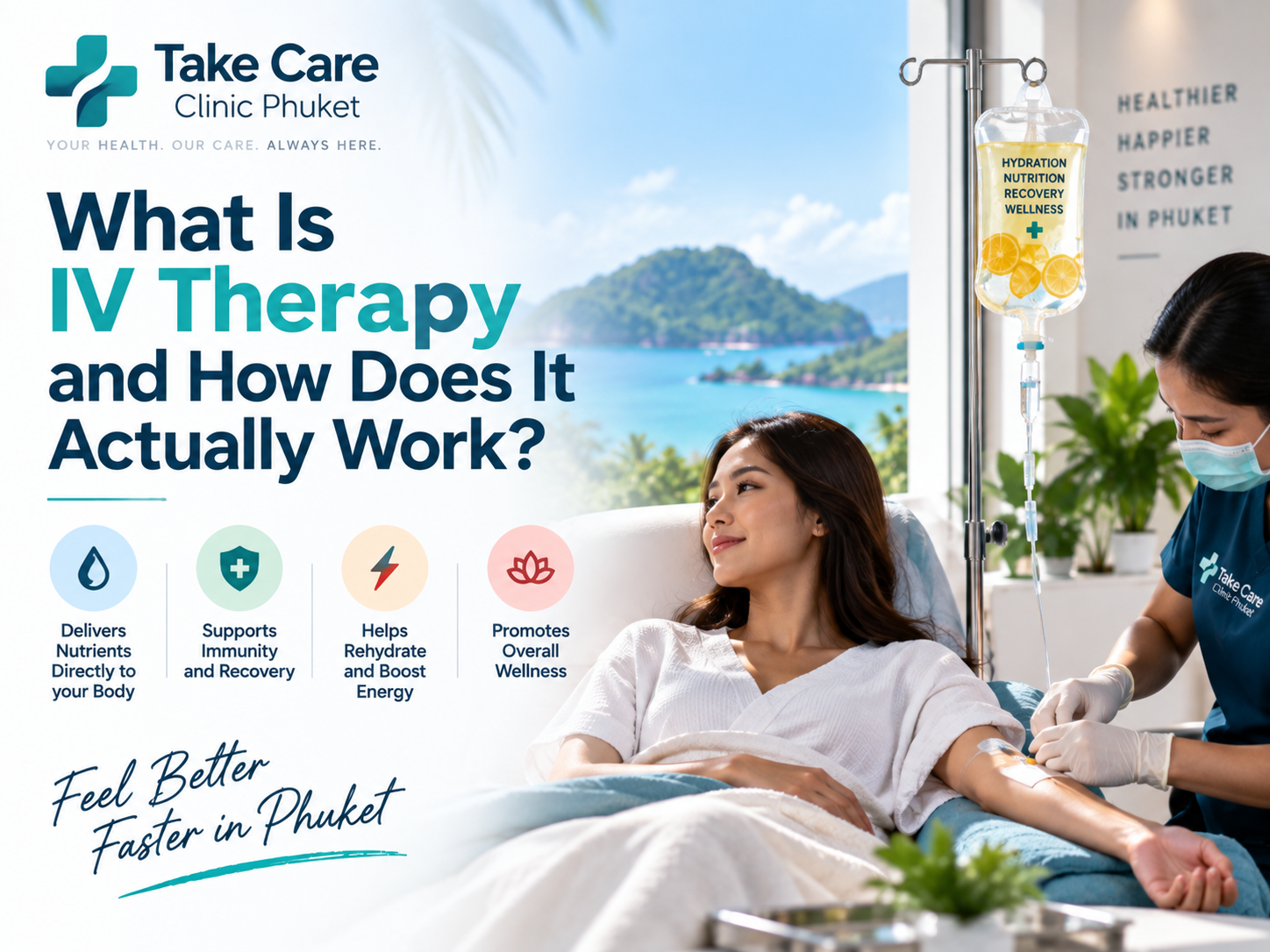
IV therapy delivers fluids, electrolytes, and nutrients directly into your bloodstream through a small needle in your arm. Because it bypasses your digestive system entirely, your body gets what it needs within minutes, not hours. It is used for dehydration, hangover recovery, food poisoning, heat exhaustion, and vitamin support. At Takecare Clinic Phuket, it is available as a walk-in service with no appointment needed and a doctor present throughout.
You have been on a long-tail boat out of Rawai since early morning. No shade. Not enough water. Back on shore by two in the afternoon feeling dizzy, nauseous, and with a headache that will not shift. You drink water. You try a sports drink. Your stomach is not cooperating and nothing is moving fast enough. This is exactly the point where oral fluids stop being the right tool.
I see this pattern every week, and not just in first-time visitors. Expats who have lived here long enough to feel acclimatised to Phuket’s heat are often the ones who underestimate it. IV therapy is not a hospital emergency procedure. It is a clinical tool that puts fluids and nutrients directly into your bloodstream when your body cannot absorb them fast enough any other way. Here is what goes in, what it actually does, who should have it, and who should not.

Why Your Gut Cannot Always Keep Up in Phuket’s Heat
Swallowing water works fine when you are mildly dehydrated and your stomach is settled. The problem is that your gut absorbs fluid gradually. In Phuket’s heat and humidity, you can lose fluid faster than your digestive system can replace it, especially if you are vomiting or have diarrhea from food poisoning.
When your gut is not working properly, anything you swallow takes time your body does not have. IV therapy goes straight into a vein. There is no digestion step. Fluids and electrolytes reach your bloodstream within minutes.
Alcohol makes this worse. A full beach day followed by a night in Patong is a familiar story in my clinic. Alcohol pulls fluid out of your body faster than normal. Add heat, sun, and a late night, and by morning the deficit is significant enough that no amount of sports drinks will close it quickly.
What Is Actually in an IV Drip
The base of almost every drip is isotonic saline, a sterile salt-water solution that matches your blood’s fluid balance. Some drips use a balanced electrolyte solution instead, which includes sodium, potassium, and chloride. Either way, the foundation is always fluid first.
From there, ingredients depend on what you need. A basic rehydration drip stays at the saline level. A hangover or recovery drip typically adds B-complex vitamins and magnesium, which helps with muscle function and headache. Anti-nausea medication is often included if you are still vomiting.
Vitamin C drips deliver high-dose ascorbic acid directly into the bloodstream at concentrations you cannot reach with a tablet. Glutathione is an antioxidant added to some drips for immune and skin support. The Myers cocktail combines magnesium, B vitamins, vitamin C, and calcium in a single infusion. What you actually need depends on your symptoms, not on the name of the drip.

What Is IV Therapy Doing That a Tablet Cannot
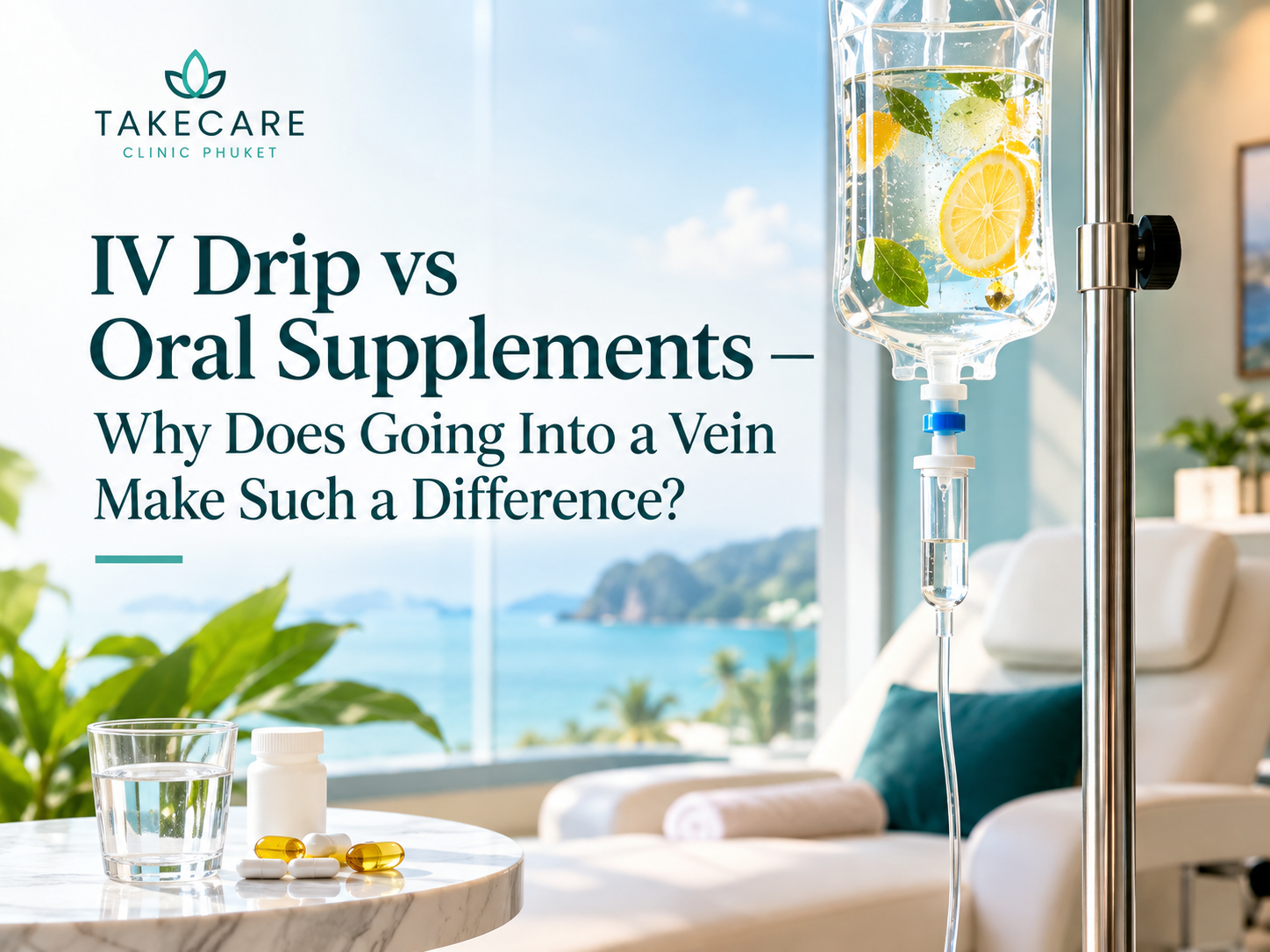
When you swallow a vitamin tablet, your stomach breaks some of it down before absorption even begins. Your gut then absorbs what is left through its lining, and that process has a ceiling. For high-dose vitamin C in particular, oral absorption saturates quickly.
An IV drip has no absorption ceiling. Everything goes directly into the vein at the dose given. This is why IV vitamin C at therapeutic doses cannot be replicated with tablets, and why a severely dehydrated patient cannot drink their way to recovery at the same speed.
For mild dehydration and general wellness, oral supplements and good hydration are perfectly adequate. IV therapy earns its place when the gut is the obstacle or when the dose needed exceeds what the digestive system can handle.
Who Gets IV Therapy at Takecare Clinic — Real Phuket Scenarios
The most common reason people walk in is dehydration from heat, alcohol, or food poisoning. I see all three every week. The beach day gone wrong, the Patong hotel buffet that disagreed violently by midnight, the long-haul flight arrival followed by straight-to-beach behaviour without enough water.
Post-dive fatigue is another one I see regularly. Divers who have done back-to-back days out near Kata or on a liveaboard to Phi Phi sometimes come in flat and exhausted. A rehydration drip with B vitamins helps faster than a rest day alone.
Jet lag recovery is less dramatic but real. Arriving from Europe or Australia with twelve-plus hours of travel, broken sleep, and dry cabin air leaves some patients genuinely depleted before their holiday has started. A hydration and vitamin drip on arrival day can reset that faster than waiting it out.
The expat patient is a different profile. Some residents managing chronic fatigue use monthly IV support as part of an ongoing plan agreed with their doctor. That requires a clinical conversation, not just a drip menu.
Is IV Therapy Safe — What Physician Oversight Actually Means
IV therapy administered in a licensed medical clinic by a qualified physician is a different standard from a spa drip bar or mobile nurse service with no doctor present. This distinction matters more than most people realise.
Before any drip at Takecare Clinic Phuket, a doctor checks your symptoms, blood pressure, and pulse, and screens for contraindications. Allergies are identified before a cannula goes in. Infusion rate is set correctly for each patient.
Side effects from correctly administered IV therapy are uncommon. The most frequent are minor: a cool sensation in the arm, slight bruising at the cannula site, or a mild vitamin taste during infusion. Serious complications are rare when the drip is physician-supervised and the right patient has been properly assessed.
Who Should Not Have IV Therapy
This matters more than most clinic pages admit. IV therapy is not right for everyone, and the pre-treatment assessment exists for a reason.
Patients with kidney disease should not receive IV fluids without careful medical evaluation. Patients with congestive heart failure carry similar risk. Excess fluid is not handled safely by a heart already under strain.
Pregnancy warrants specific medical advice before any IV drip, particularly vitamin and supplement infusions. Known allergies to drip components are an obvious contraindication. Anyone with an active infection at the cannula site should wait until that clears.
A spa or mobile drip service cannot screen for any of these factors the way a physician-led clinic can. That is not a small difference.
What to Expect When You Walk In for an IV Drip
No appointment needed. You walk in, describe how you are feeling, and a doctor sees you before anything is ordered. Vitals are checked. If a drip is the right call, the right drip for your situation is selected, not just the most popular one on the list.
The cannula goes into a vein in your arm or hand. Most drips run between 30 and 60 minutes. You sit in a chair. Many patients feel noticeably better before the bag is finished.
Aftercare is straightforward. Drink water through the rest of the day. Avoid alcohol for at least 24 hours if you came in for hangover recovery. Eat something light. If symptoms return or worsen after leaving, come back.
If you are dealing with dehydration, heat exhaustion, food poisoning, a rough night in Patong, or just feel flat after a long journey to Phuket, Takecare Clinic Phuket offers walk-in IV drip therapy with physician supervision and no appointment needed. A doctor assesses you before any drip is started, and the right treatment is chosen for your actual symptoms. Walk in any day at 34/14 Prachanukhro Road, Patong, or visit takecareclinicphuket.com.
Frequently Asked Questions
Dr. Ponlawat Pitsuwan
Physician, Takecare Medical Clinic Phuket
a walk-in medical clinic based in Patong with English-speaking physician care and no appointment needed. He sees tourists, expats, and residents across Phuket for IV drip therapy, dehydration treatment, heat exhaustion, hangover recovery, and general wellness support. His focus is straightforward, evidence-based care delivered in plain language.