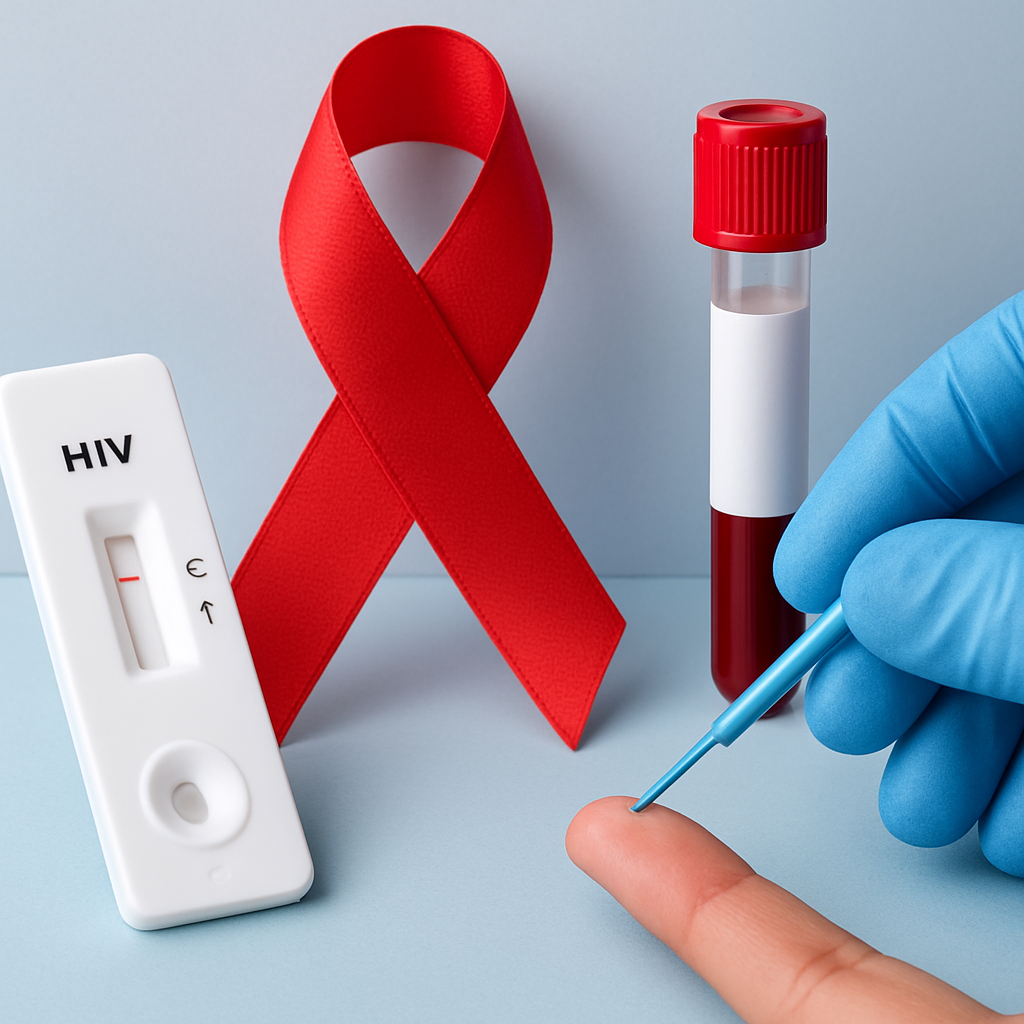
HIV Testing in Phuket: Rapid vs. Lab Tests, Accuracy and How to Schedule a Confidential Appointment
If you need hiv testing phuket, understanding which test to choose and when to test makes the difference between a reliable result and a false reassurance. This short guide compares rapid point-of-care tests, fourth-generation lab assays and nucleic acid testing, explains window periods and accuracy trade-offs, and describes the follow-up steps after a reactive screen. It ends with clear, confidential instructions for booking an appointment at Takecare Clinic Phuket and practical options for travelers, expats and local residents.
Rapid point of care HIV tests available in Phuket
Quick reality: rapid point of care tests in Phuket use a finger prick or small blood tube and detect antibodies only, so they give an answer within 15 to 30 minutes but are not the best choice for very recent exposures.
How they are offered locally: clinics, community outreach events and some private health centres provide rapid HIV testing Phuket as walk in or appointment services. Results are immediate, making these tests useful when you need same day information or have limited time on the island.
Accuracy and the tradeoff: rapid tests are highly specific so false positives are uncommon, but sensitivity depends on time since exposure. The tradeoff is speed for early detection; rapid antibody tests can miss infections during the early seroconversion window that fourth generation lab assays or nucleic acid tests would catch.
Practical considerations for choosing a rapid test in Phuket
- When rapid test makes sense: need same day result, screening while travelling, outreach testing or baseline check with planned follow up
- When to avoid relying on rapid alone: exposure within the past few weeks, symptoms of acute HIV illness, or when you need the earliest possible detection
- Confirmatory step: any reactive rapid result requires follow up testing by an accredited laboratory before a diagnosis is made
Concrete example: a tourist reports unprotected sex 10 days earlier and asks for a quick test before flying. A Phuket clinic can perform a rapid test that day for immediate information, but a clinician will usually recommend arranging a fourth generation lab test or NAT and a scheduled follow up because a negative rapid test at 10 days does not rule out recent infection.
What to expect at a rapid test visit: private pre test discussion, finger prick, result in under 30 minutes, and brief post test counselling. If you prefer to book a confidential slot at a local clinic use Takecare Clinic Phuket to indicate language needs and whether you want a same day rapid test or lab sample arranged.
Common mistake: people use rapid negative results for immediate reassurance after recent exposure and then skip follow up. In practice that is how false reassurance happens. If there was a recent exposure plan the test as part of a sequence rather than a single one-off check.
Lab based screening tests: fourth generation antigen antibody assays and their role
Bottom line: fourth generation antigen-antibody assays are the practical clinical standard when you need earlier and more reliable detection than antibody-only rapid tests without immediately going to expensive RNA testing.
How these tests are done in Phuket
Collection and processing: clinics typically draw venous blood and send serum to an accredited central laboratory for automated fourth generation testing; results commonly return within 24 to 72 hours depending on courier schedules and lab capacity. If you need the sample processed faster, ask at booking because true same-day lab processing is available only at larger hospitals or on-site reference labs, not every private clinic.
- What the assay detects: p24 antigen plus early antibodies, which shortens the diagnostic window compared with antibody-only tests.
- Turnaround trade-off: better early sensitivity at the cost of an hours-to-days delay for results and the need for venous sampling.
- Confirmatory pathway: any reactive fourth generation screen still requires confirmatory testing by a different assay or NAT before a definitive diagnosis and treatment initiation.
Practical limitation: fourth generation tests are not a replacement for nucleic acid testing when exposure is within the first 1 to 2 weeks. In real practice in Phuket, clinicians use fourth generation assays as the first-line lab screen for most recent exposures, then reserve NAT for high-risk, symptomatic, or clinically urgent cases because NAT is costlier and less widely available.
Concrete example: a traveller who had unprotected sex 18 days earlier goes to a Phuket clinic. The clinician orders a fourth generation lab screen; the sample is couriered to an accredited lab and the result comes back the next day showing p24 reactivity. The clinic arranges immediate NAT for confirmation and rapid linkage to care when positive — this sequence catches infections that a rapid antibody test at that time could miss.
A working judgment: for exposures between about 2 and 6 weeks, fourth generation lab screening is the best balance of accuracy, cost and accessibility in Phuket. If you are inside the first 14 days after exposure and the answer would change management (for example to start PEP or investigate acute illness), insist on NAT availability or referral to a hospital with NAT capacity.
If you want to arrange a fourth generation screen at Takecare Clinic Phuket, note this when you book so staff can advise sample timing, expected turnaround and whether they will arrange NAT if clinically indicated. That single step prevents delays that matter when early detection changes treatment or prevention decisions.
Nucleic acid testing and diagnosis of very recent infection
Direct detection first: nucleic acid testing (NAT) looks for HIV RNA and becomes positive earlier than antigen or antibody assays, so it is the only practical way to reliably detect infection in the first 1 to 2 weeks after exposure in most people.
When NAT matters in practice
- Clinical urgency: symptomatic patients with fever, sore throat, rash or other signs of acute seroconversion where an early diagnosis will change management.
- High-risk exposure inside the PEP window: when decisions about immediate post-exposure prophylaxis or early treatment hinge on whether infection is already established.
- Unusual serology results: discordant or indeterminate antibody/antigen results where RNA clarifies the picture.
- Occupational exposure: need for a reliable baseline and rapid rule-in or rule-out after needle-stick incidents.
Trade-off to accept: NAT gives the earliest answer but it costs more, requires venous blood and reliable lab logistics, and is not available at every clinic in Phuket. In real-world practice clinicians reserve NAT for cases where the result will change immediate care rather than using it as routine screening for everyone.
Key limitation: a single negative NAT does not remove the need for follow-up testing. False negatives can occur with very low-level viraemia, improper sample handling, or if antiretroviral drugs were taken very soon after exposure. Plan NAT as part of a testing sequence rather than a one-off guarantee.
Ordering NAT in Phuket: practical steps
- Ask at booking: tell the clinic you need an RNA/HIV NAT so staff can confirm partner lab capability and courier timing.
- Sample needs: expect venous blood and plasma separation; delays in transport reduce test reliability.
- Turnaround: hospital reference labs can return results within 24 hours; private lab routes often take 24–72 hours—confirm before you depend on the result.
- Combine tests: when clinically appropriate request a NAT plus a fourth generation assay to cover both immediate RNA detection and early antigen/antibody markers.
Concrete example: a local nurse sustains a needle-stick and presents 36 hours later. The clinic arranges same-day venous draw and orders NAT through a hospital lab; the RNA result arrives within 24 hours and is negative. The clinic documents a baseline NAT, starts the PEP decision protocol based on exposure risk, and schedules a follow-up fourth generation test at two weeks and a 12-week antibody check.
Final takeaway: NAT is the correct tool for very recent exposures or symptomatic acute infection, but it is a specialist test. In Phuket, use it when the clinical decision requires the earliest possible detection; otherwise a scheduled fourth generation test with follow-up at recommended intervals will be the more practical option.
Comparing accuracy and window periods: practical timelines
Key point: accuracy is primarily a timing problem. The same test that is near-perfect at 6 weeks can miss infection at 10 days. Choose a test based on how soon you need an answer and what you will do with it.
Practical tradeoff: rapid tests give immediate results but sacrifice early sensitivity; fourth generation lab assays catch most infections earlier but require hours to days for processing; nucleic acid testing (NAT) finds infection earliest but is costlier and logistically heavier. In Phuket this means clinicians balance urgency, travel timing, and available lab turnaround when advising patients.
| Test | Earliest typical detection (days) | When to prefer in Phuket | Practical caveat |
|---|---|---|---|
| NAT (HIV RNA) | 7 to 14 | High-risk exposure within 2 weeks; symptomatic acute infection; occupational needle-stick | Ask the clinic about partner lab and same-day courier; not universally available |
| Fourth generation antigen-antibody assay | Around 15 to 28 | Routine early screening after 2 weeks; pre-procedure or clinical workups | Best balance of accuracy and cost; turnaround commonly 24 to 72 hours |
| Antibody-only rapid test | Reliable by ~12 weeks for most people | Same day screening, outreach events, or when quick reassurance is needed | Can miss early seroconversion; use as part of a planned testing sequence |
Concrete example: An expat had condom failure 28 days before a work start date and needs documentation within 48 hours. The clinic can draw venous blood for a fourth generation lab test for the fastest reliable screen and offer a rapid test the same day for immediate information. Explain to the employer that a definitive negative still depends on the planned 12-week check if there is any remaining clinical uncertainty.
Decision framework to use in practice: think baseline, then sequence. Get a baseline test as soon as possible to document status. If exposure is under 2 weeks and the result would change care, push for NAT. Between 2 and 6 weeks, prefer fourth generation lab testing. Use rapid tests only for immediate, interim answers and always schedule follow-up according to the window period.
- When to insist on NAT: recent high-risk exposure when knowing status within days affects PEP or clinical management.
- When fourth generation is sufficient: routine early follow-up, asymptomatic exposures after two weeks, and most travel or occupational screening where cost and speed must be balanced.
- When a rapid test is reasonable: immediate counselling, outreach, or when you must get same day feedback and will accept follow-up testing.
A realistic limitation: NAT loses value if sample handling or transport is delayed beyond 24 hours. In Phuket ask the clinic to confirm the lab turnaround and courier schedule before relying on a same-day RNA result.
If you need a trustworthy negative before travel or work, do not rely on a single rapid test; plan the right test sequence and confirm lab turnaround when you book.
How testing and confidentiality are handled at Takecare Clinic Phuket
What you get on arrival: Takecare Clinic Phuket treats testing as a clinical service and a privacy workflow at the same time. Patients are seen in secluded consultation rooms, samples can be labeled by code rather than full name on request, and English-speaking clinicians provide clear consent and pre-test counselling. The clinic can perform on-site rapid tests, draw venous samples for lab-based fourth generation assays, and arrange NAT through partner laboratories when clinically indicated.
Confidential pathways and practical limits
Important tradeoff: requesting anonymous or limited-identification testing reduces administrative footprint but also limits the clinic ability to proactively call you with a reactive result or link you directly into care. If you want seamless follow-up, treatment referral, or an official medical certificate for work or travel, you must provide sufficient ID at booking.
Data handling and communication: staff record results in secure medical records and can send results via encrypted email or WhatsApp only if you consent. If you prefer minimal digital trace, tell the clinic when you book so they can plan phone-free handover or in-person pickup. For general confidentiality standards see WHO.
- How to request privacy when booking: choose the booking option on Takecare Clinic Phuket booking and add a note requesting limited ID or anonymous testing; the team will confirm what is feasible.
- What to bring if you need documentation: bring the ID required by the receiving authority and say so at booking so the clinic prepares a signed result form.
- If you want same-day discreet screening: ask specifically for a same day rapid test and a coded lab pathway — this keeps workflow short and reduces time in public spaces.
Concrete example: an expat requested a confidential screening before a job start. They booked online, selected English support and limited-identification, had a rapid point-of-care test with results in 20 minutes under a code, and arranged a venous draw the same visit for a fourth generation lab screen that returned the next day. Because they provided contact consent, the clinic called with the lab result and, when necessary, fast-tracked linkage to treatment.
A judgment that matters: clinics that advertise fully anonymous testing often struggle with follow-up logistics. In practice, limited-identification protocols hit the right balance: they protect privacy while preserving the clinic ability to confirm reactive results, arrange NAT, and start PEP or ART without avoidable delay.
If you need a signed certificate for work or travel, disclose that at booking; anonymous options usually cannot produce certified paperwork.
How to schedule a confidential appointment at Takecare Clinic Phuket
Start with how you want to be contacted. When privacy is your priority, tell the clinic your preferred communication channel at the time of booking so staff do not leave voicemails or unencrypted messages. Use the booking form to flag language needs and whether you want immediate rapid testing or a venous sample sent to a partner lab.
Step 1 – Pick the booking channel and mark privacy preferences
Use the online booking page for the clearest record: Takecare Clinic Phuket booking. If you prefer real time confirmation, call or WhatsApp using the contact page so you can explain privacy needs directly. Be explicit in the booking note: preferred language, need for same day results, and whether you want minimal digital contact or a coded result label.
Step 2 – Specify the test and urgency so staff can arrange logistics
Tell them whether you need a rapid HIV test only, a fourth generation lab screen, or an RNA/NAT. This matters because lab samples require courier slots and may need a special urgent label to get faster processing. If your travel or treatment decisions depend on timing, mark the appointment as urgent so the clinic can reserve an appropriate slot and advise on expected turnaround.
Step 3 – What to bring and how to reduce your digital footprint
Bring one form of ID if you want official documentation, otherwise ask about minimal ID options. Payment by cash reduces electronic traces, but it prevents the clinic from issuing an insurer friendly invoice. If you need a signed certificate for work or travel, disclose that at booking because fully anonymous options cannot produce certified paperwork.
- If you need same day results: request a rapid test when booking and ask staff to reserve a short privacy window.
- If you want the earliest possible detection: ask for NAT availability and confirm courier schedules before arrival.
- If follow up matters: agree on one secure contact method for reactive results so the clinic can link you to care quickly.
Concrete example: A tourist who had a high risk exposure 10 days earlier used the online booking form, selected English support, and marked the appointment urgent. The clinic scheduled a late afternoon slot for discretion, performed a rapid test on arrival, drew blood for a fourth generation assay, and arranged an expedited courier so the lab result returned the next morning. The patient left with clear follow up instructions and a secure call agreement for any reactive result.
If you pick full anonymity you trade convenience: clinics cannot proactively call or issue certified results without identity details. Decide which matters more for your situation.
After the test: interpreting results, confirmatory steps and next actions
Immediate framing: treat any screening result as one data point in a diagnostic sequence. A result has clinical meaning only when placed against the type of test used and the time since exposure.
Interpreting a non-reactive result
What non-reactive usually means: a negative result lowers the probability of infection but does not exclude very recent infection. The practical consequence is that you need a repeat schedule matched to the test you had and the exposure timing rather than assuming you are clear.
Practical retest plan: if you had a fourth generation lab test at about three weeks after exposure, plan a repeat at roughly six weeks and a final check at 12 weeks to capture late seroconversion. If you started PEP, extend follow-up testing because prophylaxis can delay antibody development and affect RNA detection. If you relied on a same-day rapid antibody test inside the first month, arrange a fourth generation lab test as soon as logistics allow.
If a screening test is reactive
What happens next clinically: the clinic will not issue a final diagnosis on a single reactive screen. Expect an immediate venous draw for confirmatory assays — commonly a different immunoassay and, where indicated, NAT — together with structured post-test counselling and an expedited plan for linkage to HIV care.
- Immediate steps the clinic will take: collect confirmatory samples, explain the likely causes of false positivity (for example technical error or rare cross-reactivity), and set a timeline for definitive confirmation.
- What you should expect: clear contact arrangements, an offer of psychosocial support, and discussion about whether to start antiretroviral therapy rapidly once confirmation is available.
Clinical judgment that matters: in practice in Phuket clinicians balance speed against certainty. Starting ART on the same day of a reactive screen is appropriate only when confirmatory testing is arranged without delay or when the clinical picture strongly suggests acute infection. Otherwise clinicians commonly wait for at least one confirmatory assay before initiating lifelong therapy, while providing interim support and fast referral to treatment centres.
Concrete example: a patient receives a reactive rapid test at Takecare Clinic Phuket. Staff draw venous samples the same visit, send one tube for a second immunoassay and another for NAT, provide immediate counselling, and schedule a phone check for the confirmatory result. If confirmation returns positive, the clinic arranges same-day linkage to a local HIV treatment centre and starts baseline blood work required before ART.
Important trade-off: anonymous or limited-ID testing protects privacy but complicates timely linkage to care and access to subsidised treatment programs. If you think you may need immediate ART, certified paperwork, or insurance claims, discuss identity requirements with the clinic at booking via the Takecare Clinic Phuket booking page.
Special considerations for travelers and expats
Practical reality: people passing through Phuket or living here temporarily must balance test timing, paperwork needs and privacy in ways residents do not. Testing choices that make clinical sense for a local can be impractical for someone catching a flight or claiming a foreign employer requirement.
Timing trade-off: if you leave the island within 24–72 hours, a same-day rapid test gives immediate information but is not definitive for recent exposures. If the result must satisfy a third party (employer, embassy, school) insist on a venous draw sent for a fourth generation assay and a signed clinic statement at booking—that process needs lead time for courier and lab processing.
Privacy versus care linkage: fully anonymous testing limits the clinic's ability to call you about reactive results, to arrange confirmatory NAT quickly, or to fast-track treatment. For travellers who want discreet handling without sacrificing access to follow-up care, request a coded result pathway and an agreed secure contact method at booking.
Checklist for travelers and expats before you book
- Confirm deadlines: flight, visa interview or job start date and whether the recipient accepts clinic-issued certificates
- Identify required test type: some authorities require a lab-issued fourth generation result rather than a point-of-care rapid test
- Language and documentation: request English documentation or a certified translation through the clinic if needed
- Payment and insurance: decide whether you will pay privately or use travel insurance and ask about invoices needed for claims
- Privacy preference: state whether you want coded labeling, minimal digital contact, or a normal medical record so staff can set the pathway
- Urgency flags: tell the clinic if you need expedited courier, same-day phlebotomy, or potential NAT so they can reserve the right slot
Concrete example: An expat needs a pre-employment health certificate in 48 hours. They book an urgent slot via the Takecare Clinic Phuket booking page, request English documentation and a fourth generation assay. The clinic draws venous blood, arranges an expedited courier to an accredited lab, and prepares a signed certificate that meets the employer's format — but the patient confirms acceptance criteria with the employer first to avoid a wasted trip.
Emergency planning: if you have a possible exposure while travelling, call before you arrive. Clinics and hospitals in Phuket can advise on immediate PEP and whether onsite NAT or a fast referral is needed — this is time-sensitive and logistics matter as much as the medical decision.
Book a specific privacy and result-delivery plan when you reserve the appointment so staff can align courier times, documentation and language support before you arrive.
Final judgment to act on: do not gamble on a single convenience-driven choice. If you are on a tight travel schedule, plan testing as a short sequence: immediate rapid for peace of mind only, plus arranged fourth generation (or NAT when clinically necessary) with documentation requested at booking. Check acceptance rules for certificates before you book the test.