
Clinically reviewed by Dr. Ponlawat Pitsuwan, Physician, Takecare Clinic Phuket.
Last reviewed: October 2026
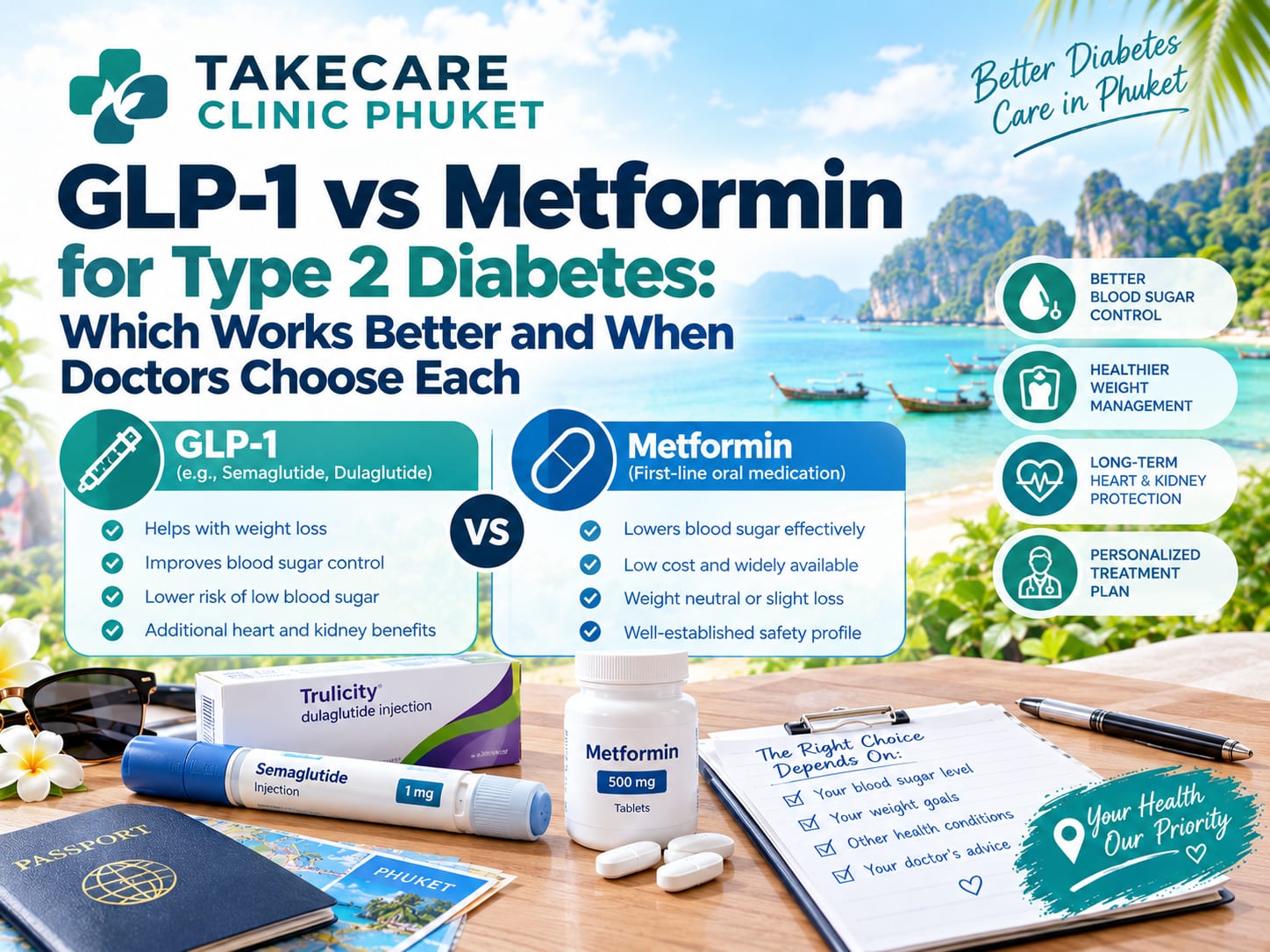
Both GLP-1 receptor agonists and metformin lower blood sugar in type 2 diabetes, but they work differently and suit different patients. Metformin is inexpensive, taken by mouth, and backed by decades of safety data, making it the standard first choice in most guidelines. GLP-1 drugs such as semaglutide and dulaglutide produce greater weight loss and stronger cardiovascular protection, but cost significantly more and are typically injected. Many patients take both together when one drug alone is not enough.
A long-stay expat in Chalong sat across from me recently, phone in hand, having spent the morning reading about GLP-1 medications. She had been on metformin for four years, her HbA1c was holding, and she wanted a straight answer: should she switch, and would it actually make a difference for someone in her situation? It deserves a proper answer, not a brochure summary.
How Each Drug Works
Metformin reduces how much glucose your liver releases into your blood. It also helps your muscle cells respond better to insulin. It does not push your pancreas to make more insulin, which is why it rarely causes dangerously low blood sugar on its own.
GLP-1 receptor agonists copy the action of a natural gut hormone your body releases after eating. That hormone tells the pancreas to release insulin when blood sugar is high, slows how quickly food leaves your stomach, and suppresses glucagon, which is the hormone that raises blood sugar. The result is better control, less appetite, and slower glucose spikes after meals.
The practical distinction: metformin improves how your body handles insulin that is already there. GLP-1 drugs actively boost the insulin response to each meal, but only when blood sugar is actually elevated. That is why neither drug commonly causes hypoglycemia, the blood sugar drop that leaves you shaky and sweaty, when used on its own.
What the Clinical Evidence Shows
On blood sugar control, both drugs reduce HbA1c, which is your three-month blood sugar average. Metformin’s evidence base includes the UKPDS trial, one of the largest and longest diabetes studies ever conducted, which showed meaningful reductions in diabetes-related complications over time. GLP-1 drugs have shown comparable or stronger HbA1c reductions in their own major trials.
On weight, GLP-1 drugs win clearly. Metformin produces modest weight reduction in most patients. GLP-1 agonists produce substantially greater weight loss, with the degree varying by drug and dose. This is partly why GLP-1 drugs have become central to obesity treatment, not just diabetes management.
On heart protection, large cardiovascular outcomes trials including REWIND and SUSTAIN-6 have shown that GLP-1 drugs reduce the risk of major cardiac events in patients who already have heart disease or are at high risk. That level of prospective cardiovascular evidence does not exist for metformin in the same form, though metformin’s long safety record remains clinically valuable.

When Doctors Choose GLP-1 Over Metformin
The American Diabetes Association Standards of Care give clear signals here. If you have established cardiovascular disease, meaning a prior heart attack or stroke, your doctor will likely want a GLP-1 drug in your regimen regardless of your starting HbA1c. The same applies if you have heart failure or chronic kidney disease, where certain GLP-1 agents have shown evidence of benefit.
If weight loss is a priority alongside blood sugar control, GLP-1 drugs are the stronger choice. Metformin does not produce the same degree of weight reduction.
Age, kidney function, cost, and how someone feels about weekly injections all factor into the decision. There is no universal right answer. That is the conversation worth having with a doctor who knows your full picture, not a decision to make based on a comparison article alone.
Safety and Side Effects
Metformin’s most common side effects are gastrointestinal: nausea, loose stools, and stomach discomfort, particularly in the first few weeks. Taking it with food helps. The extended-release version causes fewer GI problems for some people, though the evidence is mixed and the benefit is not consistent across all studies. There is also a rare but serious risk called lactic acidosis, a dangerous buildup of lactic acid in the blood, in patients whose kidneys are not working well. Kidney function must be checked before starting metformin and monitored during use.
GLP-1 drugs cause nausea and sometimes vomiting, most often in the first weeks after starting or after a dose increase. This usually eases over time. There is a prescribing warning about thyroid C-cell tumours observed in rodent studies, so GLP-1 drugs are contraindicated in patients with a personal or family history of medullary thyroid carcinoma or with Multiple Endocrine Neoplasia type 2 (MEN2). The relevance of the rodent findings to humans has not been determined, but the precaution applies regardless. Neither drug commonly causes low blood sugar when used alone.
Can You Take GLP-1 and Metformin Together?
Yes, and this is a standard prescribing pattern. The two drugs work through different mechanisms, so their effects add together rather than overlap. A typical approach is to start with metformin, check HbA1c after several months, and add a GLP-1 drug if targets are not met or if cardiovascular or weight benefits are needed.
If you are already on both and want a review of whether your current combination still makes sense, that is something Takecare Clinic Phuket can help with. You can find out more about can you take GLP-1 and metformin together and arrange a same-day consultation.
Practical Differences: Cost, Format, and Access in Thailand
Metformin is one of the cheapest medications available. It is widely stocked at pharmacies across Phuket, from Patong to Phuket Town to Chalong, and a month’s supply costs very little. GLP-1 drugs are significantly more expensive. They are also typically injected once weekly or daily, require refrigerated storage, and are not available over the counter.
In Thailand, GLP-1 drugs require a prescription and may not be available at every pharmacy. If you are a visitor whose GLP-1 medication was lost, damaged, or ran out during your stay, a walk-in consultation at Takecare Clinic Phuket is the practical first step. We can assess your situation and issue a local prescription where appropriate.
Managing Diabetes in Phuket: What Visitors and Expats Actually Need to Know
Running out of metformin mid-stay is a fixable problem. Thai pharmacies often stock it and may dispense standard doses without a local prescription. For anything higher, or if there is uncertainty, a walk-in clinic visit makes sense. A quick blood sugar check tells us whether your levels have drifted during any gap in medication.
For expats living in Rawai, Chalong, Laguna, or Cherng Talay, managing a chronic condition without a regular GP can get complicated. Annual monitoring should cover HbA1c, kidney function, cholesterol, and blood pressure. A prescription refill is not a reason to skip that monitoring. If the last proper review was more than a year ago, that is worth addressing. You can book a blood test in Phuket or come in for a full review without an appointment.
Diabetes also interacts with other health issues common in Phuket. Blood sugar control affects how well wounds heal, which matters for reef cuts from Kata or Karon and scooter road rash from the Patong hill roads. Dehydration in Phuket’s heat and a bout of food poisoning can alter blood sugar in ways that are hard to predict. If you are unwell and diabetic, tell the treating doctor both facts at the same time. Management decisions interact. This applies whether you are at a hotel in Patong or a villa in Nai Harn.
If you are navigating a chronic condition as a long-term resident, a prescription refill in Phuket combined with a proper annual review is a sensible baseline. For acute concerns alongside diabetes management, the walk-in doctor in Phuket service means you do not need to plan ahead.
| Metformin | GLP-1 Receptor Agonists | |
|---|---|---|
| How it is taken | Oral tablet, once or twice daily | Injection, weekly or daily; some oral forms exist |
| Primary mechanism | Reduces liver glucose output; improves insulin sensitivity | Stimulates insulin release after meals; suppresses glucagon; slows gastric emptying |
| HbA1c reduction | Moderate, well-established | Moderate to strong, varies by agent |
| Weight effect | Modest reduction | Significant reduction |
| Cardiovascular benefit | Long safety record; cardioprotection evidence less direct | Proven reduction in major cardiac events in patients with existing heart disease |
| Hypoglycemia risk | Low when used alone | Low when used alone |
| Common side effects | Nausea, diarrhea, stomach discomfort (often resolves) | Nausea, vomiting (often resolves); injection site reactions |
| Serious safety concern | Lactic acidosis risk at low kidney function | Thyroid C-cell tumour warning; contraindicated in relevant personal or family history |
| Cost | Very low | High |
| Available in Thailand | Yes, widely | Requires prescription; availability varies |
Need a diabetes review in Phuket? Takecare Clinic Phuket in Patong is open for walk-in consultations with no appointment needed. We can check your HbA1c, review your current medication, and issue a prescription for metformin or advise on GLP-1 access where appropriate. We see patients from across the island, including Rawai, Chalong, Kata, Karon, Bang Tao, Cherng Talay, and Phuket Town. Visit takecareclinicphuket.com or come in directly.
Frequently Asked Questions
Dr. Ponlawat Pitsuwan
Physician, Takecare Medical Clinic Phuket
a walk-in medical clinic based in Patong with no appointment needed and English-speaking care available for patients across the island. He sees tourists, expats, and residents for chronic disease management including type 2 diabetes, prescription reviews, and annual monitoring. His focus is straightforward, evidence-based care delivered in plain language.
References
- American Diabetes Association Professional Practice Committee. Standards of Care in Diabetes — 2024. Diabetes Care, 2024.
- UK Prospective Diabetes Study (UKPDS) Group. Effect of intensive blood-glucose control with metformin on complications in overweight patients with type 2 diabetes. Lancet, 1998.
- Gerstein HC et al. Dulaglutide and cardiovascular outcomes in type 2 diabetes (REWIND). Lancet, 2019.
- Marso SP et al. Semaglutide and Cardiovascular Outcomes in Patients with Type 2 Diabetes (SUSTAIN-6). New England Journal of Medicine, 2016.
- WHO. Diabetes: Key Facts. World Health Organization.
- Handelsman Y et al. Metformin Extended-Release vs Immediate-Release: Efficacy and Safety. ClinicalTrials.gov NCT02252965.
The information in this article is for educational purposes only and does not constitute medical advice. It should not be used to self-diagnose or replace a consultation with a qualified physician. If you have concerns about your health, contact a licensed medical professional. For appointments at Takecare Clinic Phuket, visit takecareclinicphuket.com.
