
Clinically reviewed by Dr. Ponlawat Pitsuwan, Physician, Takecare Clinic Phuket.
Last reviewed: October 2026
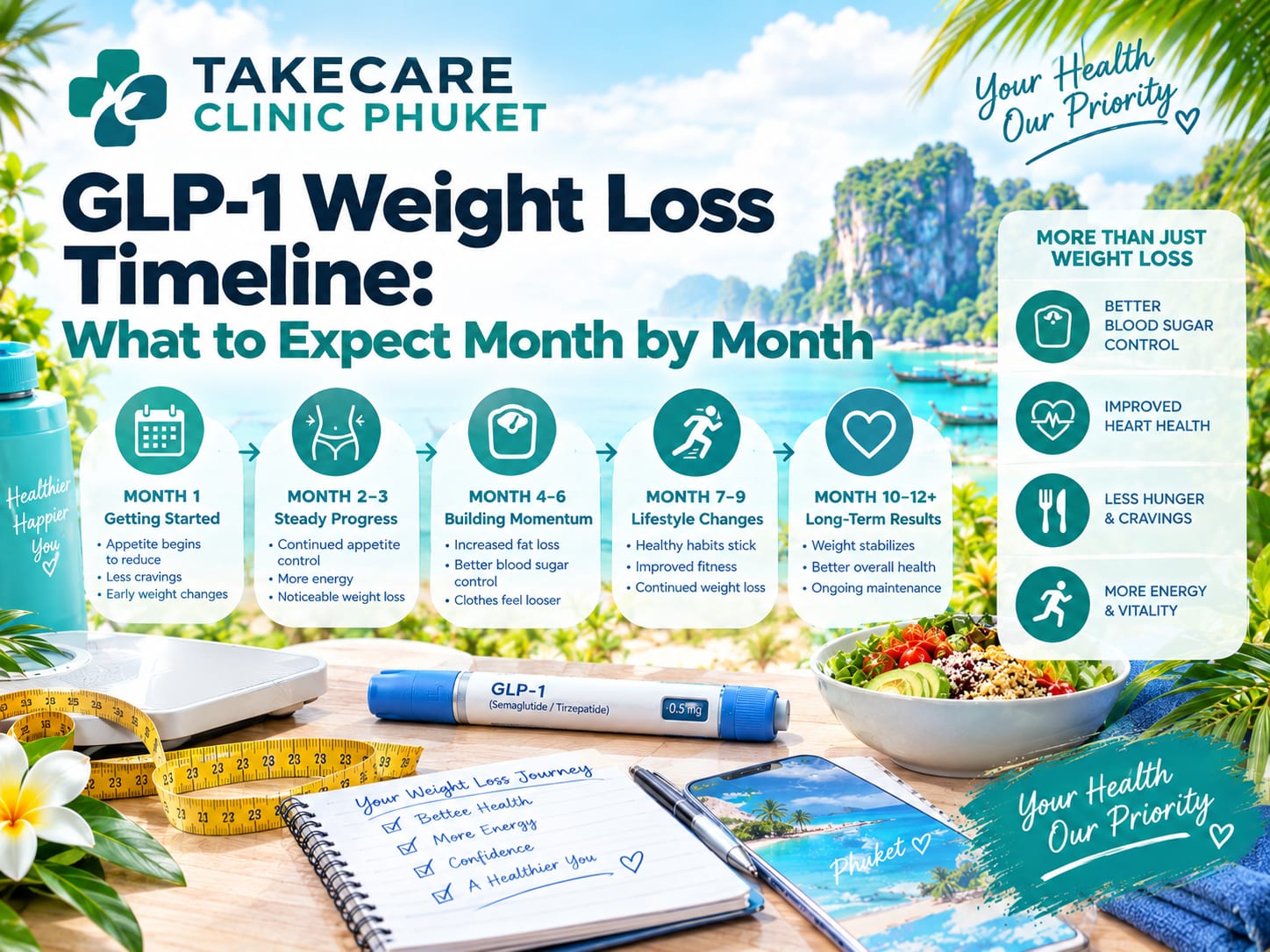
GLP-1 medications like semaglutide and tirzepatide produce gradual weight loss over months, not weeks. Most people see modest changes in the first month during dose escalation, then more meaningful results between months three and six as the dose reaches its therapeutic level. Clinical trials show significant total body weight reduction over twelve to eighteen months with consistent use and physician supervision.
You have been living in Chalong for eight months. You started a GLP-1 medication three weeks ago and the scale has barely moved. You are not sure whether the medication is working, whether Phuket’s heat and your beach routine are interfering, or whether something is wrong. This question comes up regularly for expats and long-stay visitors managing weight treatment on the island.
Three weeks in at a starting dose is not a fair test of this medication. GLP-1 medications should not be used by people with a personal or family history of medullary thyroid carcinoma or multiple endocrine neoplasia syndrome type 2, and anyone with a history of pancreatitis should discuss the risks with a physician before starting. The GLP-1 weight loss timeline, whether you are taking semaglutide (Ozempic, Wegovy) or tirzepatide (Mounjaro), follows a pattern tied directly to dose escalation. Understanding that pattern makes the difference between staying the course with good reason and stopping a treatment that was about to work.

How GLP-1 Medications Work
GLP-1 stands for glucagon-like peptide-1, a hormone your gut releases after eating. These medications mimic that hormone. They act on your brain’s satiety signals to reduce hunger, and on your stomach to slow how fast food moves through. You feel full sooner and stay full longer. Many patients describe it as the absence of persistent background hunger. Some call it the quiet of food noise finally switching off.
The weight loss effect comes primarily from eating less, not from burning more. That distinction matters for setting realistic expectations about pace.
The First Four Weeks on GLP-1 Treatment
The first month is a titration phase. You start at a low dose by design, to let your body adjust and reduce side effects like nausea. At this level, appetite suppression is mild. Some people feel it clearly. Others feel almost nothing yet.
Weight changes in weeks one through four often reflect water weight and reduced food volume more than fat loss. The STEP 1 trial for semaglutide confirms that early-phase losses are modest. This is not the medication failing. Expecting significant fat loss at week three on a starting dose is like judging a course of antibiotics after the first pill.
Nausea, if it appears, usually settles as your body adapts. Smaller meals, avoiding rich or fatty food, and staying hydrated in Phuket’s heat all help. If nausea is severe enough to stop you eating or drinking, that warrants a physician review.

Months One to Three: Dose Escalation and Early Adaptation
This is when the dose steps up, usually every four weeks, toward the therapeutic target. With semaglutide, reaching the maintenance dose takes several months. With tirzepatide, the titration schedule from the SURMOUNT-1 trial also spans multiple months. The two medications have different escalation schedules, so comparing results at the same time point is not useful.
By the end of month three, most people are approaching a meaningful dose level. Appetite suppression becomes noticeably stronger. Portion sizes shrink without deliberate effort. Some patients notice improved energy and better blood sugar control before the scale reflects much change. These are real signs the medication is working.
Non-scale changes matter here. How your clothes fit, your resting energy, how often you think about food between meals. These are legitimate markers of progress during dose escalation.
Months Three to Six: When the GLP-1 Weight Loss Timeline Becomes Visible
This is where results become more visible. At or near a full therapeutic dose, appetite suppression is consistent. Caloric intake drops more reliably, and the body enters a genuine caloric deficit without the constant fight against hunger.
The STEP 1 trial with semaglutide showed average body weight reductions of around fifteen percent at the end of the 68-week trial in trial participants. The SURMOUNT-1 trial for tirzepatide showed greater reductions at the higher doses, with mean weight loss of around fifteen to twenty-one percent at 72 weeks depending on dose. These are trial averages under controlled conditions. Individual results vary based on starting weight, diet, activity, and how the body responds to each medication.
For someone at ninety kilograms, a ten percent reduction over six months means losing around nine kilograms. That pace is gradual by design. Faster loss would come with greater muscle mass loss, which is not the goal.
Why Progress May Stall and What to Do
A plateau during GLP-1 treatment is common after several months. Three things drive it. A smaller body needs fewer calories, so the same dose produces a smaller deficit over time. Some appetite rebound can occur as the body adjusts. And diet quality tends to drift over months, especially for people living somewhere with variable food environments.
Phuket adds its own variables. A long-stay expat’s eating habits shift across beach clubs, local restaurants, and home cooking in Chalong or Cherng Talay in ways that are harder to track than a structured trial environment. A visitor doing a few weeks here may have limited control over what is available.
A minority of people on GLP-1 medications lose significantly less than average even at full dose. The proportion varies by medication, dose, and the definition used, but trial data suggest around thirteen to seventeen percent of people on semaglutide 2.4 mg do not reach five percent weight loss by the end of the trial. If you have been at a therapeutic dose for eight weeks or more and seen less than five percent body weight change, a physician review is appropriate. If your home prescriber is not accessible, you can get that review through a doctor on call in Phuket without waiting for an appointment.
Months Six to Twelve: Continued Loss and Muscle Considerations
Weight loss continues through months six to twelve, but the rate slows. This is normal metabolic adaptation. The body becomes more efficient at lower caloric intake, and the rate of fat loss decreases even if the medication is working correctly.
Preserving lean muscle mass during this phase matters. GLP-1 medications reduce overall caloric intake, which can include protein if diet quality is not managed. Adequate protein and some form of resistance activity help maintain muscle through this phase. Routine blood tests in Phuket for kidney function and metabolic markers are worth doing on an extended course, and these can be arranged on the same visit as a physician review.
Getting GLP-1 Treatment and Support in Phuket
Injectable GLP-1 medications are classified as special controlled drugs under Thai FDA regulations. They require a physician prescription. You cannot purchase them over the counter, and importing a personal supply without oversight creates legal and safety risks. This matters for tourists who run out mid-trip and for expats whose home prescriptions do not transfer here.
At Takecare Clinic Phuket in Patong, an English-speaking doctor can assess your current treatment, review your progress, manage side effects, and advise on continuation or dose adjustment. No appointment is needed. Whether you are in Rawai, Bang Tao, Kamala, or Phuket Town, same-day physician access is available. If you want a broader picture of your metabolic health alongside weight management, a health check-up in Phuket gives the baseline data a physician needs to supervise treatment responsibly.
Months Twelve to Eighteen and the Long-Term Picture
The rate of loss slows significantly after month twelve. Trial data from both the STEP and SURMOUNT programs shows that most total weight loss occurs in the first year, with a slower maintenance phase following. This is expected, not a sign of failure.
What the research is clear on: stopping the medication without a maintenance strategy typically results in weight regain. The body’s hunger regulation returns toward baseline when the drug is removed. This is a chronic condition requiring ongoing management. The conversation about long-term strategy, whether to continue, reduce dose, or transition to a maintenance approach, is one to have with a physician.
Managing GLP-1 weight loss treatment in Phuket? Takecare Clinic Phuket in Patong offers walk-in physician consultations with no appointment needed, prescription assessments, and blood work monitoring for patients across the island. Walk in, or contact us to arrange a same-day consultation.
Frequently Asked Questions
Dr. Ponlawat Pitsuwan
Physician, Takecare Medical Clinic Phuket
a walk-in medical clinic in Patong with no appointment needed and English-speaking physician care for the whole island. He sees tourists, expats, and residents across Phuket for weight management consultations, GLP-1 treatment review, metabolic health assessment, and ongoing chronic disease management. His focus is straightforward, evidence-based care delivered in plain language.
References
- Wilding JPH, et al. Once-Weekly Semaglutide in Adults with Overweight or Obesity (STEP 1). New England Journal of Medicine, 2021.
- Jastreboff AM, et al. Tirzepatide Once Weekly for the Treatment of Obesity (SURMOUNT-1). New England Journal of Medicine, 2022.
- U.S. Food and Drug Administration. Wegovy (semaglutide) Prescribing Information, 2023.
- U.S. Food and Drug Administration. Zepbound (tirzepatide) Prescribing Information, 2023.
- Wilding JPH, et al. Weight regain and cardiometabolic effects after withdrawal of semaglutide: The STEP 1 trial extension. Diabetes, Obesity and Metabolism, 2022.
- American College of Cardiology. SURMOUNT-1: Tirzepatide Once Weekly for the Treatment of Obesity. ACC Clinical Trials, 2022.
The information in this article is for educational purposes only and does not constitute medical advice. It should not be used to self-diagnose or replace a consultation with a qualified physician. If you have concerns about your health, contact a licensed medical professional. For appointments at Takecare Clinic Phuket, visit takecareclinicphuket.com.
