
Clinically reviewed by Dr. Ponlawat Pitsuwan, Physician, Takecare Clinic Phuket.
Last reviewed: October 2026
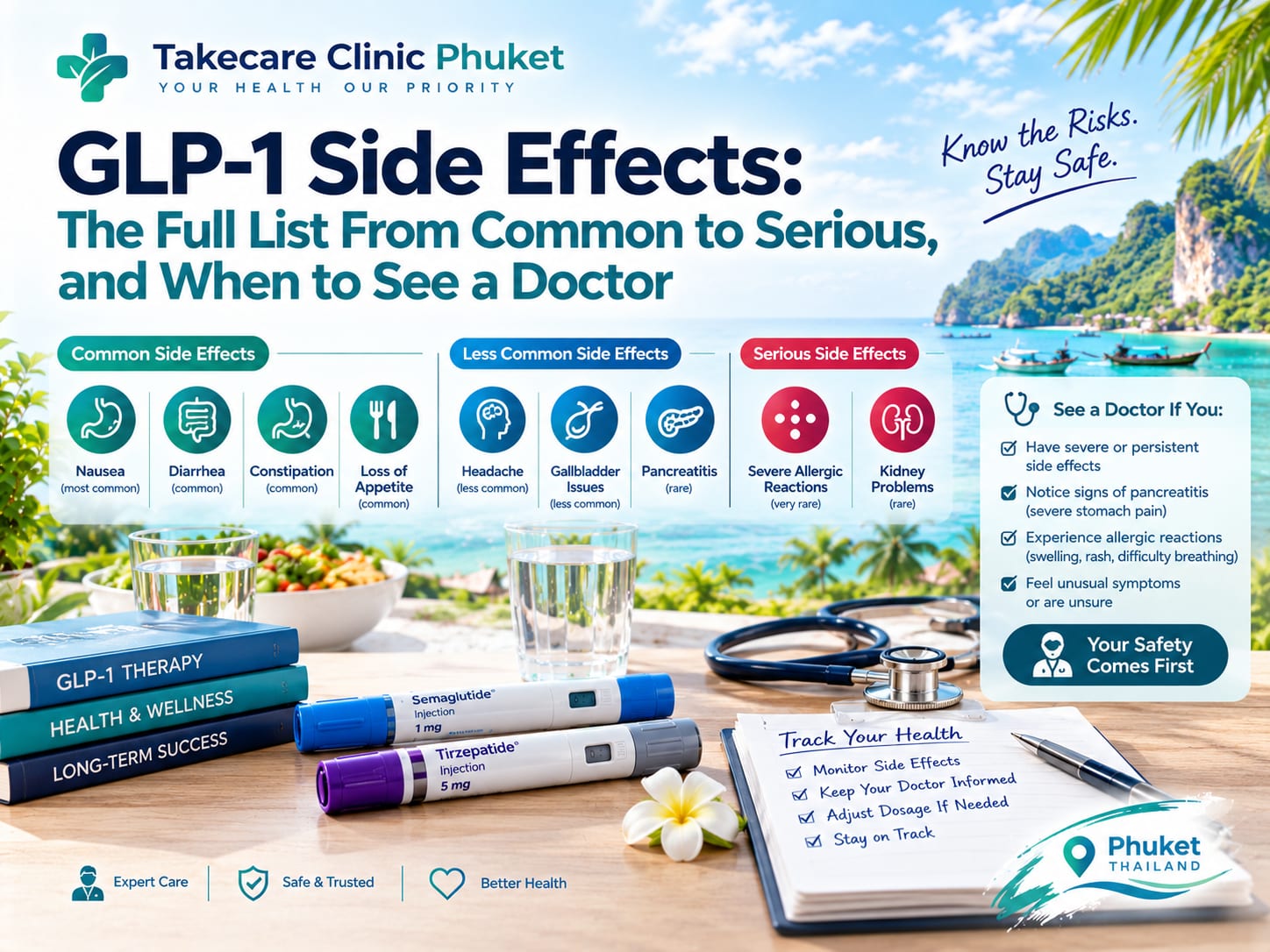
GLP-1 medications like semaglutide (Ozempic, Wegovy) and tirzepatide (Mounjaro, Zepbound) cause nausea, vomiting, diarrhea, and constipation in a significant number of users, especially at the start and after each dose increase. Most of these effects settle with time and careful dose titration. Serious but rarer risks include pancreatitis, gallbladder disease, and acute kidney injury from dehydration. If you cannot keep fluids down, have severe abdominal pain that radiates to your back, or notice sudden vision changes, stop your medication and get assessed the same day.
You are a week into semaglutide. You flew into Phuket for a long stay, planned to spend your mornings at the pool in Bang Tao, and instead you are in your villa bathroom at 6am wondering whether this is normal or whether something has gone wrong. Your prescribing doctor is eight time zones away. You are not sure whether to take your next injection. You are Googling symptoms in the dark.
This is not a rare situation. Some of what you are feeling is expected. Some of it warrants clinic assessment today. This guide covers the GLP-1 side effects full list from routine to rare, and tells you clearly when to walk in rather than wait.
Common GLP-1 Side Effects: The Full Breakdown
The side effects most people talk about are gastrointestinal. Nausea, vomiting, diarrhea, and constipation are the most reported across the drug class at higher doses. They tend to cluster in two moments: when you first start the medication, and each time your dose goes up.
Injection site reactions are also common. Redness, bruising, or mild swelling at the injection site usually resolves within a day or two. Rotating sites helps reduce this. Headache and fatigue show up in some users, particularly in the early weeks.
Burping and reflux are less talked about but genuinely frequent. GLP-1 medications slow the rate at which your stomach empties, so food and acid sit longer. This is the same mechanism behind the nausea, and it tends to improve as your body adjusts.
Why GLP-1 Side Effects Are Worst at the Start
GLP-1 medications are started at a low dose and increased gradually over weeks. When you move to a higher dose, your gut needs time to adjust to the stronger effect on gastric emptying. If that adjustment is rushed, the GI effects hit harder.
This is why side effects that seemed manageable at your starting dose can flare again after each increase. It is the expected pattern. Most people find the worst of it passes within a few days to a couple of weeks at each new dose level.

Hair Loss on GLP-1: Is It the Drug or the Diet?
Hair loss is real, and patients on GLP-1 medications do experience it. But the cause matters. Most cases are telogen effluvium, a temporary shedding triggered by rapid caloric restriction rather than a direct effect of the drug itself. When the body loses weight quickly, the stress of that change can push hair follicles into a resting phase, causing noticeable shedding a few months later.
This is usually temporary. Adequate protein intake helps. If the shedding is severe or persists well after your weight has stabilised, a GP review is worth having to rule out other causes.
Serious but Rare GLP-1 Side Effects: Pancreatitis, Gallbladder Disease, and More
Pancreatitis is the most important serious risk to know. Symptoms are severe pain in the upper abdomen, often radiating through to your back, sometimes with vomiting. UK regulators strengthened their pancreatitis warning for this drug class in January 2026, covering cases that were necrotising and fatal. If you have this symptom pattern, stop your injection and get same-day assessment. This is not a wait-and-see situation.
Gallbladder disease, including gallstones, is a recognised risk with GLP-1 use, thought to be linked to rapid weight loss. Symptoms include pain in the upper right abdomen, especially after eating. Left untreated, this can become serious.
Acute kidney injury is a less-discussed risk. It happens indirectly: severe vomiting leads to dehydration, and dehydration strains the kidneys. In Phuket’s heat, this progression can happen faster than it would somewhere cooler. A long beach day in Kata or Karon plus ongoing nausea is a real dehydration risk, not a theoretical one.
Non-arteritic anterior ischaemic optic neuropathy is a form of sudden, painless vision loss. It appeared in clinical literature in 2024 and 2025 as a possible association with GLP-1 use. It is rare. Sudden unexplained vision change in one eye is a red flag that needs same-day assessment regardless of cause.
Who Should Not Use GLP-1 Medications
These medications are not suitable for everyone. People with a personal or family history of medullary thyroid carcinoma, or with a condition called MEN 2 syndrome, should not use GLP-1 receptor agonists. This is a label-level contraindication across the drug class.
They are not recommended during pregnancy. Caution also applies with a history of pancreatitis, severe gastrointestinal disease, or diabetic retinopathy in certain contexts. If you are unsure whether your history makes these medications safe for you, that question deserves a physician review before your next dose.
Managing GLP-1 Side Effects While You Are in Phuket
Smaller portions, bland food around injection days, and avoiding eating to fullness all help with GI side effects. None of these are dramatic interventions, but they make a real difference.
Hydration is harder in Phuket than most patients expect. Tropical heat accelerates fluid loss. If you are vomiting or have diarrhea on top of that, you can become genuinely dehydrated before you feel thirsty. Oral rehydration salts are available at any 7-Eleven on the island. If you cannot keep fluids down, oral rehydration alone is not enough and IV fluids may be needed.
GLP-1 medications are prescription-only in Thailand. You cannot buy them over the counter here. If you have run out of supply while in Phuket, a physician consultation is required. Takecare Clinic Phuket can assess your situation, advise on managing a gap in supply, and provide a prescription or referral where appropriate.
When to Stop Your Medication and Seek Help the Same Day
Severe upper abdominal pain radiating to your back: stop your injection and get assessed now. This could be pancreatitis.
Inability to keep any fluids down for more than 24 hours: this is dehydration territory, and Phuket’s heat makes it more urgent than it would be at home. If persistent diarrhea is part of the picture, that accelerates things further.
Yellowing of the skin or eyes needs same-day assessment. So does sudden painless vision change in one eye. Swelling of the face or throat after an injection is an allergic emergency. Severe shakiness, sweating, or confusion, particularly if you are also on other diabetes medications, may suggest low blood sugar and needs prompt review.
If any of these apply and you are in Phuket, you do not need an appointment. Walk into Takecare Clinic Phuket in Patong, use our doctor-on-call service, or for anything that looks like an emergency, go directly to the nearest hospital.
Managing a GLP-1 side effect in Phuket, whether you are staying in Bang Tao or living long-stay in Chalong, does not have to mean a frantic search for help. Takecare Clinic Phuket is a walk-in medical clinic in Patong with English-speaking physician care and no appointment needed. We assess dehydration, GI symptoms, injection site reactions, and side-effect concerns the same day. We also offer prescription refill consultations for patients who have run out of supply while travelling. Come in, or use our doctor-on-call service if you cannot get to the clinic.
Frequently Asked Questions
Dr. Ponlawat Pitsuwan
Physician, Takecare Medical Clinic Phuket
a walk-in medical clinic in Patong with no appointment needed and English-speaking physician care for the whole island. He sees tourists, expats, and residents across Phuket for GLP-1 medication management, side effect assessment, prescription consultations, and ongoing chronic disease care. His focus is straightforward, evidence-based care delivered in plain language.
References
- Davies M, et al. Semaglutide 2·4 mg once a week in adults with overweight or obesity, and type 2 diabetes (STEP 2): a randomised, double-blind, placebo-controlled, phase 3 trial. The Lancet. 2021.
- Jastreboff AM, et al. Tirzepatide Once Weekly for the Treatment of Obesity. New England Journal of Medicine. 2022.
- MHRA. GLP-1 receptor agonists and dual GLP-1/GIP receptor agonists: strengthened warnings on acute pancreatitis, including necrotising and fatal cases. Drug Safety Update, January 2026.
- FDA. Mounjaro (tirzepatide) Prescribing Information. 2025.
- World Health Organization. Obesity and overweight: key facts. WHO, 2024.
The information in this article is for educational purposes only and does not constitute medical advice. It should not be used to self-diagnose or replace a consultation with a qualified physician. If you have concerns about your health, contact a licensed medical professional. For appointments at Takecare Clinic Phuket, visit takecareclinicphuket.com.
