
Clinically reviewed by Dr. Ponlawat Pitsuwan, Physician, Takecare Clinic Phuket.
Last reviewed: October 2026
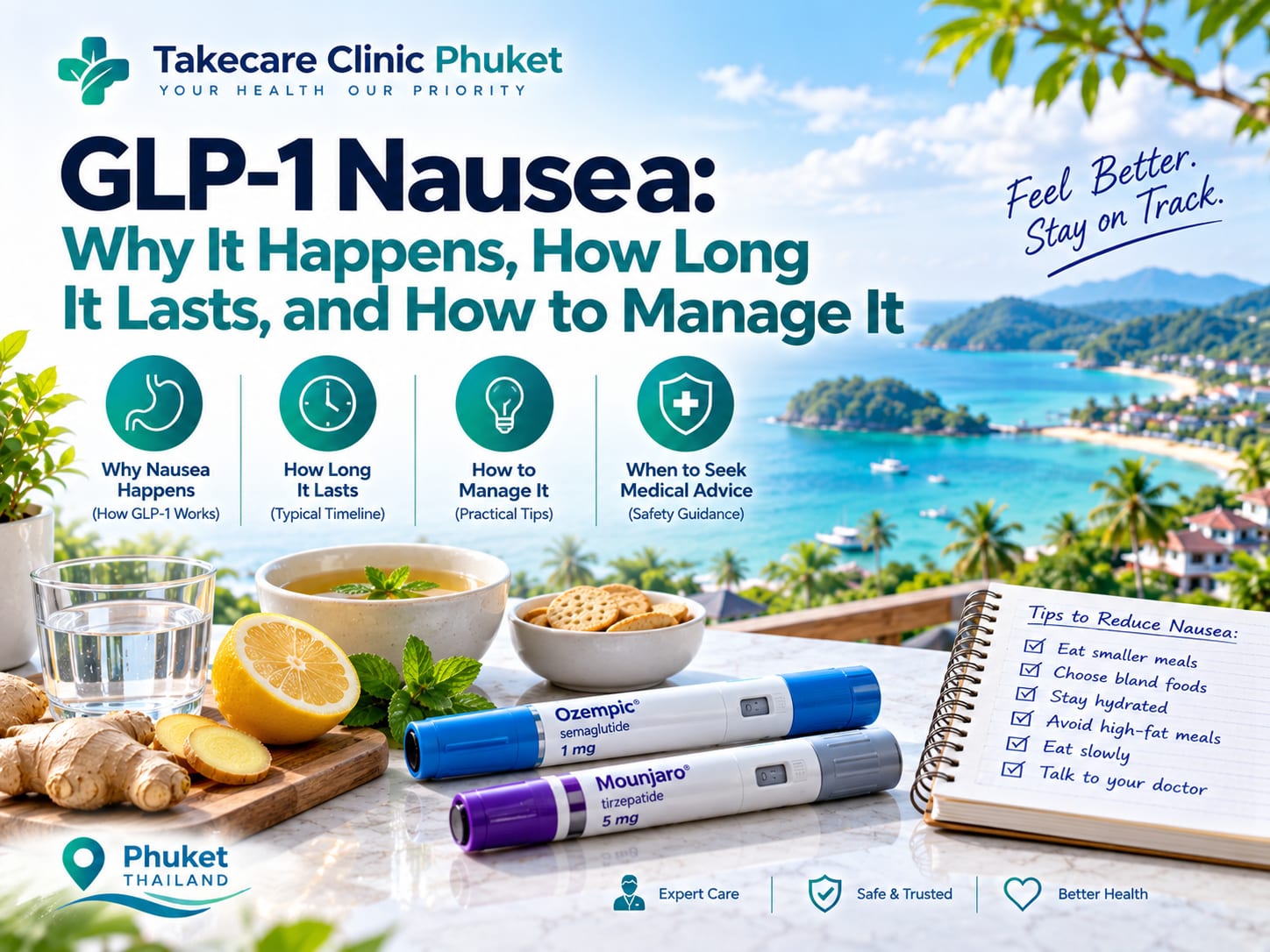
GLP-1 nausea occurs because these medications slow stomach emptying and activate nausea receptors in the brain. For most people it peaks in the first few weeks and again at each dose increase, then fades. It rarely needs emergency care, but severe abdominal pain, vomiting that prevents you keeping fluids down, or signs of dehydration mean you need a doctor the same day.
You packed your semaglutide pen carefully, kept it in the minibar at your Kata hotel, and injected on schedule. By day three, you cannot finish a meal without feeling sick. The beach feels less appealing. The dinner reservation you made a month ago now sounds like a bad idea. GLP-1 nausea is one of the most frequent concerns among patients visiting or living in Phuket who are on these medications: the nausea arrived on schedule, and the holiday did not pause for it.
GLP-1 nausea is manageable for most people. What helps is understanding why it happens, what to expect as your dose goes up, and the specific signs that mean you need more than ginger tea. If you are mid-trip with no home GP to call, knowing when to walk into a clinic versus when to ride it out makes a real difference.

Why GLP-1 Medications Cause Nausea
These medications act on two separate systems at once, and both contribute.
The first is your gut. GLP-1 receptor agonists, the drug class that includes semaglutide (Ozempic, Wegovy) and tirzepatide (Mounjaro), slow how fast your stomach empties. Food stays in your stomach longer than it normally would. That delay is partly why the medications reduce hunger, but it is also why your stomach can feel full, heavy, and unsettled after even a small meal.
The second is your brain. GLP-1 receptors exist in a region of the brainstem that processes nausea signals. When the medication activates these receptors, it can trigger nausea directly, independent of what is happening in your gut. Both pathways run at the same time.
This is why dietary changes alone do not always solve the problem. The gut effect responds to what and how much you eat. The brain effect is harder to modify without medication.
How Long GLP-1 Nausea Lasts
Most people find the nausea is worst in the first few weeks after starting. It tends to ease as your body adjusts to a given dose.
The part that surprises people: it often comes back. Each time your dose goes up, the nausea cycle can restart. Usually milder and shorter than the first time, but real. If you are on a standard escalation schedule with dose increases every four weeks, expect a new wave around each step up. This is expected. It does not mean something is wrong.
For many patients, nausea settles substantially within the first few months. For some, a low-level background nausea persists. If severe nausea continues beyond the first few months at a stable dose, that is worth a clinical review. There are adjustments that can help. For more on how long GLP-1 nausea lasts and when to seek care, our doctor-on-call team can advise without you needing to come in.

Dietary and Lifestyle Changes That Help
Smaller meals make a real difference. Gastric emptying is already slowed by the medication. Adding a large volume of food on top of that is a reliable way to trigger nausea. Eat less at each sitting, more often if needed.
Fatty and fried food slows gastric emptying further. In Phuket’s food environment, that means being careful with heavy buffet meals, fried street food, and large portions of coconut-based curries, especially early in the medication cycle. Plain rice, steamed protein, and mild soups are easier on a stomach that is already working slowly.
Alcohol also slows gastric emptying and irritates the stomach lining. If you are already feeling nauseous, a night out in Patong is likely to make the next morning worse. That is not a moral judgment, it is just physiology.
Stay upright for at least an hour after eating. Lying down immediately after a meal reliably worsens nausea on these medications.
When GLP-1 Nausea Is a Red Flag
Most GLP-1 nausea is unpleasant but not dangerous. Some presentations are different.
Severe abdominal pain that spreads into your back, especially with vomiting, can indicate pancreatitis. This needs same-day assessment at an emergency doctor in Phuket. Do not wait overnight.
Pain in the upper right side of your abdomen, especially if your skin or eyes look yellow, can indicate gallbladder disease. Both pancreatitis and gallbladder complications are known risks with GLP-1 receptor agonists. They are uncommon, but they are real, and neither improves with home management.
Dehydration is the third red flag. If vomiting has reached the point where you cannot keep any fluids down, your urine is dark, or you feel dizzy when you stand, that is beyond home management. Phuket’s heat accelerates dehydration faster than most visitors expect. A visitor from a cooler climate will lose fluid reserves here far quicker than past experience would suggest.
What a Doctor Can Do That Home Remedies Cannot
Ginger, small meals, and staying upright help. They do not cover everything.
A doctor can prescribe ondansetron, which is commonly used to manage nausea during the early weeks of GLP-1 treatment. For patients who are struggling to eat or function normally, it can bridge the adjustment period in a way that dietary changes alone cannot.
A doctor can also review your escalation schedule. Sometimes the right call is to slow the dose increase, stay at a lower dose for longer, or pause briefly while your body adjusts. That decision needs clinical judgment based on your full picture. If you are managing this without a home prescriber, Takecare Clinic Phuket can do that review same-day with no appointment needed.
For patients who cannot keep fluids down, IV therapy in Phuket is available at the clinic. It rehydrates quickly and can include anti-nausea medication delivered directly. This is a practical option when oral management has stopped working. If your symptoms also include signs of gastric irritation, our gastritis treatment page covers what to expect from that assessment.
Managing GLP-1 Nausea in Phuket: Notes for Travellers and Expats
Pen storage matters here more than in most places. Semaglutide and tirzepatide pens must be refrigerated before first use. Once in use, they have temperature limits that Phuket’s midday heat can easily exceed if you leave a pen in a beach bag or hot car. Keep in-use pens in your hotel minibar or a cool bag with an ice pack, and check the manufacturer’s guidance for your specific pen. If you are unsure whether your pen has been heat-damaged, discuss it with a doctor before your next dose rather than injecting and finding out the hard way.
For long-stay expats in Chalong, Bang Tao, or Rawai managing their weight with GLP-1 medications without a local GP, this is one of those situations where having a reliable clinic nearby matters. Dose adjustment questions, side effect management, and prescription refills for anti-nausea medication are all things that can be handled at a walk-in clinic without a referral or a flight home.
If you started a new prescription or dose increase just before arriving in Phuket, and the nausea is making your trip genuinely miserable, same-day care is available. An English-speaking doctor in Phuket can review your situation, prescribe if appropriate, and help you decide whether your current dose schedule needs adjusting. No prior appointment needed.
Managing GLP-1 nausea mid-trip or as a Phuket resident without a regular GP? Takecare Clinic Phuket is a walk-in clinic in Patong with no appointment needed and English-speaking physician care. We can assess your symptoms, prescribe anti-nausea medication if appropriate, review your escalation plan, or provide IV rehydration if you are dehydrated. Walk in or visit takecareclinicphuket.com to find us.
Frequently Asked Questions
Dr. Ponlawat Pitsuwan
Physician, Takecare Medical Clinic Phuket
a walk-in medical clinic in Patong with no appointment needed and English-speaking physician care for the whole island. He sees tourists, expats, and residents across Phuket for weight management support, GLP-1 side effect review, and ongoing chronic disease management. His focus is straightforward, evidence-based care in plain language.
References
- Wilding JPH, et al. Once-Weekly Semaglutide in Adults with Overweight or Obesity. N Engl J Med. 2021;384:989-1002.
- Davies M, et al. Semaglutide 2.4 mg once a week in adults with overweight or obesity, and type 2 diabetes (STEP 2): a randomised, double-blind, double-dummy, placebo-controlled, phase 3 trial. Lancet. 2021;397(10278):971-984.
The information in this article is for educational purposes only and does not constitute medical advice. It should not be used to self-diagnose or replace a consultation with a qualified physician. If you have concerns about your health, contact a licensed medical professional. For appointments at Takecare Clinic Phuket, visit takecareclinicphuket.com.
