
Clinically reviewed by Dr. Ponlawat Pitsuwan, Physician, Takecare Clinic Phuket.
Last reviewed: October 2026
GLP-1 nausea is worst in the first two to four weeks after starting or increasing your dose. Eat small amounts, stick to bland low-fat foods like plain rice, toast, and bananas, stay hydrated with frequent sips of water or coconut water, and avoid fatty, spicy, or rich meals until symptoms settle. If you cannot keep any fluids down for more than eight to twelve hours, get medical assessment the same day.
You started semaglutide or tirzepatide a week ago. Maybe here in Phuket as part of a long-stay plan, maybe before you flew out and the first dose hit mid-trip. Either way, you are now sitting in your villa in Rawai or your hotel in Kata staring at a breakfast menu, feeling like nothing on it is safe. That is a very common place to be in the first few weeks on a GLP-1 medication, and the food choices you make right now genuinely affect how quickly you get through it.
The nausea is real and well-documented. What you eat matters here, not because of weight loss targets, but because the wrong choice on a bad morning can tip you from manageable nausea into a full day of vomiting in Phuket’s heat. This article walks you through what to eat, what to skip, and when to stop managing this alone.

Why GLP-1 Medications Cause Nausea
GLP-1 drugs like semaglutide and tirzepatide slow down how fast your stomach empties. Your gut is not used to this. Food sits longer, pressure builds, and your brain’s nausea centre picks up the signal. A meal that felt fine before you started may now cause twenty minutes of misery.
Each time your dose increases, your stomach gets a fresh adjustment period. Most patients find nausea settles within two to four weeks at any given dose. This is not an allergy or a damage response. It is your digestive system adapting to a slower pace.
A Food Ladder for GLP-1 Nausea: Work Through It in Stages
Do not try to eat normally when nausea is at its worst. Start at the bottom and only move up when you feel ready.
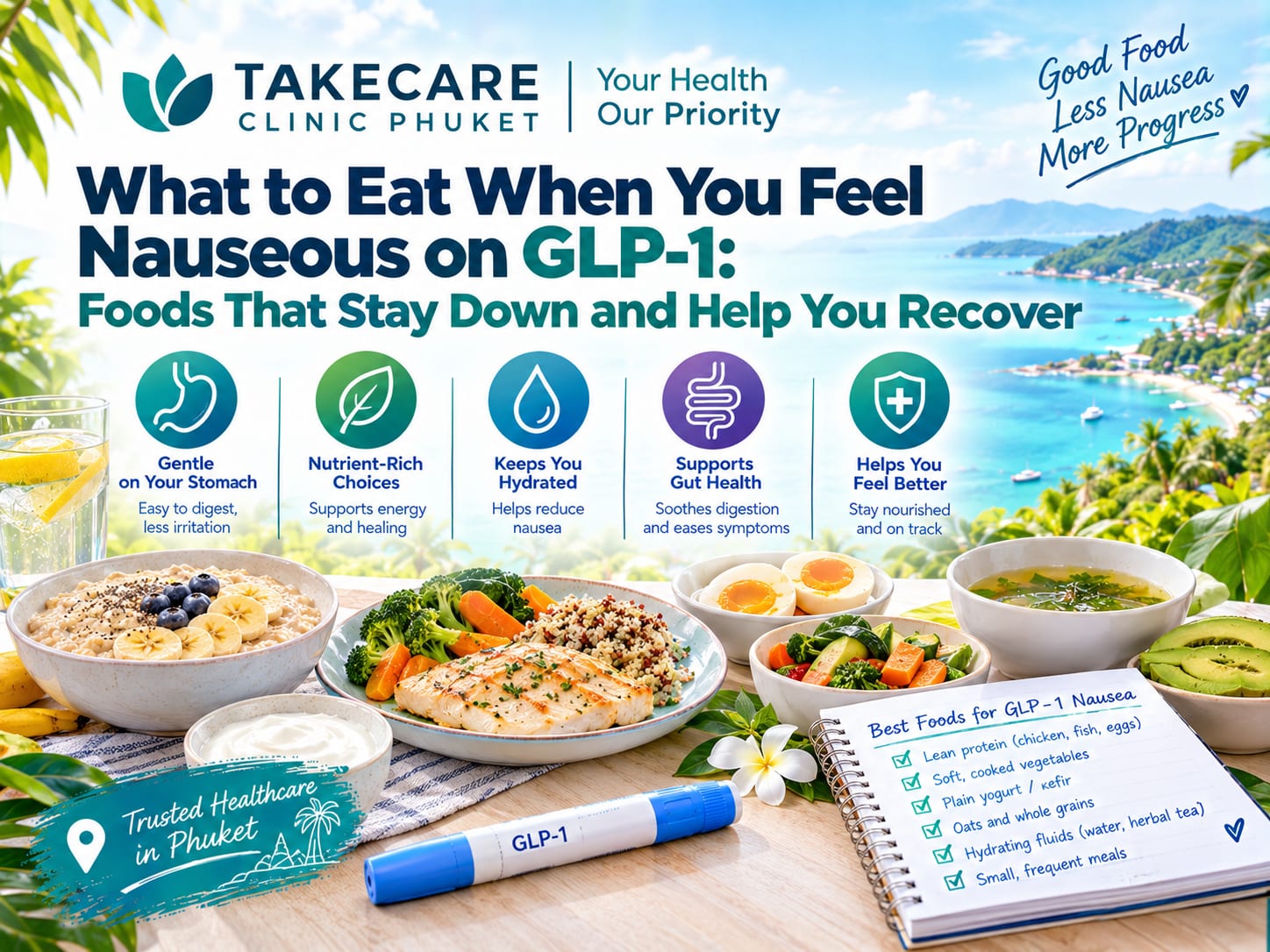
On your worst days, start with clear fluids only. Small, frequent sips of water, plain broth, or fresh coconut water. Ice chips if you cannot manage liquid. Getting fluid in is more important than getting food in at this stage.
Once fluids stay down, try dry bland foods. Plain white rice, toast without butter, plain crackers, banana. These are low in fat, low in fibre, and easy on a slow stomach. In Phuket, kao tom, plain Thai rice porridge, fits exactly this. Most hotel restaurants and street stalls can make a plain version without spice or oil. It is one of the better GLP-1 nausea food choices available here.
When those stay down, add gentle protein in small portions. Plain steamed fish, a boiled egg, plain tofu, or low-fat yogurt. This matters because GLP-1 medications reduce appetite significantly. If you skip protein entirely, GLP-1 medications reduce both fat and lean mass, and consistent protein intake is associated with less lean mass loss. Consistent protein intake matters even when portions are small.
Foods That Make GLP-1 Nausea Worse
These are not just foods to avoid for weight management. These are foods that actively worsen nausea when your stomach is already slow.
Fatty foods top the list. Fried chicken, creamy curries, coconut milk-heavy Thai dishes, anything deep-fried. Fat slows gastric emptying further, and on a GLP-1 your stomach is already slow. The combination reliably makes nausea worse.
Spicy food is a common trigger. This matters in Phuket, where chilli is in almost everything around you. A green curry or a plate of pad kra pao from a Bang Tao beach club may be fine eventually. In your first weeks on a new dose, it is a risk not worth taking.
Large portions, carbonated drinks, alcohol, and high-sugar foods all belong in the same category during a nausea phase. Keep portions to roughly a fist-size until symptoms settle. If you are unsure what qualifies as manageable, Takecare Clinic Phuket can advise on specific food choices.
Staying Hydrated in Phuket’s Heat
Dehydration moves faster here than most visitors expect. The combination of Phuket’s heat, humidity, and an inability to eat or drink normally on GLP-1 is a real risk. You lose fluid quickly in this climate even at rest.
Aim for frequent small sips rather than large glasses. Large volumes at once can trigger or worsen nausea because they distend the stomach. Cold water, diluted fruit juice, plain broth, or fresh coconut water are all reasonable choices. Coconut water provides natural sodium and potassium replacement, which matters if you have been vomiting.
If you cannot keep fluids down for more than eight to twelve hours, oral rehydration is no longer enough. If you cannot keep fluids down, get same-day medical assessment to evaluate whether intravenous fluids are needed.
Why Protein Still Matters Even When You Cannot Eat Much
One of the real risks with GLP-1 nausea is that patients stop eating almost entirely, then lose weight too fast from the wrong tissues. Muscle preservation requires consistent protein intake, even in small amounts.
You do not need a large meal. A boiled egg, a small portion of steamed fish from a Rawai market, a scoop of low-fat Greek yogurt, or a small piece of plain grilled chicken. These are all manageable when portions are kept small and nothing else on the plate adds fat or spice.
If solid protein is too much, a plain protein shake made with water, not milk, is a reasonable short-term option. Keep the flavour simple. Strong sweet flavours can worsen nausea in some patients on GLP-1s.
Practical GLP-1 Nausea Food Options in Phuket
You do not need a health food shop. Most of what helps is available here already.
Plain jasmine rice is at every Thai restaurant, convenience store, and hotel on the island. Kao tom is a standard Thai breakfast available from street stalls from early morning in Chalong, Phuket Town, and Kamala. Steamed fish is available at most local markets and many hotel kitchens on request. Fresh coconut water is sold at roadside stalls across the island.
Plain crackers, toast, and bananas are at every 7-Eleven. Oral rehydration sachets are stocked at most pharmacies and many convenience stores. These are practical tools while you wait for nausea to ease. If symptoms are not settling, a gastritis assessment can help rule out whether something else is contributing to your discomfort.
When GLP-1 Nausea Needs a Doctor, Not Just a Diet Change
Most GLP-1 nausea is manageable with the food strategies above. Some is not.
Get medical assessment the same day if you cannot keep any fluids down for more than eight to twelve hours, if you feel dizzy or have very dark urine, or if you have severe abdominal pain. Severe upper abdominal pain that radiates to the back warrants urgent assessment to rule out pancreatitis, which is a rare but serious concern with this class of medication. If you also take insulin or sulphonylureas for diabetes, reduced eating can contribute to low blood sugar and needs prompt review.
If nausea is still severe after four to six weeks at the same dose, that is a conversation to have with your prescriber, not something to push through alone.
Takecare Clinic Phuket is a walk-in clinic in Patong with no appointment needed and English-speaking physician care. If you are an expat or long-stay visitor managing GLP-1 side effects without a local GP, same-day assessment is available across the island.
Managing GLP-1 nausea in Phuket and not sure if what you are experiencing is normal? Takecare Clinic Phuket offers walk-in physician care in Patong with no appointment needed, with English-speaking physician care for the whole island. An English-speaking doctor can assess your symptoms, support rehydration if needed, and help you manage GLP-1 side effects safely. Walk in or visit takecareclinicphuket.com.
Frequently Asked Questions
Dr. Ponlawat Pitsuwan
Physician, Takecare Medical Clinic Phuket
a walk-in medical clinic based in Patong with no appointment needed and English-speaking physician care for the whole island. He sees tourists, expats, and residents across Phuket for the management of GLP-1 medication side effects, including nausea, dehydration, and dose-related complications. His focus is straightforward, evidence-based care delivered in plain language.
References
- Wilding JPH, et al. Once-Weekly Semaglutide in Adults with Overweight or Obesity. N Engl J Med. 2021;384(11):989-1002.
- Davies M, et al. Semaglutide 2.4 mg once a week in adults with overweight or obesity, and type 2 diabetes (STEP 2): a randomised, double-blind, placebo-controlled, phase 3 trial. Lancet. 2021;397(10278):971-984.
- Haines M, et al. Consuming more protein may protect patients taking anti-obesity drug from muscle loss. Endocrine Society ENDO Annual Meeting. 2025.
The information in this article is for educational purposes only and does not constitute medical advice. It should not be used to self-diagnose or replace a consultation with a qualified physician. If you have concerns about your health, contact a licensed medical professional. For appointments at Takecare Clinic Phuket, visit takecareclinicphuket.com.
