
Clinically reviewed by Dr. Ponlawat Pitsuwan, Physician, Takecare Clinic Phuket.
Last reviewed: October 2026
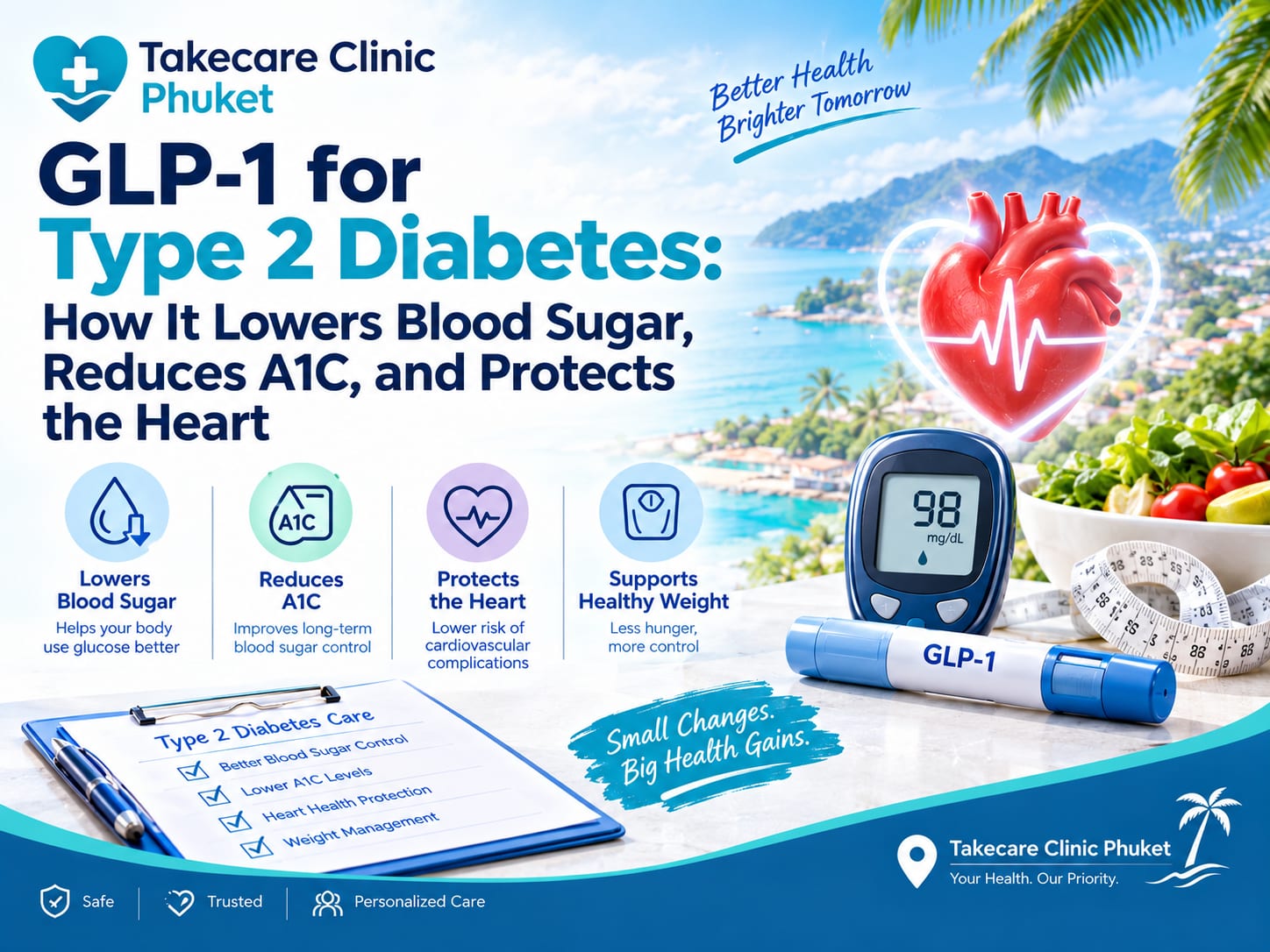
GLP-1 receptor agonists lower blood sugar by stimulating insulin release only when glucose is elevated, suppressing glucagon, and slowing digestion. In clinical trials, they reduced A1C by roughly 1 to 2 percentage points compared to placebo. In high-risk patients, certain agents cut the chance of a serious heart event. They are not insulin, they carry a low risk of hypoglycaemia on their own, and some formulations are taken once weekly by injection or daily by mouth.
A long-stay visitor came in to see us recently, about six weeks into a rental in Chalong. His Ozempic pens had run out. His HbA1c check was overdue. His GP back home was twelve time zones away and unavailable on the day he needed them. He knew he was on something called a GLP-1, but beyond that, he was not entirely sure what it was doing or why it mattered that he stay on it.
Long-stay visitors and expats managing type 2 diabetes in Phuket can reach a point where the home-country infrastructure runs out before the trip does. Sometimes they have just been told at a health check in Phuket Town that their blood sugar is higher than it should be and a GLP-1 was mentioned for the first time.
Either way, this article explains what GLP-1 receptor agonists actually do, how much they lower A1C, what the cardiovascular evidence says, and what to do if you are managing this in Phuket without a regular GP.

How GLP-1 Lowers Blood Sugar
GLP-1, short for glucagon-like peptide 1, is a hormone your gut releases naturally after you eat. It tells the pancreas to release insulin, but only when blood glucose is actually elevated. That detail matters. It is called glucose-dependent insulin release, and it is the reason these drugs carry a much lower risk of pushing your blood sugar dangerously low compared to some older diabetes medicines.
At the same time, GLP-1 suppresses glucagon. Glucagon is the hormone that tells your liver to release stored sugar into the bloodstream. In type 2 diabetes, glucagon tends to be overactive. Reducing it lowers that background glucose load.
Food also moves through your stomach more slowly on these drugs. Glucose enters the bloodstream more gradually after a meal, which flattens the post-meal spike. Slowed digestion also reduces appetite, which is why weight loss is a well-documented secondary effect of this drug class.
How Much Can GLP-1 Reduce Your A1C?
HbA1c reflects your average blood sugar over roughly three months. The target for most people with type 2 diabetes is below 7 percent, though your doctor may set a slightly different goal based on age and other health factors.
In major trials, GLP-1 receptor agonists reduced A1C by roughly 1 to 2 percentage points compared to placebo. The actual reduction depends on your starting A1C, which drug is used, and whether you reach the full maintenance dose. Meaningful changes typically appear after several months, with full effect closer to six months at a stable dose.
If your A1C is sitting at 9 percent and comes down to 7.5 percent, that is a significant clinical shift. It lowers your long-term risk of nerve damage, kidney disease, and eye problems. A blood test in Phuket for HbA1c and renal function is available on a walk-in basis if you need monitoring during your stay.
GLP-1 and Cardiovascular Protection: What the Trials Show
This is where GLP-1 therapy separated itself from older diabetes drugs. Not all agents in the class have proven heart benefit, and that distinction matters clinically.
The LEADER trial studied liraglutide in patients with type 2 diabetes who had established cardiovascular disease or high cardiovascular risk. It found a statistically significant reduction in major adverse cardiovascular events, covering heart attack, stroke, and cardiovascular death. The SUSTAIN-6 trial studied semaglutide in a similar population and found a reduction in the same outcomes. Both results were published in the New England Journal of Medicine and are cited in current treatment guidelines.
Lixisenatide and exenatide extended release have not shown the same level of cardiovascular benefit in their respective trials. If you have existing heart disease alongside your diabetes, the specific GLP-1 agent you use is not a trivial choice. All drugs in this class are not equivalent on this point.
GLP-1 Medication Options: Injectable and Oral
The agents most commonly used are semaglutide (Ozempic as a weekly injection, Rybelsus as a daily oral tablet), liraglutide (Victoza as a daily injection), and tirzepatide (Mounjaro as a weekly injection, which targets both GLP-1 and GIP receptors).
The once-weekly injection is the most practical format for most patients. Oral semaglutide is a genuine option for those who strongly prefer to avoid injections, though it requires strict fasting and timing rules to absorb properly.
Availability in Thailand varies by formulation. If you have run out of your usual brand mid-trip, the specific product you use at home may not be stocked locally. Bring your prescription details or original packaging. That makes it much easier to find an equivalent or bridge the gap, and a prescription refill in Phuket consultation goes faster when the doctor can see exactly what you were taking.
Side Effects and How to Manage Them
Nausea is the most common side effect, particularly in the first few weeks. It is a direct result of slowed gastric emptying and usually settles as your body adjusts to the dose.
The standard approach is to start at the lowest available dose and increase slowly. Eating smaller meals, avoiding high-fat foods in the early weeks, and not lying down right after eating all help. Most people find the nausea manageable or gone entirely by the time they reach their maintenance dose.
Vomiting, significant abdominal pain, or symptoms that stop you eating or drinking warrant a clinic visit. Pancreatitis is rare but associated with this drug class. Upper abdominal pain that radiates to the back is the specific symptom to watch for, and that is a reason to seek same-day medical review rather than wait it out.
Who Should Not Take GLP-1 Medications
GLP-1 receptor agonists are not appropriate for everyone. Patients with a personal or family history of medullary thyroid carcinoma, or with a condition called MEN2 (multiple endocrine neoplasia type 2), should not use these drugs. This contraindication comes from animal study data and is reflected in product labelling for all agents in this class.
A history of pancreatitis is a relative contraindication. If you have had pancreatitis in the past, discuss it specifically before starting any GLP-1 agent. These drugs are also not approved for type 1 diabetes or for use in pregnancy.
If you are already on a sulfonylurea or insulin alongside a GLP-1, your risk of hypoglycaemia increases. That combination needs monitoring and possibly a dose adjustment in your other medication.
Managing Your Type 2 Diabetes in Phuket
Phuket’s heat, the change in routine, and the way people eat here can all shift blood sugar control in ways that catch people off guard. Buffet eating along Patong’s restaurant strip, the fresh fruit available at every corner stall in Rawai, the disruption to meal timing during day trips to Phi Phi: none of it is dangerous on its own, but it does mean your glucose patterns here may not look like they do at home.
Long-stay visitors in Chalong, Cherng Talay, and Rawai often go weeks without any formal diabetes monitoring, either because they assume it can wait or because they do not know where to go. It does not need to wait, and there is a straightforward option.
Takecare Clinic Phuket offers walk-in diabetes consultations with English-speaking physicians, same-day HbA1c and renal function testing, and prescription support for patients already on GLP-1 therapy. A health check-up in Phuket can cover your diabetes markers alongside a full panel in a single visit. No appointment needed. The clinic serves patients from Patong to Rawai to Phuket Town.
If your numbers feel off, your medication has run out, or you just need someone to review your current plan, walk in. That is what the clinic is there for.
Managing type 2 diabetes in Phuket without a regular GP does not mean going without care. Takecare Clinic Phuket offers walk-in diabetes consultations with English-speaking physicians, same-day blood tests for HbA1c and renal function, and prescription support for patients already on GLP-1 therapy. No appointment needed. We see patients across the whole island, from Patong to Rawai to Phuket Town. Visit takecareclinicphuket.com or walk in to 34/14 Prachanukhro Rd, Kathu District, Patong.
FAQ
Dr. Ponlawat Pitsuwan
Physician, Takecare Medical Clinic Phuket
a walk-in medical clinic based in Patong with English-speaking physician care available across the whole island. He sees tourists, expats, and long-stay residents for chronic disease management including type 2 diabetes, GLP-1 prescribing, and ongoing metabolic health monitoring. His approach is straightforward, evidence-based care delivered in plain language.
References
- Marso SP, Daniels GH, Brown-Frandsen K, et al. Liraglutide and Cardiovascular Outcomes in Type 2 Diabetes. N Engl J Med. 2016;375:311-322.
- Marso SP, Bain SC, Consoli A, et al. Semaglutide and Cardiovascular Outcomes in Patients with Type 2 Diabetes. N Engl J Med. 2016;375:1834-1844.
- Holman RR, Bethel MA, Mentz RJ, et al. Effects of Once-Weekly Exenatide on Cardiovascular Outcomes in Type 2 Diabetes. N Engl J Med. 2017;377:1228-1239.
- American Diabetes Association Professional Practice Committee. Standards of Care in Diabetes 2026. Diabetes Care. 2026;49(Supplement 1).
- Drucker DJ. Mechanisms of Action and Therapeutic Application of Glucagon-like Peptide-1. Cell Metabolism. 2018;27(4):740-756.30119-X)
- World Health Organization. Classification of Diabetes Mellitus. WHO. 2019.
The information in this article is for educational purposes only and does not constitute medical advice. It should not be used to self-diagnose or replace a consultation with a qualified physician. If you have concerns about your health, contact a licensed medical professional. For appointments at Takecare Clinic Phuket, visit takecareclinicphuket.com.
