
Clinically reviewed by Dr. Ponlawat Pitsuwan, Physician, Takecare Clinic Phuket.
Last reviewed: November 2026
A head injury after a scooter fall needs a clinical assessment the same day, not a wait-and-see night at the hotel. Concussion symptoms can appear hours after impact, and some serious bleeds develop gradually with no immediate warning signs. If you are unsure, come in. That is what we are here for.
You rented a scooter in Patong this morning. The hill roads were steeper than you expected, the surface was slick from earlier rain, and the bike went out from under you. Your head hit the ground. No helmet. You felt shaken but walked away, and now you are back at the hotel wondering if you actually need to see anyone. You have a flight home in two days and a dive trip booked for tomorrow morning.
The decision you make in the next few hours matters more than most people realise. A mild concussion and a slow bleed can look almost identical in the first hour. This is what to watch for, when to come in, and what happens when you do.

Concussion Symptoms After a Head Injury in Phuket
You do not need to lose consciousness to have a concussion. Most people who have one never black out.
Watch for headache, dizziness, nausea, feeling foggy or slowed down, sensitivity to light or noise, and difficulty concentrating. Some people also have gaps in their memory around the time of the impact. Others feel fine at the scene and only develop symptoms hours later.
That delayed onset matters. Feeling fine after the fall does not mean you are clear. New headache or fatigue appearing two or three days later can be part of the same injury and warrants a clinical review, even if you were not assessed at the time.
A watch-and-see approach is reasonable for mild symptoms. But only after a proper clinical assessment, and only with a sober adult with you overnight.
Red Flags That Mean Go Straight to Hospital
Some symptoms are not a monitoring situation. They need emergency care now.
Call 1669 or go directly to hospital if you lose consciousness for more than a few minutes, vomit repeatedly, have a seizure, develop a headache that keeps getting worse rather than staying steady, become confused or agitated, notice weakness or numbness in an arm or leg, have slurred speech, or if someone checking on you notices unequal pupil sizes.
These are possible signs of bleeding inside the skull. Both subdural and epidural bleeds can progress from a walking, talking patient to a life-threatening emergency within hours. The lucid interval is real and it is dangerous.
If any of these appear, call 1669 and go to Bangkok Hospital Phuket or Patong Hospital. Do not wait until morning.
Why Alcohol Changes Everything After a Head Injury
This is the part that worries me most in a Patong context.
Alcohol causes confusion, slowed responses, nausea, and unsteadiness. So does a concussion. If you have been drinking and you hit your head, neither you nor the friends around you can reliably tell the difference. The two overlap too closely.
Any head injury combined with alcohol warrants a clinical review, not a night sleeping it off. A physician can assess the mechanism of the fall, the point of impact, and objective findings when your reported symptoms are unreliable. That is not a judgment. It is a clinical reality that changes the decision.
When a CT Scan Is Needed After a Head Injury
Not every head injury needs imaging. But several factors shift that assessment.
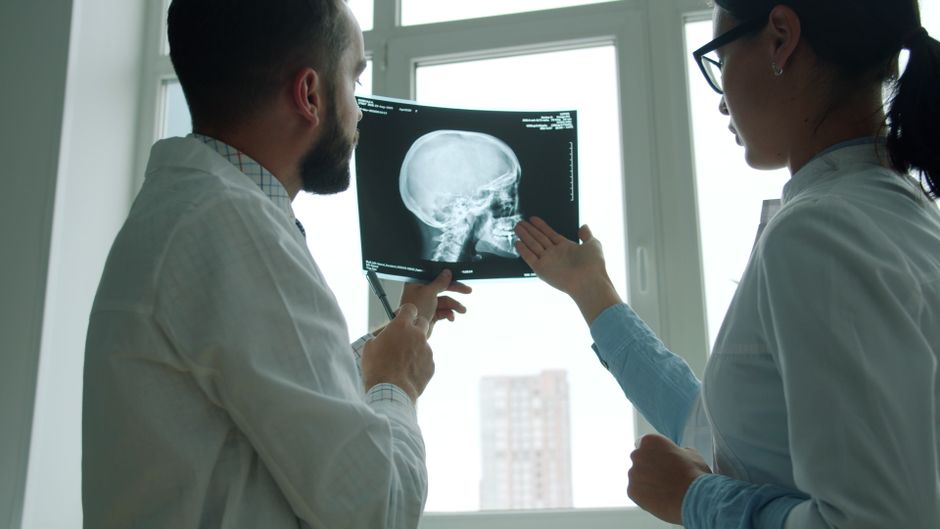
Validated clinical decision rules, including the NICE head injury guidelines and criteria used by emergency physicians internationally, identify key risk factors: loss of consciousness, amnesia around the event, two or more vomiting episodes, age over 65, suspected skull fracture, anticoagulant medication, and a high-energy mechanism without a helmet. A fall from a scooter on the Patong hill roads without a helmet qualifies as a significant mechanism under these criteria, even at low speed.
Feeling fine afterwards is not sufficient evidence of safety in an unprotected fall.
At Takecare Clinic Phuket, we apply these decision rules during your assessment. If imaging is indicated, we refer you to the appropriate facility with the clinical information already documented, which is faster and better coordinated than arriving without a prior assessment. If you need documentation for your travel insurer, we can provide that at the same visit. For comprehensive post-accident care, see our motorbike accident care page.
Flying and Diving After a Head Injury
These are two common questions after a fall.
On flying: guidance on flying with active concussion symptoms is not uniform, and at least one large study of athletes found no association between flying soon after concussion and worse outcomes. Cabin pressure changes are not the main concern in a mild concussion. The concern is being enclosed, far from care, with symptoms that could escalate. If you have active symptoms and a flight within 24 to 48 hours, a fitness to fly certificate from the clinic documents the clinical picture for your airline and insurer. If symptoms have fully resolved and you have been cleared by a physician, most guidance does not prohibit flying, but that clearance needs to come from a clinical assessment, not a self-check.
On diving: cancel the morning dive and get assessed first. After surfacing, neurological symptoms from decompression sickness and delayed concussion can look almost identical. Treating the wrong one carries real risk. Most dive medicine guidance requires physician clearance before returning to the water after any head injury. We can include dive fitness in the post-injury assessment at Takecare Clinic Phuket.
For any wounds from the fall itself, our wound care service covers road rash and lacerations at the same visit.
If you have hit your head after a scooter fall in Phuket and are unsure whether you need to be seen, do not wait it out. Takecare Clinic Phuket is a walk-in clinic in Patong with no appointment needed and an English-speaking physician available for head injury assessment, clinical documentation, and referral for imaging when indicated. We also provide fitness to fly certificates and medical certificates for travel insurance claims. Walk in to 34/14 Prachanukhro Road, Kathu District, Patong, or call ahead if you need guidance on whether to come in or go directly to hospital.
Frequently Asked Questions
Dr. Ponlawat Pitsuwan
Physician, Takecare Medical Clinic Phuket
a walk-in medical clinic in Patong with no appointment needed and English-speaking physician care available across the island. He sees tourists, expats, and residents for head injury assessment, concussion evaluation, post-accident care, and referral for imaging and specialist review when indicated. His focus is evidence-based care delivered in plain language.
References
- National Institute for Health and Care Excellence. Head injury: assessment and early management (NG232). NICE, 2023.
- Kuppermann N, et al. Identification of children at very low risk of clinically-important brain injuries after head trauma: a prospective cohort study (PECARN). Lancet. 2009;374(9696):1160-1170.
- Divers Alert Network. Concussions and Diving. Alert Diver.
- Centers for Disease Control and Prevention. Heads Up: Concussion Signs and Symptoms. CDC, 2024.
- NHS Highland. Air Travel Advice Following a Head Injury. NHS Highland Patient Information.
The information in this article is for educational purposes only and does not constitute medical advice. It should not be used to self-diagnose or replace a consultation with a qualified physician. If you have concerns about your health, contact a licensed medical professional. For appointments at Takecare Clinic Phuket, visit takecareclinicphuket.com.
