
Clinically reviewed by Dr. Ponlawat Pitsuwan, Physician, Takecare Clinic Phuket.
Last reviewed: November 2026
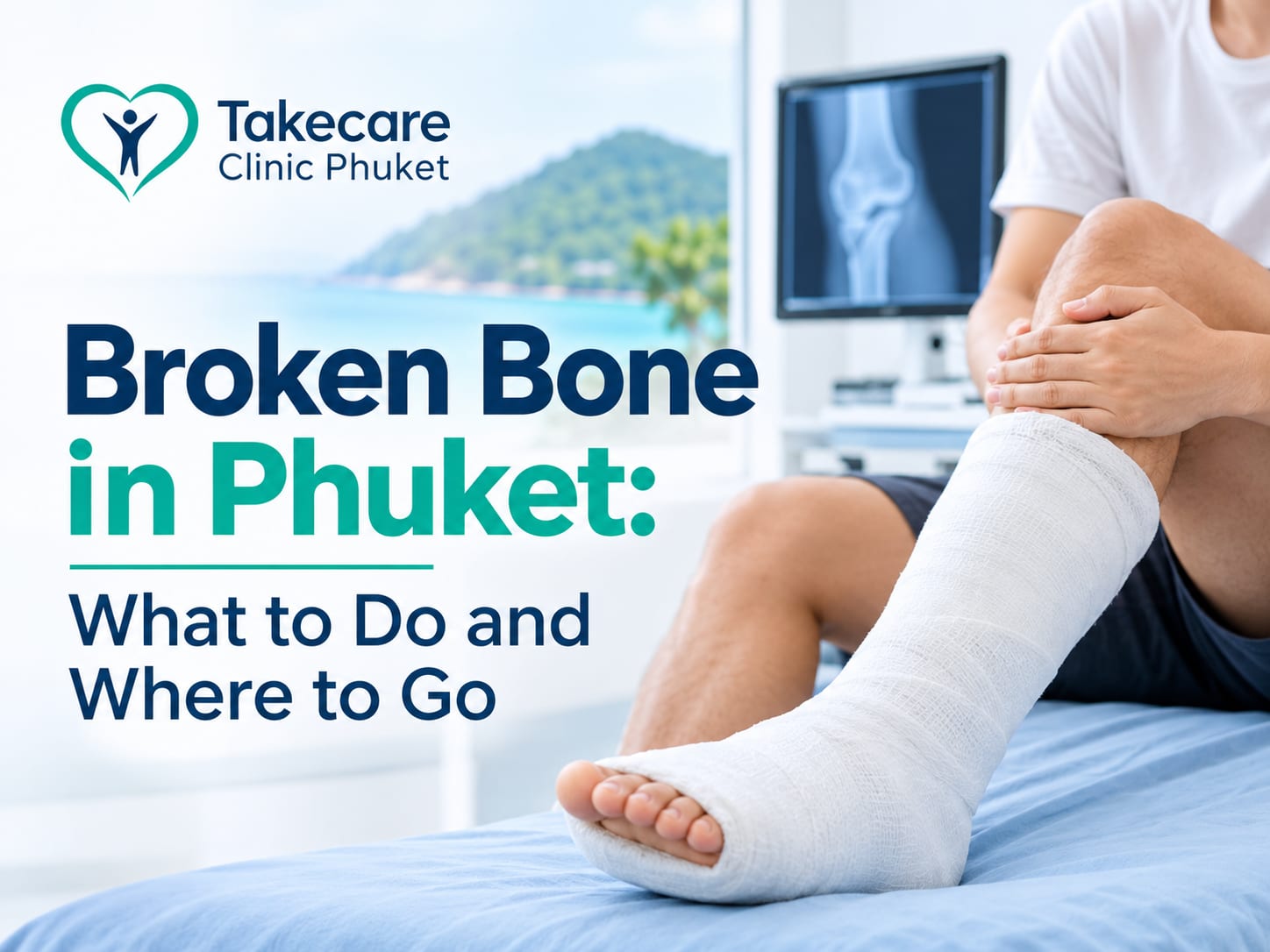
If you think you have broken a bone in Phuket, the first step is not a hospital queue. A walk-in clinic can examine you, arrange an X-ray, splint the injury, and give you the paperwork your insurer needs, all in one visit. Open fractures, suspected spinal injuries, and injuries with numbness or no pulse below the break need emergency hospital care straight away.
You rented a scooter in Patong, took the hill road toward Kata, and went down on a corner. Your wrist took most of it. Now it is swollen, tender to the touch, and you cannot tell if it is broken or badly twisted. Your flight home is in four days and you are Googling symptoms in the back of a songthaew.
This is one of the most common injury patterns on the island. Scooter falls, reef stumbles near Kata and Karon, pool deck slips, and beach football on Surin all produce the same question: broken or not? You cannot answer that without an X-ray. What you can do right now is stabilise the limb, stop using it, and get to a clinic.

Sprain vs Fracture: Why You Cannot Tell From the Outside
Swelling and bruising do not tell you which one you have. Both a sprain and a fracture can produce significant swelling within minutes, especially in Phuket’s heat. The swelling here often appears faster than visitors from Northern Europe or Australia expect from experience at home.
What does point to a fracture is point tenderness: sharp pain when you press directly on a specific spot on the bone, not the surrounding soft tissue. Inability to bear weight for four steps is another strong indicator, particularly for ankle and foot injuries. Visible deformity, a step or angle where there should not be one, makes the decision straightforward.
Clinically, the Ottawa Ankle Rules guide when an X-ray is needed for ankle and foot injuries. In plain terms: if there is bony tenderness at specific points on the ankle, or you cannot walk four steps, the ankle needs imaging. If you are in doubt, come in.
When to Go Straight to a Hospital
Most fractures do not need an ambulance. These ones do.
An open fracture, where bone is visible through the skin or a wound sits directly over the break, is a surgical emergency. Go directly to hospital. Suspected spinal injury after a motorbike accident or a fall from height means do not move the person. Call for emergency help immediately.
Any fracture where the limb below the break has gone cold, pale, numb, or pulseless needs emergency vascular assessment, not a walk-in clinic. These are injuries where time matters in minutes. For everything else, a walk-in clinic is the right first step and will save you hours in a hospital waiting room.
First Aid Before You Get to a Clinic
Immobilise the limb. For a wrist or forearm, a folded magazine or firm cardboard tied gently in place does the job until you reach the clinic. For an ankle, keep weight off it completely. The goal is to hold the joint above and below the suspected break so it does not move.
Apply ice wrapped in a cloth, never directly on skin, to reduce swelling. Elevate the limb above the level of your heart if you can. Do not try to straighten a deformed limb yourself.
If the fall also produced road rash or a wound, this needs attention at the same visit. Tropical wounds in Phuket’s heat and humidity can become infected quickly, often faster than visitors from cooler climates expect. A scooter fall on a road like Route 4028 almost always combines a suspected fracture with abrasion. Both need to be cleaned and assessed together at the same visit.
Broken Bone in Phuket: X-Ray and Hospital Referral
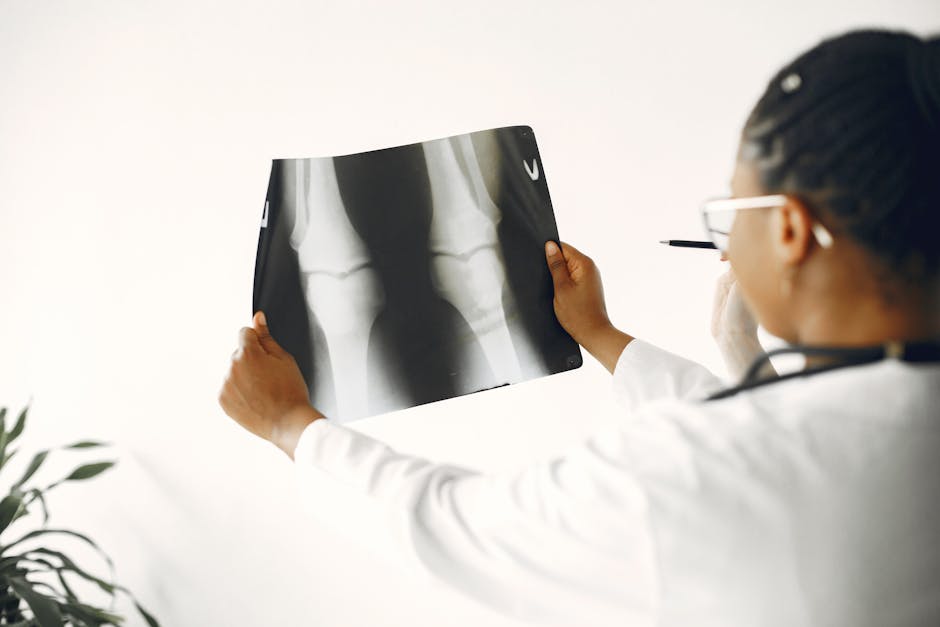
An X-ray is the only way to confirm a fracture. At Takecare Clinic Phuket in Patong, straightforward fractures of the wrist, hand, foot, and ankle can be assessed, splinted, and documented with no appointment needed and an English-speaking doctor throughout. For fractures needing orthopaedic surgery, manipulation under anaesthetic, or specialist imaging, we provide a direct referral to an appropriate hospital with a written referral letter for the receiving team.
For your travel insurance claim, you need specific documents. Get a dated X-ray with a written radiology report. Get a discharge note that names the diagnosis and treatment in English. Keep every receipt, and ask for a referral letter if you need follow-up at home. Insurers regularly reject claims that are missing a formal diagnosis document. Request all of this at the time of treatment.
If the fracture involves the spine, pelvis, or femur, or if there is any sign of vascular or nerve injury, the right place is a hospital with orthopaedic and surgical capability. The clinic will tell you this clearly and arrange the referral. You can find more about what to expect when a motorbike accident is involved at our motorbike accident care page.
Casts in Phuket’s Heat and Humidity
A plaster-of-Paris cast and Phuket’s climate are not a good combination. Plaster weakens when wet, loses its ability to hold the fracture in position, and creates an environment under the cast where skin breaks down quickly. In heat and humidity, this happens faster than you might expect. If a plaster cast gets soaked, come back to the clinic the same day.
Fibreglass casts fitted with a waterproof liner tolerate limited water exposure better, but this does not mean you can swim or snorkel. Ask your doctor specifically what your cast can handle before making plans near the water.
Itching and odour under a cast are common in tropical heat. Do not push objects down the cast to scratch. Check daily that your fingers or toes are warm, the same colour as the other side, and that you can move them. Increased pain, numbness, or a cast that feels suddenly loose or tight all need same-day review.
Flying Home With a Broken Bone
Standard clinical guidance says that a tubular cast applied less than 48 hours before a flight should be split or bivalved before you board, regardless of flight length, because air trapped in fresh plaster expands at altitude and can cause harmful pressure. For long-haul flights, particularly the ten-plus-hour journey from Phuket to Europe or Australia, the concern is deep vein thrombosis (DVT), a blood clot that can form in the leg when circulation is reduced by a cast and prolonged sitting.
For long-haul travel with a lower leg cast, a bivalved cast may be recommended. This means the cast is split down both sides and held with bandage wrapping, allowing for swelling and reducing pressure on circulation during the flight. Your doctor will advise whether this applies to your injury.
Get a fit-to-fly certificate before you board. Some airlines require it. Takecare Clinic Phuket can provide this at the time of your injury assessment or at a follow-up visit. See our Fit to Fly Certificate page for details. Call your airline before you travel, as some have specific policies on casts and may require a medical clearance letter as well.
The Scooter Fracture Pattern in Phuket
Motorbike and scooter injuries here follow a consistent pattern. The fall usually produces a handlebar wrist fracture, road rash across one or both forearms, and sometimes a knee or ankle injury from the bike landing on the leg. Helmets are often not worn, which means a head injury alongside the limb fracture is possible and needs to be checked.
A wrist that is painful but not obviously deformed after a scooter fall still needs imaging. Hairline and undisplaced fractures look almost like a bad sprain from the outside. The fracture is in the X-ray, not in the appearance of the wrist.
Road rash from Phuket’s roads needs proper wound care at the same visit: cleaning, removal of any grit or debris, and appropriate dressing. These wounds get infected quickly here. Your tetanus status should be confirmed at the same time. Do not leave with only one of the two injuries addressed. Our wound care in Phuket page covers what that assessment involves. If you have any concerns beyond the fracture itself, our emergency doctor service is available when the injury is more complex.
Suspected broken bone in Phuket? Takecare Clinic Phuket in Patong is open for walk-in care with no appointment needed. We can assess your injury, arrange an X-ray, splint the fracture, and provide the documentation you need for travel insurance and follow-up care at home. English-speaking physician care is available across the whole island, including Kata, Karon, Rawai, Bang Tao, and Phuket Town. Come in, or contact us to arrange a doctor visit to your hotel.
Frequently Asked Questions
Dr. Ponlawat Pitsuwan
Physician, Takecare Medical Clinic Phuket
a walk-in medical clinic based in Patong with no appointment needed and English-speaking physician care for the whole island. He sees tourists, expats, and residents across Phuket for fracture assessment, wound care, post-injury documentation, and referral to orthopaedic specialists when needed. His focus is straightforward, evidence-based care delivered in plain language.
References
- Stiell IG, Greenberg GH, McKnight RD, et al. Decision rules for the use of radiography in acute ankle injuries. Refinement and prospective validation. JAMA. 1993;269(9):1127-1132.
- GPnotebook. Plaster cast and air travel. GPnotebook clinical reference.
- GPnotebook. Fracture and air travel. GPnotebook clinical reference.
- Physitrack. Ottawa Ankle Rules: Clinical Decision Criteria and When to Order an X-Ray.
- Stiell IG, McKnight RD, Greenberg GH, et al. Implementation of the Ottawa ankle rules. JAMA. 1994;271(11):827-832.
The information in this article is for educational purposes only and does not constitute medical advice. It should not be used to self-diagnose or replace a consultation with a qualified physician. If you have concerns about your health, contact a licensed medical professional. For appointments at Takecare Clinic Phuket, visit takecareclinicphuket.com.
