
Clinically reviewed by Dr. Ponlawat Pitsuwan, Physician, Takecare Clinic Phuket.
Last reviewed: November 2026
Phuket has two main government hospitals and several private hospitals with international patient services. For most tourist presentations, a walk-in clinic is faster and cheaper than either. Private hospitals offer the strongest English support and direct billing with many travel insurers, but require an upfront deposit for non-emergency care. Government hospitals cost less but English availability varies and waits are longer. Know which option fits your situation before you need it.
You are three days into a Kata surf trip and the reef wound from yesterday looks angrier than it did last night. It is red around the edges, warm to touch, and you are trying to decide whether this needs a hospital or whether you are overreacting. That decision, made quickly and correctly, can save you hours in a waiting room and several thousand baht.
Phuket has more medical options than most visitors realise: two government hospitals, a cluster of private hospitals with international departments, and walk-in clinics that handle the majority of what tourists and expats actually need day to day. This guide lays out what each option does well, what it costs, and how to pick the right one without guessing.

Private Hospitals in Phuket for Foreigners
Bangkok Hospital Phuket is the most internationally focused private hospital on the island. It holds JCI accreditation, has dedicated international patient coordinators, and most senior doctors speak functional English. It is in Phuket Town and handles everything from cardiac care to complex surgery.
Phuket International Hospital is on Chalermprakiat Road and also has an international patient unit. English support is generally solid. It sees a high volume of tourist-related cases and runs a 24-hour emergency department.
Siriroj Hospital, now operating as Bangkok Hospital Siriroj, is part of the Bangkok Dusit Medical Services (BDMS) private network and is located on Chalermprakiat Ror 9 Road (the Bypass Road) in Phuket Town. It handles more complex referral cases and specialist care. English support exists but is less consistent than at Bangkok Hospital Phuket.
Mission Hospital Phuket, on Thepkrasattri Road, is a mid-tier private option. It is quieter than Bangkok Hospital, pricing is generally lower, and it handles common inpatient and outpatient needs well.
Government Hospitals: Vachira and Patong
Vachira Phuket Hospital is the main government referral hospital on the island. It has the most advanced trauma and intensive care capacity available here. There is an international department where staff can help foreigners register, but English fluency among clinical staff varies and waits at the emergency department can run several hours.
Patong Hospital is the government facility serving the main tourist area. It is smaller than Vachira and handles routine urgent care, but serious cases are typically transferred to Vachira or a private hospital. It is walking distance from the beach strip, which matters when you need to get there fast.
Foreigners are charged higher rates than Thai nationals at government hospitals. This is a formal dual-pricing structure. Rates are still substantially lower than private hospitals, but do not expect to pay the same as a local patient.
What Each Option Handles Best
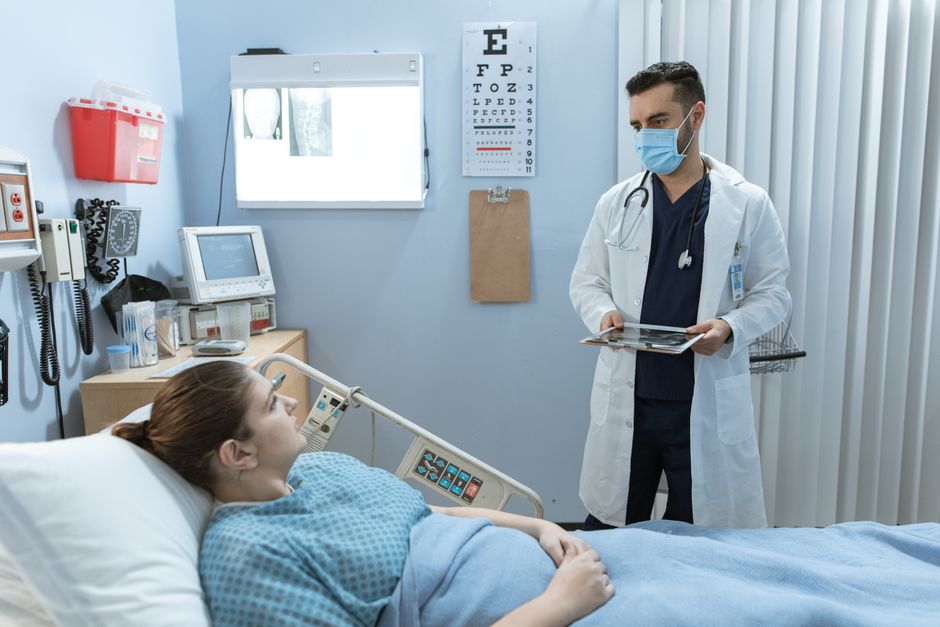
Private hospitals handle trauma, cardiac events, surgery, and inpatient specialist care with the strongest English support. If you are brought in after a serious road accident on Route 4028 or the Patong hill roads, Bangkok Hospital Phuket and Phuket International Hospital both have the capacity to manage it.
Vachira has the island’s highest-level intensive care. If a private hospital cannot manage a case in-house, Vachira is often where the transfer goes.
For the cases that fill most tourist clinic visits, neither a government nor a private hospital is the right first stop. Swimmer’s ear after a few days in Bang Tao, traveller’s diarrhoea after seafood at Rawai market, a UTI, a mild fever, a prescription refill, a stray dog bite needing a rabies assessment, road rash from a scooter spill: these are clinic-level problems. Sending them to a hospital emergency department adds cost and waiting time without adding clinical value.
Typical Costs and Insurance at Phuket Hospitals
A private hospital outpatient consultation alone typically costs several times more than the same consultation at a walk-in clinic. Emergency department fees, facility charges, and specialist billing stack up quickly even for straightforward presentations.
Government hospitals are cheaper, but the dual-pricing structure means foreigners pay more than the standard Thai rate. For uninsured visitors, the out-of-pocket difference between a private hospital and a walk-in clinic for a minor condition can be significant.
Most major private hospitals in Phuket, Bangkok Hospital Phuket in particular, have direct billing agreements with international travel insurers. Your insurer pays the hospital directly and you do not front the cost. Before a non-emergency visit, check your insurer’s direct billing list and have their 24-hour assistance line saved in your phone.
For non-emergency care at a private hospital, an upfront deposit is standard. For major procedures this can be a very large sum. If you are uninsured and face an admission, ask the billing desk directly what is required before you agree to anything beyond emergency stabilisation.
When a Walk-In Clinic Is the Right First Call
Most of what brings tourists and expats to medical care in Phuket does not need a hospital at all. Ear infections after diving near Phi Phi, food poisoning after a Patong buffet, mild diarrhoea treatment, a sinus infection, sunburn, jellyfish stings, minor wound care, skin infections, a fever without red-flag signs: all of these are handled quickly and affordably at a walk-in clinic, with no appointment, no deposit, and an English-speaking doctor.
Takecare Clinic Phuket is based in Patong and covers the whole island. Walk in, no appointment needed, English-speaking physician care, and fees that do not require a travel insurance claim for a simple consultation.
The conditions that do need a hospital emergency department: chest pain, signs of stroke, a head injury with any loss of consciousness, difficulty breathing, severe dehydration that cannot be managed with oral fluids, signs of dengue complication such as bleeding or a sudden drop in alertness, and severe abdominal pain. For those, go directly to an emergency department. For everything else, a clinic is usually faster, less expensive, and entirely appropriate.
Wound care is worth calling out specifically. In Phuket’s heat and humidity, a reef cut or road rash wound can show signs of infection faster than you would expect from experience at home. Redness spreading beyond the wound edge, warmth, swelling, or any discharge within 24 to 48 hours warrants a same-day assessment. For scooter injuries and motorbike accident wound care, or for reef and coral cuts that need proper cleaning, we can assess and treat these the same day at the clinic. If you are unsure whether your situation needs a hospital or a clinic, our walk-in doctor page walks through that decision clearly.
Transfers to Bangkok from Phuket
Phuket’s private hospitals handle the majority of serious cases on the island without needing to transfer. There are situations where a Bangkok transfer is the right clinical call: highly specialised neurosurgery, complex paediatric cases, certain oncology presentations, or any case where a Phuket specialist is not available in-house.
Private hospitals arrange transfers when their own capacity is exceeded. Options include commercial flight with a medical escort, a dedicated air ambulance, and ground transfer to Phuket Airport. Air ambulance is expensive. Without insurance coverage that specifically includes medical evacuation, the cost falls entirely on the patient.
If a transfer is being discussed, contact your travel insurer’s assistance line immediately. Do not wait until after the transfer is arranged. Insurers often need to pre-authorise evacuation or they will not cover it. Have your policy number and the insurer’s 24-hour line accessible before you travel.
Not sure whether your situation needs a hospital, a clinic, or just a pharmacist? Takecare Clinic Phuket is a walk-in medical clinic in Patong with no appointment needed, an English-speaking physician, and extended hours for tourists and residents across the whole island. We handle the majority of what visitors and expats need day to day, from wound care and infections to prescription refills and travel health. Walk in or contact us through takecareclinicphuket.com.
Frequently Asked Questions
Dr. Ponlawat Pitsuwan
Physician, Takecare Medical Clinic Phuket
a walk-in medical clinic based in Patong with no appointment needed and English-speaking physician care for the whole island. He sees tourists, expats, and residents across Phuket for urgent care, travel health, wound management, and ongoing medical needs, and helps patients navigate the full range of medical options available on the island. His focus is straightforward, evidence-based care delivered in plain language.
References
- Bangkok Hospital Phuket. Joint Commission International Accreditation (JCI). Bangkok Dusit Medical Services, 2025.
- Bangkok Hospital Siriroj. Our Story. Bangkok Dusit Medical Services, 2024.
- World Health Organization. Rabies: Post-Exposure Prophylaxis. WHO Fact Sheet, 2023.
- Centers for Disease Control and Prevention. Travelers’ Health: Thailand. CDC, 2024.
- Phuket101. Phuket Hospitals and Clinics. Phuket101.net, 2024.
- Centers for Disease Control and Prevention. Dengue Clinical Guidance for Healthcare Providers. CDC, 2024.
The information in this article is for educational purposes only and does not constitute medical advice. It should not be used to self-diagnose or replace a consultation with a qualified physician. If you have concerns about your health, contact a licensed medical professional. For appointments at Takecare Clinic Phuket, visit takecareclinicphuket.com.
