
Clinically reviewed by Dr. Ponlawat Pitsuwan, Physician, Takecare Clinic Phuket.
Last reviewed: October 2026
GLP-1 medications like semaglutide (Ozempic, Wegovy) and tirzepatide (Mounjaro) slow digestion. Foods high in fat, sugar, or large in volume sit longer in your stomach and make nausea, bloating, and vomiting worse. Alcohol compounds the problem, especially in heat. The foods to avoid on GLP-1 are not complicated, but knowing which ones cause the most trouble in a Phuket setting makes a real difference.
A week into your Phuket stay, on Ozempic or Wegovy, and last night’s Patong hotel buffet has left you feeling genuinely awful. The deep-fried station, the coconut curry, the dessert table you visited twice. Your stomach has not forgiven you. This is almost entirely avoidable.
GLP-1 medications slow how quickly food leaves your stomach. That is partly how they work. But it also means the wrong meal sits there and causes trouble. High-fat foods, large portions, sugary drinks, and alcohol all press hard on a digestive system already running slower than normal. What follows is practical guidance on which foods cause the most problems, and what eating out in Phuket on a GLP-1 actually looks like.
Why GLP-1s Slow Your Digestion and Why That Changes What You Eat
These medications slow how quickly food moves from your stomach into your gut. That slower transit reduces appetite and helps with blood sugar. But it also means your stomach stays fuller longer, stretches more easily, and becomes more sensitive to certain foods.
Eating the same portions you ate before starting these drugs is one of the fastest ways to trigger nausea. Your stomach signals fullness sooner now. Pushing past that signal, especially with rich, fatty, or high-volume food, is when mild discomfort becomes vomiting.
The effect is strongest in the first several weeks of treatment and after each dose increase. If you are in that window and traveling in Phuket, your food choices matter more than at any other point in your treatment.
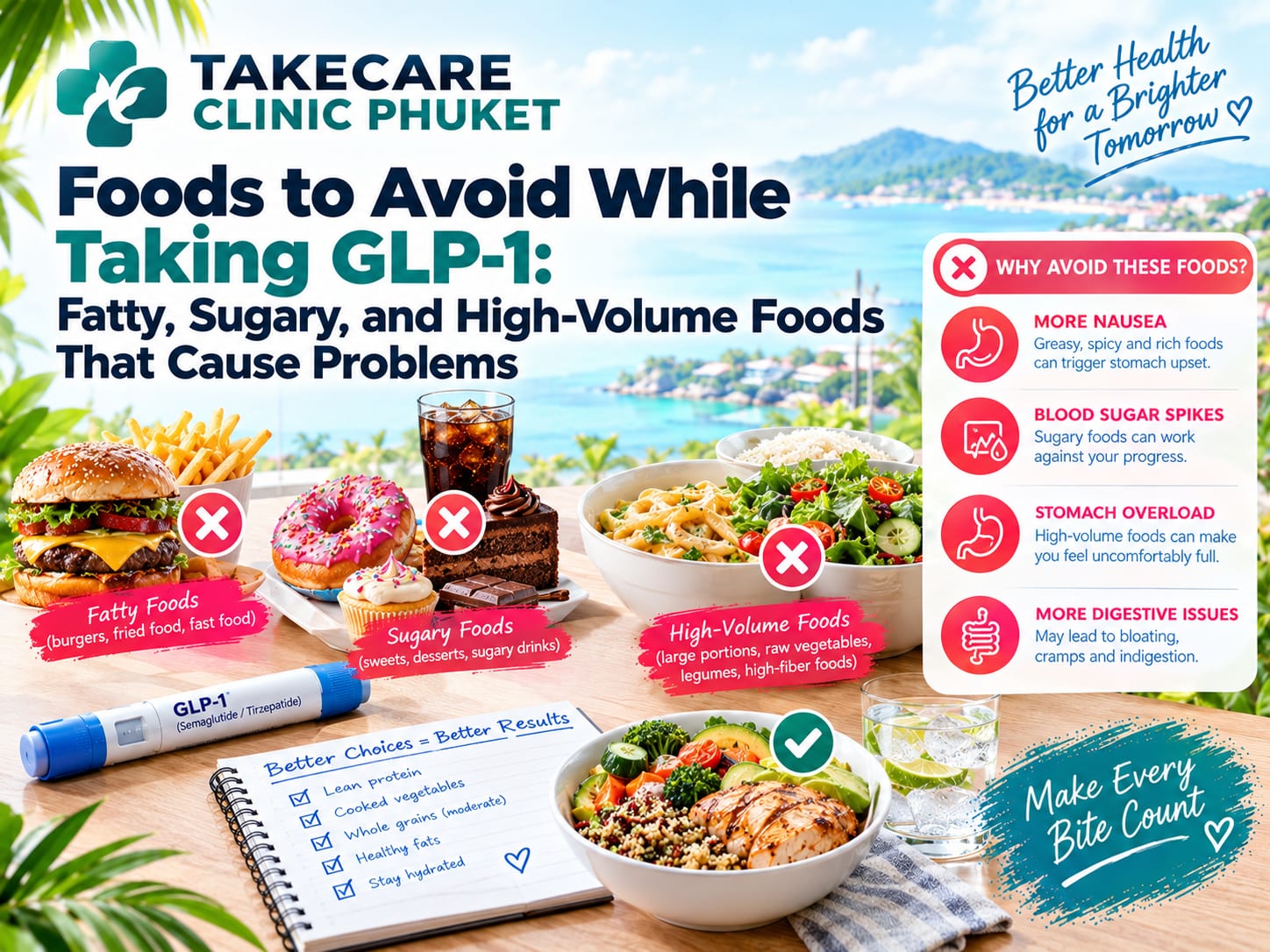
Why Fatty Foods Are the Biggest Problem on GLP-1s
Fat takes longer to digest than protein or carbohydrate. On a GLP-1, that delay is amplified. A high-fat meal can sit in your stomach for hours, driving nausea, reflux, and in some cases vomiting.
The foods that cause the most problems are deep-fried items, fatty cuts of meat, heavy cream sauces, full-fat dairy in large amounts, and coconut-cream-based dishes. In Phuket, this covers a wide range of popular options: massaman curry, panang curry, deep-fried whole fish, fried rice cooked in excess oil, and the deep-fried street food common at the Patong and Cherng Talay night markets.
Grilled, steamed, or lightly stir-fried is a completely different picture. The issue is cooking method and fat content, not Thai cuisine as a whole.
If you are unsure whether fatty foods are driving your symptoms, the doctor on call services at Takecare Clinic Phuket cover the whole island, so you can get a same-day review without travelling far.

Sugary Foods and Refined Carbs to Limit on GLP-1 Medications
Sugar and refined carbohydrates cause rapid blood sugar spikes. On a GLP-1, this works directly against the medication’s goal of improving blood glucose control.
Practically, this means limiting white rice in large portions, sweetened drinks including Thai iced tea and fruit juices, desserts, pastries, and white bread. The issue is not a single bite. It is a meal dominated by refined carbs with little protein or fibre to slow absorption.
Vegetables, legumes, and oats contain soluble fibre that slows glucose absorption and works well alongside GLP-1 therapy. Lean protein, including chicken breast, fish, tofu, and eggs, helps you feel full without the gastric load of fat. These are the foods that work with the medication rather than against it.
High-Volume Foods and Eating Speed
A large salad sounds like the right call. But volume matters on its own, regardless of what the food is. On a GLP-1, your stomach sends a fullness signal sooner. A high-volume meal, even a healthy one, can trigger nausea if eaten too quickly or in too large a portion.
Smaller portions, eaten slowly, is the practical answer. Stop before you feel full, because on these medications the full signal arrives late. Buffet formats make this harder. Patong hotel buffets in particular are designed around appetite, not satiety signals, and constant top-ups make portion tracking difficult. Carbonated drinks add gas to a stomach already moving slowly. Still water in small amounts with meals is the better choice.
Alcohol and GLP-1 Medications in a Resort Setting
Alcohol is not absolutely off the table on GLP-1 medications, but the risks are more layered than most people expect, and Phuket makes them worse. Alcohol worsens nausea directly. It also causes dehydration, and in Phuket’s heat, whether you are at a beach club in Surin or on Bangla Road in the evening, you are already losing more fluid than you would at home. Dehydration and nausea together can progress faster than people from cooler climates anticipate.
Alcohol can increase the risk of low blood sugar mainly when a GLP-1 is used alongside insulin or a sulfonylurea. On a GLP-1 alone the risk is lower, but drinking without eating enough still warrants caution. One drink with food is a very different situation from several drinks on a light stomach.
During your first weeks on a GLP-1, or after a dose increase, the safest call is to avoid alcohol entirely. After that window, one drink with a meal and extra water alongside is a reasonable approach for most people. Spirits mixed with sugary drinks, large quantities of beer, and drinking on an empty stomach are all high-risk combinations.
Eating Out in Phuket on a GLP-1: Practical Guidance
Thai restaurant menus are entirely navigable on a GLP-1. The issue is preparation and portion size, not the cuisine itself. Tom yum soup, grilled chicken or fish, papaya salad, clear broths, and steamed jasmine rice in a modest portion all work well. Som tam, larb with grilled meat, and most seafood dishes without heavy sauce are reasonable choices.
The dishes to be cautious with are those involving visible oil, heavy coconut milk, deep-frying, or very large portions of noodles in thick sauce. Pad krapow lightly cooked is fine. Pad see ew with a large noodle portion and heavy sauce is a different situation.
The Rawai seafood market is one of the best options on the island for GLP-1 users: fresh grilled fish and shellfish with moderate seasoning, straightforward portions, and almost no heavy sauce in sight. When eating at a resort buffet, use a smaller plate, visit once, and wait before going back. Most GLP-1 side effects in a resort setting come from the buffet format, not any single dish.
When GLP-1 Side Effects Need a Doctor
Mild nausea after a high-fat meal is common and expected, especially early in treatment. That is not the problem. The problem is when symptoms do not stop. Repeated vomiting, inability to keep fluids down, dizziness, or signs of dehydration, including dark urine, dry mouth, or feeling faint, are not a normal part of GLP-1 therapy.
Severe upper abdominal pain, especially pain that spreads to the back, is a red flag. That needs urgent attention, not a wait-and-see approach.
Takecare Clinic Phuket in Patong is open for walk-in visits with no appointment needed. If you cannot keep fluids down, same-day IV rehydration is available. For expats and long-stay residents managing ongoing GLP-1 prescriptions, we also handle prescription refills in Phuket without a referral. Do not manage persistent vomiting at home with the assumption it will pass.
Managing GLP-1 side effects in Phuket, or looking for physician support for semaglutide or tirzepatide therapy while you are on the island? Takecare Clinic Phuket is a walk-in clinic in Patong with no appointment needed, English-speaking physician care, and same-day availability for GLP-1-related concerns including nausea, vomiting, dehydration, and prescription support. We see tourists, expats, and long-stay residents across the whole island.
Frequently Asked Questions
Dr. Ponlawat Pitsuwan
Physician, Takecare Medical Clinic Phuket
a walk-in medical clinic in Patong with no appointment needed and English-speaking physician care for the whole island. He sees tourists, expats, and residents across Phuket for GLP-1 medication management, side effect review, dietary guidance, and ongoing chronic condition care.
References
- Wilding JPH, Batterham RL, Calanna S, et al. Once-Weekly Semaglutide in Adults with Overweight or Obesity. N Engl J Med. 2021;384(11):989-1002.
- Jastreboff AM, Aronne LJ, Ahmad NN, et al. Tirzepatide Once Weekly for the Treatment of Obesity. N Engl J Med. 2022;387(3):205-216.
- US Food and Drug Administration. Mounjaro (tirzepatide) prescribing information. 2022.
- EMJ Reviews. Weighing up the Risks: GI Side Effects of Semaglutide vs Tirzepatide. 2025.
- American Diabetes Association. Standards of Medical Care in Diabetes. Diabetes Care. 2024.
The information in this article is for educational purposes only and does not constitute medical advice. It should not be used to self-diagnose or replace a consultation with a qualified physician. If you have concerns about your health, contact a licensed medical professional. For appointments at Takecare Clinic Phuket, visit takecareclinicphuket.com.
