
Clinically reviewed by Dr. Ponlawat Pitsuwan, Physician, Takecare Clinic Phuket.
Last reviewed: October 2026
GLP-1 medications like semaglutide and tirzepatide slow how fast your stomach empties. This makes food choices matter more than on most other weight-loss approaches. Prioritise lean protein and fibre-rich foods at every meal. Avoid large portions, high-fat dishes, and alcohol. If nausea stops you drinking fluids for more than a day, see a doctor rather than adjusting your diet alone.
You are three weeks into semaglutide, staying somewhere between Kata and Patong, and the resort buffet has become genuinely difficult. Everything looks like too much. You managed half a plate of fried rice last night and felt sick for two hours after. You are not doing anything obviously wrong. Nobody told you how differently your stomach behaves on this medication, or which foods here will help and which will set you back.
GLP-1 receptor agonists, the drug class that includes semaglutide and tirzepatide, work partly by slowing gastric emptying, the rate at which food moves out of your stomach. That is what creates the full feeling. It is also what makes a heavy, fatty, or oversized meal land so badly. Once you understand which foods work with the medication rather than against it, eating becomes much more manageable, even in Phuket’s food environment.
Why Food Choices Hit Differently on GLP-1
Most weight-loss approaches ask you to eat less and leave it there. GLP-1 medications change the mechanics of digestion itself. Your stomach empties more slowly. Your appetite signals shift. Reduced appetite can also lead to lower fluid intake overall, which many patients do not expect.
A meal that would have been fine before can now sit heavy for hours. Fat is the biggest driver. High-fat food slows gastric emptying further on top of what the medication is already doing. The result is bloating, nausea, and sometimes vomiting, not because you are intolerant of the food, but because the timing has changed.
Getting your food choices right does not just reduce side effects. It protects your muscle mass as you lose weight and keeps your blood sugar stable between doses. In Phuket’s climate, it also helps you stay hydrated in heat that pulls fluid from you faster than most visitors realise. People taking GLP-1 medications should not use these drugs if they have a personal or family history of medullary thyroid carcinoma or Multiple Endocrine Neoplasia type 2 (MEN 2), or a history of pancreatitis. If you are unsure whether GLP-1 medication is right for you, speak to a doctor before starting.
Protein First, The Most Important Nutrient on GLP-1
When appetite drops significantly, most people eat less of everything. The problem is that the body does not lose fat and muscle equally. Without enough protein, a meaningful portion of the weight lost on GLP-1 medication can come from muscle rather than fat.
Most adults need somewhere between 60 and 100 grams of protein per day, though your prescribing doctor should set your individual target based on body weight. The practical rule is simpler: eat protein first at every meal, before the carbohydrate, before anything else on the plate.
In Phuket, this is easier than it sounds. Grilled fish is available everywhere. Eggs are cheap at every breakfast spread. Tofu shows up in most Thai soups. Steamed chicken or pork with rice is a staple across the island, from a Chalong local restaurant to a Patong hotel kitchen. You do not need protein powder. You need a deliberate choice at each plate.

Best Foods to Eat on GLP-1, What Actually Works
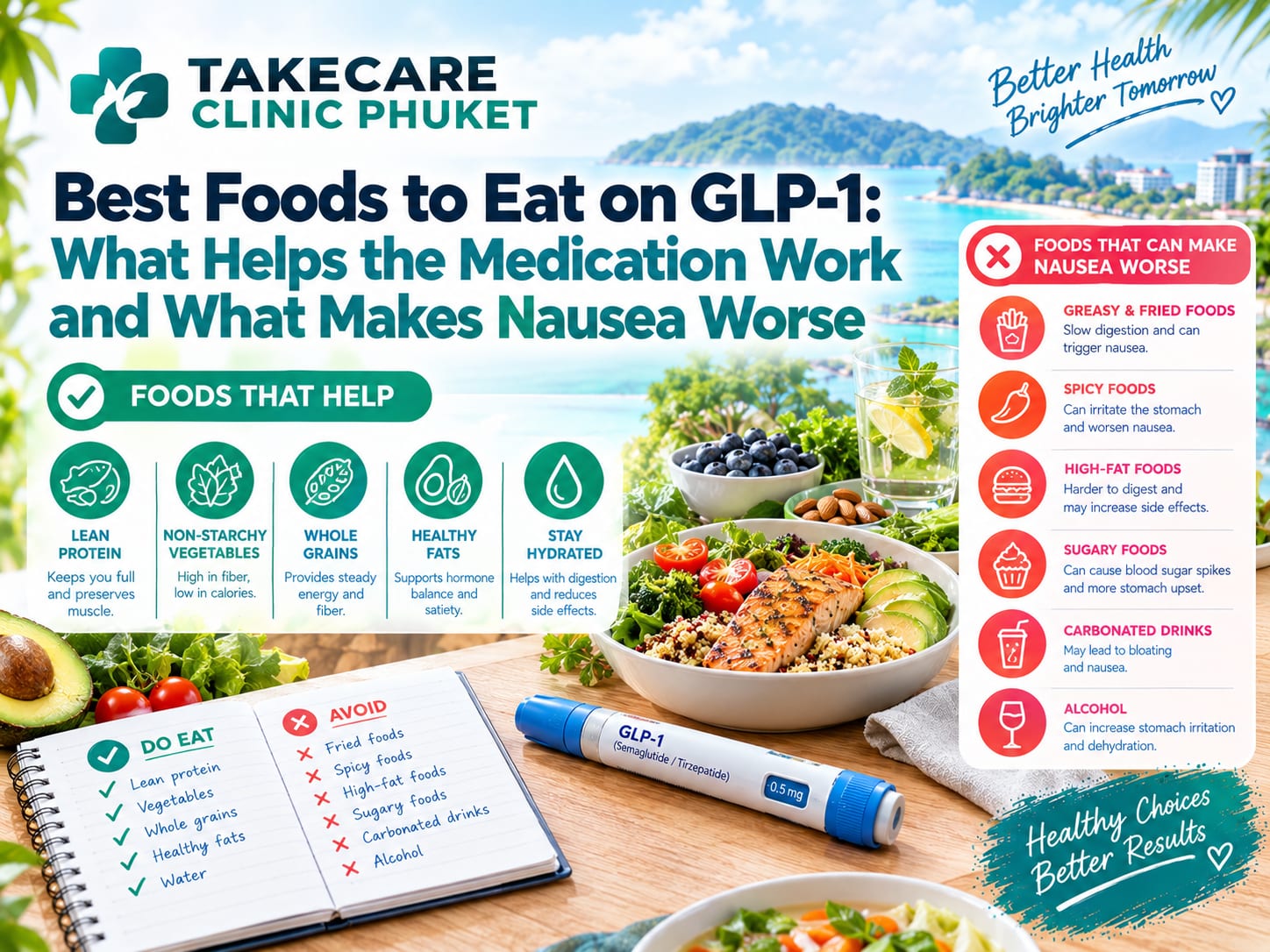
Focus on foods that are easy to digest, moderate in fat, and high in either protein or fibre. Plain steamed rice, boiled or poached eggs, grilled or steamed fish, clear soups, and soft cooked vegetables are all good starting points. These are foods your slowed stomach can handle without protest.
Fibre supports blood glucose control and keeps digestion moving. Soluble fibre, the kind found in oats, soft-cooked vegetables, and ripe fruit, is generally better tolerated than coarse insoluble fibre from raw brassicas or unprocessed bran. If vegetables cause bloating, try cooking them longer or switching varieties.
Fruit is fine in moderation. A small portion of papaya, watermelon, or mango provides fibre, hydration, and micronutrients without overloading the stomach. These are easy to find across Phuket, from the Rawai morning market to any 7-Eleven fridge.
Eating Through Nausea, What to Try When Side Effects Are Bad
Nausea tends to peak in the first few weeks and after each dose increase. This is the window where what you eat matters most. Nausea on an empty stomach is usually worse than on a settled one.
Think bland and small. Plain jasmine rice, plain congee, dry crackers, or clear broth. Cold or room-temperature foods are often better tolerated than hot ones when nausea is at its worst, because the smell is less intense. Ginger, in tea or as low-sugar ginger ale, has evidence for mild nausea relief and is widely available in Thailand. It is not a substitute for medical treatment if nausea is severe, but it is a reasonable first step.
Eat small amounts more often rather than three full meals. The goal during a bad patch is to keep something in the stomach without overwhelming it. If you cannot keep fluids down for more than a day, that is no longer a dietary problem.
Foods That Make GLP-1 Nausea Worse, What to Limit
Fatty and fried food is the main trigger. Massaman curry, deep-fried chicken, oily pad thai, and anything heavy in coconut milk will sit in a slowed stomach for a long time. This is not about avoiding Thai food entirely. It is about choosing steamed or grilled over fried, asking for lighter sauces, and skipping the extra coconut milk.
Alcohol slows gastric emptying further and lowers your judgment around food choices at the same time. It also dehydrates you in a climate that is already doing that. Spicy food can worsen reflux, which is more common on GLP-1 medications, so if you are sensitive, reduce the chilli for now.
Large portion sizes are a separate problem from food type. Even a healthy meal becomes difficult if the volume is too high. At Patong buffets, the risk is not just what you eat but how much you pile on the plate before your slowed satiety signals catch up. Understanding which foods worsen GLP-1 nausea is part of how you stay consistent with the medication long enough to see results.
Staying Hydrated in Phuket’s Heat on GLP-1
This is the risk most patients on GLP-1 medications do not see coming. The medication suppresses thirst alongside appetite. In Phuket in October, with humidity sitting above 80 percent and a full day outdoors, that is a real clinical concern.
Drink water on a schedule, not just when you feel thirsty. Choose water-rich foods: soups, fresh fruit, cucumber. If you are vomiting, you lose electrolytes alongside fluid, and plain water alone will not replace them. Coconut water, oral rehydration salts from any 7-Eleven, or electrolyte tablets are practical options here.
Dark urine, dizziness, dry mouth, and reduced urination are signs to take seriously. In Phuket’s heat, combined with a medication that mutes your thirst, dehydration can develop faster than you would expect.
What to Do When Nausea Stops You Eating or Drinking
Mild nausea that passes within a few hours is expected, especially after a dose increase. Persistent vomiting, inability to keep fluids down for more than a day, or visible signs of dehydration are different. These need a medical assessment, not another ginger tea.
At Takecare Clinic Phuket in Patong, you can walk in without an appointment and speak to an English-speaking physician the same day. We can assess hydration status, discuss dose timing, and provide anti-nausea support where appropriate. Do not stop the medication abruptly because of side effects without speaking to a doctor first. The right dose adjustment or timing change often resolves the issue.
If you are managing a GLP-1 prescription started elsewhere and need support while in Phuket, a prescription refill or medication review is something we can help with. For any side effects that feel more severe, a blood test in Phuket can also help rule out other factors affecting how you are tolerating the medication.
Managing GLP-1 side effects in Phuket, or looking for support with your medication while you are on the island? Takecare Clinic Phuket in Patong offers walk-in appointments with an English-speaking physician, no booking required. We can assess nausea, dehydration, and medication management for tourists, expats, and long-stay residents. Visit us at 34/14 Prachanukhro Road, Kathu District, Patong, or explore our services at takecareclinicphuket.com.
Frequently Asked Questions
Dr. Ponlawat Pitsuwan
Physician, Takecare Medical Clinic Phuket
a walk-in medical clinic based in Patong with no appointment needed and English-speaking physician care available across the island. He sees tourists, expats, and residents for GLP-1 medication management, nausea assessment, dehydration support, and general internal medicine. His focus is straightforward, evidence-based care delivered in plain language.
References
- Wilding JPH et al. Once-Weekly Semaglutide in Adults with Overweight or Obesity. New England Journal of Medicine. 2021.
- Jastreboff AM et al. Tirzepatide Once Weekly for the Treatment of Obesity. New England Journal of Medicine. 2022.
- Nikkhah Bodagh M et al. Ginger in gastrointestinal disorders: A systematic review of clinical trials. Food Science & Nutrition. 2018.
- Davies MJ et al. Management of Hyperglycemia in Type 2 Diabetes, 2022. A Consensus Report by the American Diabetes Association (ADA) and the European Association for the Study of Diabetes (EASD). Diabetes Care. 2022.
- Novo Nordisk. Ozempic (semaglutide) US Prescribing Information. FDA. 2021.
- Lean MEJ and Malkova D. Altered gut and adipose tissue hormones in overweight and obese individuals: cause or consequence? International Journal of Obesity. 2016.
The information in this article is for educational purposes only and does not constitute medical advice. It should not be used to self-diagnose or replace a consultation with a qualified physician. If you have concerns about your health, contact a licensed medical professional. For appointments at Takecare Clinic Phuket, visit takecareclinicphuket.com.
