
Clinically reviewed by Dr. Ponlawat Pitsuwan, Physician, Takecare Clinic Phuket.
Last reviewed: November 2026
GLP-1 medications like semaglutide (Ozempic, Wegovy), tirzepatide (Mounjaro), and liraglutide slow gastric emptying, which means food and liquid stay in your stomach longer than usual. Under general anaesthesia or sedation, that raises the risk of stomach contents entering your lungs, a serious complication called pulmonary aspiration. Earlier guidance recommended stopping weekly GLP-1 injections at least one week before any procedure involving anaesthesia or sedation, and stopping daily formulations on the day of surgery. Updated multisociety guidance from late 2024 moved away from a blanket hold for most patients and toward individualized shared decision-making between you, your surgeon, and your anaesthetist, weighing your metabolic needs against your individual aspiration risk. If you are in Phuket with a procedure scheduled and are unsure about your medication, get medical advice before your surgery date, not after.
Say you are a long-stay expat in Chalong managing your weight with a weekly Ozempic injection. A shoulder procedure at a Phuket hospital gets scheduled. Your surgeon hands you a fasting instruction sheet. Nowhere on it does it mention your GLP-1. You assume you are fine. This is the gap that causes problems.
GLP-1 drugs, the class that includes semaglutide, tirzepatide, and liraglutide, slow down how fast your stomach empties. Follow a normal nil-by-mouth fast and your stomach may still hold food or liquid from hours earlier. Under anaesthesia, that content can travel up into your airway. The hold windows exist for this reason, and they are not the same for every drug.

Why GLP-1 Medications Slow Gastric Emptying
Slowing gastric emptying is part of how these drugs work. It helps you feel full longer, which reduces how much you eat. That is useful for weight management. Before a procedure under anaesthesia, it is the problem.
Standard pre-operative fasting guidelines assume normal gastric emptying. They were not designed for patients on GLP-1 therapy. An anaesthetist following standard fasting rules on a GLP-1 patient may not know that the stomach is not empty.
Some patients develop a more pronounced slowing effect, where emptying is significantly delayed. Patients still in the dose escalation phase, those with diabetes-related nerve damage affecting the gut, or anyone experiencing nausea, bloating, or reflux on their GLP-1 carry higher risk. Those symptoms are worth disclosing to your surgical team.
The Risk Under Anaesthesia: Pulmonary Aspiration
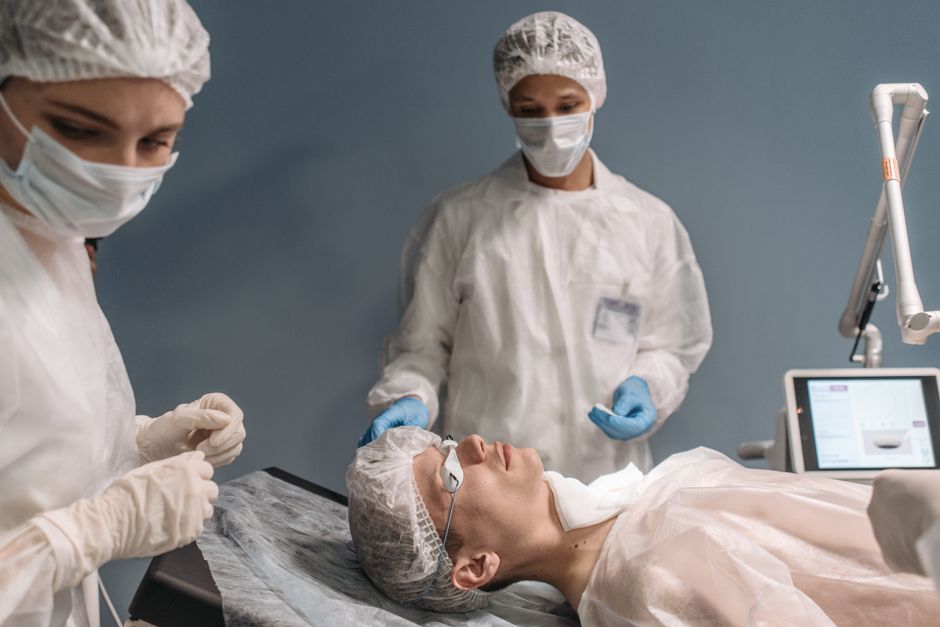
When you go under general anaesthesia or deep sedation, your normal airway reflexes are suppressed. If your stomach is not empty, its contents can move into your airway and reach your lungs. This is pulmonary aspiration, and it can cause serious lung injury or pneumonia.
This risk is not limited to full general anaesthesia. IV sedation for dental work, sedation for a colonoscopy, or a minor procedure under twilight sedation all suppress your protective reflexes to some degree. The same caution applies across all of these.
How Long Before Surgery Should You Stop GLP-1: Daily vs Weekly Dosing
This is where most patients get incomplete information. The hold window is not the same for every GLP-1 drug.
For once-daily formulations like liraglutide (Victoza, Saxenda), current guidance generally recommends holding the dose on the day of surgery. For once-weekly formulations like semaglutide (Ozempic, Wegovy) and tirzepatide (Mounjaro), the standard recommendation is to hold the last injection at least one week before the procedure.
The windows differ because of duration of action. Semaglutide has a half-life of approximately 155 hours (roughly one week), meaning meaningful drug activity persists for several weeks after your last injection. A missed dose does not reset this. If you tell your surgical team you missed your last dose, that is not the same as telling them you deliberately held it on schedule.
Some anaesthesia guidelines have considered longer hold periods for weekly agents in higher-risk patients, particularly those with GI symptoms or those still escalating their dose. Your surgical team makes that call, but only if you tell them what you are taking.
What the Current Guidelines Say
The American Society of Anesthesiologists issued guidance in 2023 recommending that weekly GLP-1 agents be held for one week before elective procedures, and that daily agents be held on the day of surgery. In October 2024, a multisociety update from the ASA, American Gastroenterological Association, and American Society for Metabolic and Bariatric Surgery reversed this position for most patients. The updated guidance recommends individualized shared decision-making rather than a routine hold, with diet modification and tailored anaesthetic planning for higher-risk patients. Patients in the early dose-escalation phase or with significant GI symptoms remain a separate consideration.
The UK Centre for Perioperative Care and a multidisciplinary UK consensus published in early 2025 also recommend that most patients continue their GLP-1 therapy, with shared decision-making and a full aspiration risk assessment rather than a blanket hold. Guidelines continue to evolve. What has not changed is the agreement across all bodies that your surgical team must know you are on a GLP-1 drug before any procedure.
Who Is at Higher Risk Before Surgery
Not every patient on a GLP-1 drug carries the same level of risk. Standard hold windows apply to stable patients on a consistent dose with no GI symptoms.
You are in a higher-risk group if you are still escalating your dose, have recently switched drugs or increased your dose, have diagnosed gastroparesis, have diabetes with autonomic nerve involvement affecting your gut, or are experiencing nausea, vomiting, or reflux on your current dose. If any of these apply, a one-week hold may not be sufficient. Your anaesthetist needs to know before the procedure date, not on the morning of surgery.
What Anaesthetists Do When They Know
When your anaesthetic team knows you are on a GLP-1 drug, they have options. They may extend your fasting period beyond the standard nil-by-mouth window. They may use rapid sequence induction, a technique for securing your airway quickly to reduce the window of risk. Some teams use bedside gastric ultrasound to check whether your stomach is empty before proceeding.
None of these mitigations work if the anaesthetist does not know you are taking a GLP-1 drug. Disclosure is not optional.
What to Tell Your Surgical Team Before Any Procedure
Tell them the exact drug name, not just "a weight loss injection." Give them your dose, how often you take it, the date of your last dose or injection, and whether you have had any nausea, bloating, or reflux recently.
If you are having a procedure at a Thai hospital and are unsure how to communicate this, raise it yourself. Ask directly: "Does my GLP-1 medication change my fasting requirements or my anaesthetic plan?" If you need support with this, an English speaking doctor in Phuket can help you prepare for that conversation before your procedure date.
Getting Pre-Surgery GLP-1 Advice in Phuket
A tourist books a procedure at a Phuket hospital. An expat has dental surgery scheduled. Neither mentioned their Ozempic or Mounjaro to the surgical team, because the intake form only asked about heart medications or antibiotics.
If your procedure is in the next few days and you have not disclosed your GLP-1 medication, contact your surgical team now. If you are managing other health questions at the same time, a prescription refill in Phuket consultation is a practical time to review your full medication list before any procedure.
Takecare Clinic Phuket in Patong is a walk-in clinic with no appointment needed. You can also use the telemedicine service in Phuket if you are across the island in Rawai, Kamala, or Bang Tao and cannot get to Patong easily. For more urgent situations, the doctor on call service covers the whole island.
A pre-operative medication review is a short consultation. It takes less time than discovering the problem on the morning of surgery.
Taking Ozempic, Wegovy, or Mounjaro and have a procedure coming up in Phuket? Do not wait until the morning of surgery to raise it. Takecare Clinic Phuket in Patong is a walk-in clinic with English-speaking physician care and no appointment needed. We can review your medication, confirm the correct hold window for your specific drug, and help you communicate with your surgical team before your procedure date. Walk in, or use our telemedicine service if you are elsewhere on the island.
FAQ
Dr. Ponlawat Pitsuwan
Physician, Takecare Medical Clinic Phuket
a walk-in medical clinic based in Patong with no appointment needed and English-speaking physician care for the whole island. He sees tourists, expats, and residents across Phuket for pre-operative medication reviews, prescription management, and travel health consultations, including advice on GLP-1 therapy and surgical preparation. His focus is straightforward, evidence-based care delivered in plain language.
References
- American Society of Anesthesiologists. Multisociety Guidance on Preoperative Management of Patients Taking GLP-1 Receptor Agonists (October 2024 update). Surgery for Obesity and Related Diseases, 2024.
- El-Boghdadly K, et al. Multidisciplinary consensus on perioperative management of adults taking GLP-1 receptor agonists. Anaesthesia, 2025.
- Nauck MA, Quast DR, Wefers J, Meier JJ. GLP-1 receptor agonists in the treatment of type 2 diabetes – state-of-the-art. Molecular Metabolism. 2021 Mar;46:101102.
The information in this article is for educational purposes only and does not constitute medical advice. It should not be used to self-diagnose or replace a consultation with a qualified physician. If you have concerns about your health, contact a licensed medical professional. For appointments at Takecare Clinic Phuket, visit takecareclinicphuket.com.
