
Clinically reviewed by Dr. Ponlawat Pitsuwan, Physician, Takecare Clinic Phuket.
Last reviewed: October 2026
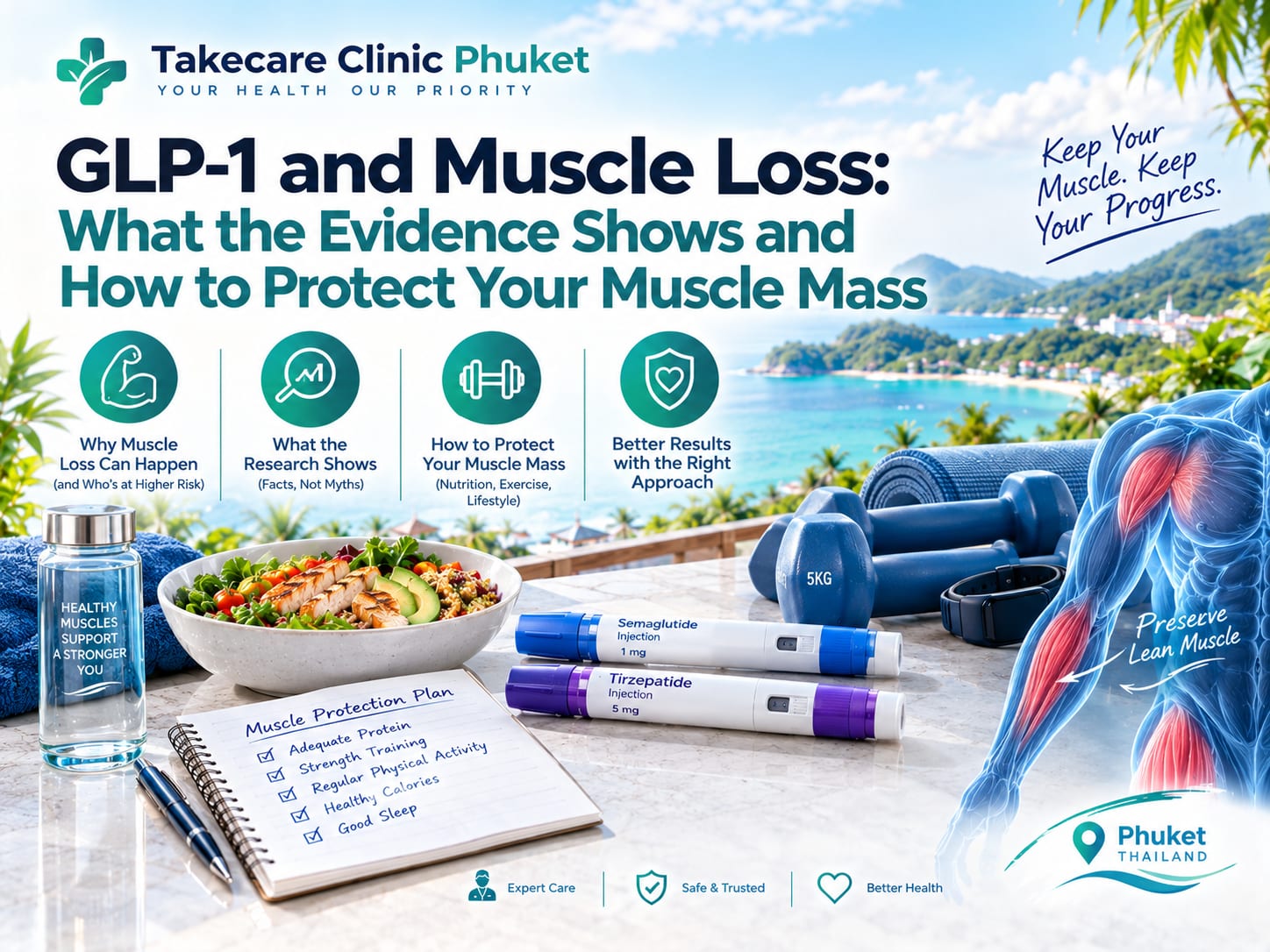
GLP-1 receptor agonists like semaglutide and tirzepatide cause some lean mass loss alongside fat loss, as any caloric deficit does. Clinical trials suggest that roughly a quarter to a third of total weight lost may come from lean tissue, though the proportion of body composition may not shift significantly compared to other weight-loss approaches. The practical strategies that limit this, adequate protein intake and regular resistance training, are well-supported by evidence and apply whether you are a tourist, expat, or long-stay resident managing GLP-1 therapy in Phuket.
You have been on semaglutide for three months, living somewhere like Chalong or Bang Tao, using the gym less than you planned because Phuket’s afternoon heat makes it easy to skip. The weight is coming off. But your arms look different. Your legs feel less solid. You search "GLP-1 muscle loss" late at night and find numbers ranging from reassuring to alarming, with no clear explanation of which applies to you.
That question deserves a straight answer. Yes, lean mass loss does happen on GLP-1 medications. No, it is not as catastrophic as some posts suggest. And no, it is not nothing either. What you do about it now makes a real difference to how you come out the other side of this treatment.

What the Clinical Evidence on GLP-1 Muscle Loss Actually Shows
When you lose weight, some of it is always lean tissue, not just fat. That is true regardless of how the weight comes off. GLP-1 trials, including STEP 1 with semaglutide and SURMOUNT-1 with tirzepatide, confirm this. Estimates from those trials suggest lean mass accounted for roughly a quarter to a third of total weight lost.
Here is the honest counterpoint. A 2025 meta-analysis found that when researchers looked at relative lean mass as a percentage of body weight, the change was comparable between GLP-1 groups and control groups. In absolute terms, GLP-1 users lost modestly more lean mass than controls in some analyses, though the difference was small. The total lean mass falls, but so does fat, and the ratio is not dramatically worse than with other caloric-deficit approaches.
What does vary is dose, duration, and whether you are exercising and eating enough protein. These factors shift outcomes considerably. No single number applies to everyone.
Muscle Size Versus Muscle Function
Most online discussion treats lean mass loss and strength loss as the same thing. They are not.
A study published in Cell Reports Medicine found that in a small proof-of-concept human cohort, absolute lean mass declined in GLP-1 users but grip strength did not worsen significantly. Muscle size and muscle function do not always move together. However, the overall evidence on strength outcomes is mixed and of very low certainty, and a separate 2026 study in older men with type 2 diabetes found reduced muscle strength with semaglutide compared with another diabetes medication.
The caveat is important: sedentary patients, older adults, and those already at the lower end of muscle mass going into treatment have less buffer and appear to carry higher risk of meaningful functional strength loss. If functional strength starts low, even a modest absolute decline matters more. If this describes you, it is worth paying attention now.
Why Appetite Suppression Creates a Hidden Protein Gap
GLP-1 medications suppress appetite powerfully. That is the point. But when total food intake drops, protein intake usually drops with it. You feel like you are eating enough because you are not hungry. You are probably not eating enough protein.
Muscle tissue needs a steady supply of amino acids to maintain itself, especially during weight loss. When protein intake falls short, lean mass loss accelerates. This is especially true for older adults and those in a significant caloric deficit.
Protein-first meal structuring helps. Eat your protein before the rest of the meal. Set a daily target and track it, at least initially. Do not assume that eating less means your protein is proportionally fine, because it almost certainly is not.
Protein Targets and What They Depend On
Current evidence supports roughly 1.2 to 2.2 grams of protein per kilogram of body weight per day during a caloric deficit. That is a wide range, and the right target depends on your age, how much you are training, and how deep your deficit is.
Older adults and those doing little resistance training should aim toward the higher end of that range. Younger, active patients may preserve lean mass adequately at the lower end. A physician or dietitian can help you land on a specific number.
The practical Phuket reality is that access to a registered sports dietitian is limited outside the bigger hospitals. What most people can do is track protein intake for a week using a free app, compare it to their target, and adjust from there. If your total calorie intake has dropped significantly on GLP-1, protein needs to be a deliberate priority at every meal, not an afterthought.
Who Is Most at Risk of Meaningful Muscle Loss on GLP-1
Not everyone on a GLP-1 medication carries equal risk. Adults over 60 face the highest risk, partly because of reduced muscle-building efficiency and partly because baseline muscle mass tends to be lower. Sedentary patients lose lean mass faster than active ones. Patients who were already low in muscle mass before starting treatment have less reserve.
Long-stay expats in Phuket who work desk jobs, travel frequently, and have let gym routines slide fall into this category more often than they expect. The weight loss feels like progress. The gradual loss of functional strength is harder to notice until it has already happened.
If you are over 60, already feeling physically weaker than before, or started GLP-1 therapy with low baseline activity, this warrants attention now. Not when the prescription runs out.
Resistance Training Is Not Optional
Cardio is good for your heart. It will not protect your lean mass during a caloric deficit. Resistance training is the intervention with the strongest evidence for limiting muscle loss when you are eating less.
Two to three sessions per week with progressive overload, gradually increasing the weight or resistance over time, is the clinical recommendation. You do not need a serious gym setup. Bodyweight training, resistance bands, or a basic hotel gym provides the stimulus your muscles need. Consistent effort with progressive challenge matters more than equipment.
In Phuket’s heat, morning sessions before 9am or indoor training in the afternoon is more practical than outdoor midday exercise. Training intensity drops in high heat and humidity, which reduces the anabolic stimulus you are actually trying to create.
Monitoring Your Body Composition While on GLP-1 Therapy
Scale weight tells you almost nothing about what is happening to your muscle-to-fat ratio. Two patients can lose the same number of kilograms with very different body composition outcomes.
DEXA scanning, which uses low-dose X-ray to measure bone density, fat mass, and lean mass separately, is the most accurate way to track body composition changes. Bioelectrical impedance analysis, the kind of measurement available on many gym scales and body composition monitors, is less precise but useful for tracking trends over time. Neither is routine in standard GLP-1 follow-up, but both are reasonable to request if you have concerns.
A blood test in Phuket that includes markers of nutritional status can also flag whether your protein intake is genuinely adequate. At Takecare Clinic Phuket, walk-in blood tests are available without an appointment, and a physician can review your GLP-1 progress and discuss any body composition concerns on the same visit.
Getting GLP-1 Support in Phuket Without a Home GP
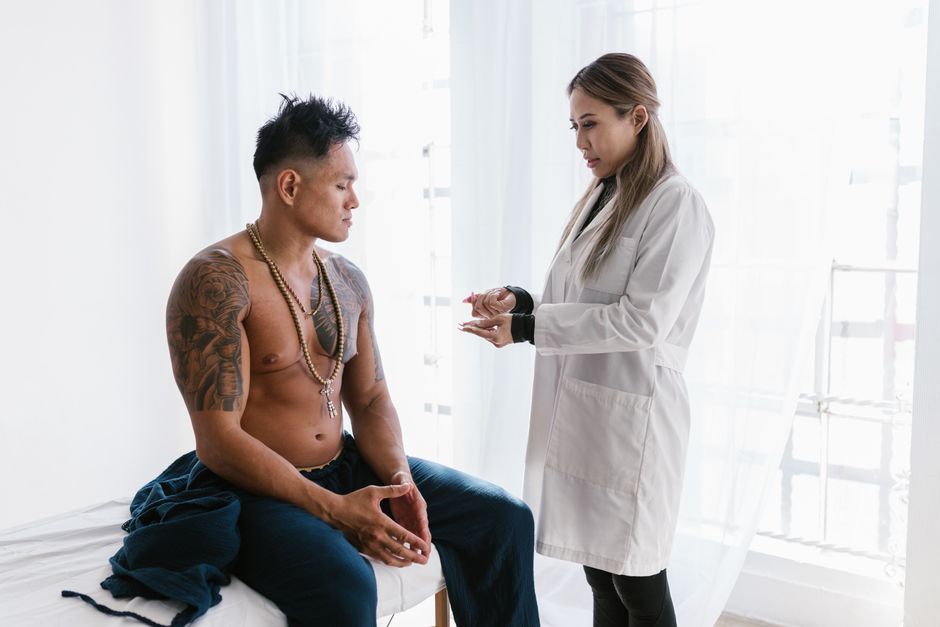
This is a real gap for a lot of people here. Long-stay expats, digital nomads spending months in Cherng Talay or Rawai, and visitors who started GLP-1 therapy at home and are now in Phuket without a local doctor all face the same problem: they need monitoring and they do not have a regular physician on the island.
Takecare Clinic Phuket operates as a walk-in clinic with English-speaking physician care and no appointment needed. If you need your GLP-1 therapy reviewed, your body composition discussed, a prescription refill in Phuket, or a blood test, you can come in the same day without navigating a referral system or explaining your situation to a hotel concierge.
The clinic covers the whole island, from Patong to Rawai to Chalong. If you are managing GLP-1 therapy here and wondering how to protect your muscle mass, a straightforward physician review is a reasonable starting point. You do not need to wait until something goes wrong. GLP-1 medications are not suitable for everyone. People with a personal or family history of medullary thyroid carcinoma or multiple endocrine neoplasia syndrome type 2 should not use them, and anyone who develops severe abdominal pain, signs of pancreatitis, or rapid unexplained deterioration while on treatment should seek medical review promptly.
Managing GLP-1 therapy in Phuket without a regular doctor? Takecare Clinic Phuket offers walk-in physician consultations with no appointment needed, in English, for the whole island. We can review your GLP-1 progress, discuss body composition concerns, order blood tests, and support your ongoing treatment. Walk in at 34/14 Prachanukhro Rd, Patong, or contact us at takecareclinicphuket.com.
FAQ: GLP-1 and Muscle Loss in Phuket
How much muscle do you actually lose on semaglutide or tirzepatide?
Trials suggest roughly a quarter to a third of total weight lost on GLP-1 medications may come from lean tissue rather than fat. A 2025 meta-analysis found that the proportion of lean mass versus fat in the body did not differ significantly between GLP-1 users and those losing similar weight by other means. Lean mass loss is real, but it is not dramatically worse than other caloric-deficit approaches.
Does losing muscle on GLP-1 actually make you weaker?
Not necessarily. A 2026 trial in Cell Reports Medicine found that while absolute lean mass declined, grip strength and knee extension force did not worsen significantly. Muscle size and functional strength do not always move together. Patients who start with low baseline strength or who are older carry higher risk of meaningful functional decline, and this is worth monitoring at a regular physician review.
How much protein do I need while taking a GLP-1 medication?
Current evidence supports roughly 1.2 to 2.2 grams of protein per kilogram of body weight per day during a caloric deficit, with older adults and less active patients generally needing the higher end. The practical issue is that GLP-1-driven appetite suppression often causes total protein intake to drop silently, even when patients feel they are eating adequately. Deliberate protein-first meal structuring and tracking your intake for a few weeks helps catch that gap early.
Will cardio be enough to protect my muscle, or do I need to lift weights?
Cardio supports heart health but does not provide the stimulus needed to preserve lean mass during a caloric deficit. Resistance training, two to three sessions per week with progressively increasing challenge, is the intervention with the strongest evidence for limiting GLP-1 muscle loss. Bodyweight exercises and resistance bands work well if a full gym is not available, including in a hotel room or outdoors in the cooler Phuket mornings.
I am staying in Rawai for three months and started semaglutide at home. Can I get monitoring in Phuket without a local GP?
Yes. Takecare Clinic Phuket is a walk-in clinic with English-speaking physicians and no appointment needed, serving patients across the island including Rawai, Nai Harn, Chalong, and the rest of Phuket. A physician can review your current therapy, discuss any muscle loss or body composition concerns, and order relevant blood tests the same day. You do not need an existing patient relationship or a referral.
Should I ask for a DEXA scan to check my muscle mass on GLP-1?
It is a reasonable request if you have been on GLP-1 therapy for several months, are over 60, or have concerns about lean mass decline. DEXA scanning is the most accurate way to separate fat loss from muscle loss. Bioelectrical impedance scales offer a practical alternative for tracking trends over time. Scale weight alone cannot tell you what is happening to your body composition, so raise this at your next physician review, especially if you started treatment without a baseline measurement.
Dr. Ponlawat Pitsuwan
Physician, Takecare Medical Clinic Phuket
a walk-in medical clinic based in Patong with no appointment needed and English-speaking physician care for the whole island. He sees tourists, expats, and residents across Phuket for chronic disease management, weight management support including GLP-1 therapy review, body composition concerns, and ongoing medical monitoring. His focus is straightforward, evidence-based care delivered in plain language.
References
- Wilding JPH, et al. Once-Weekly Semaglutide in Adults with Overweight or Obesity. New England Journal of Medicine. 2021;384(11):989-1002.
- Jastreboff AM, et al. Tirzepatide Once Weekly for the Treatment of Obesity. New England Journal of Medicine. 2022;387(3):205-216.
- Healio Endocrinology. About 31% of weight lost by adults during GLP-1 therapy comes from lean mass. Healio. 2025.
- Look M, et al. Body composition changes with tirzepatide in adults with obesity: DXA substudy of SURMOUNT-1. PMC11965027. Diabetes, Obesity and Metabolism. 2025.
- Cava E, et al. Preserving Healthy Muscle during Weight Loss. Advances in Nutrition. 2017;8(3):511-519.
- MIMS India. Semaglutide use tied to neuromuscular junction degradation in older adults with T2DM. MIMS. 2026.
The information in this article is for educational purposes only and does not constitute medical advice. It should not be used to self-diagnose or replace a consultation with a qualified physician. If you have concerns about your health, contact a licensed medical professional. For appointments at Takecare Clinic Phuket, visit takecareclinicphuket.com.
