
Clinically reviewed by Dr. Ponlawat Pitsuwan, Physician, Takecare Clinic Phuket.
Last reviewed: October 2026
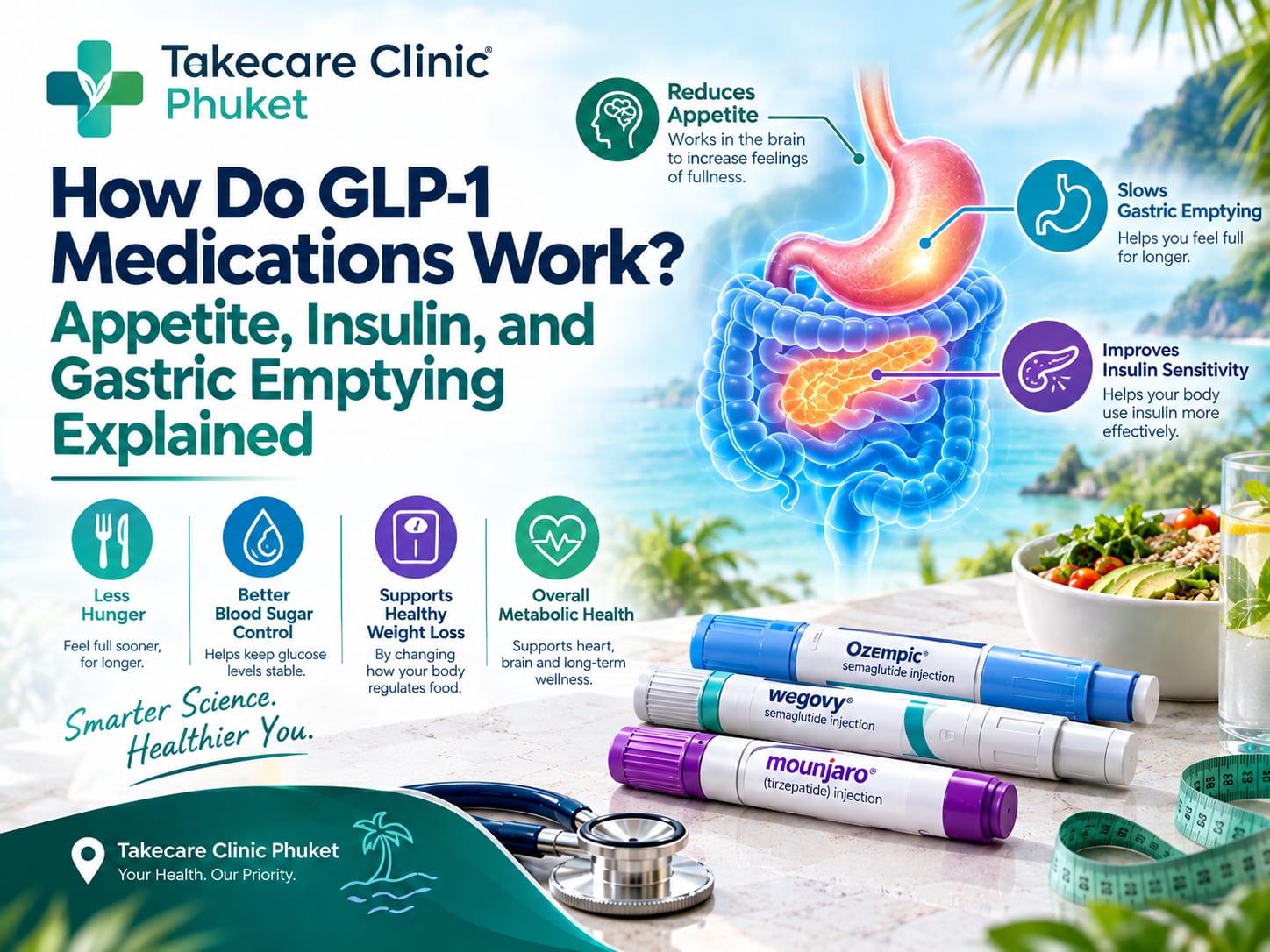
GLP-1 medications work by mimicking a natural gut hormone that signals your pancreas to release insulin, tells your stomach to empty more slowly, and sends fullness signals to your brain. The result is lower blood sugar after meals, reduced appetite, and, over time, meaningful weight loss. Both semaglutide and tirzepatide work this way, though tirzepatide also activates a second receptor, which trials show produces greater average weight loss.
A long-stay expat living in Chalong came in for a prescription refill and asked a question that comes up often in GLP-1 consultations: "I know it works, but what is it actually doing?" He had been on semaglutide for two months. His clothes fit differently, he felt less hungry, but the mechanism was a complete mystery. That gap matters. Understanding how the drug works makes the side effects less alarming and the dosing instructions easier to follow.
These medications do three things at once, and each one connects to the others. Once you see the full picture, the nausea, the slower eating pace, and the blood sugar improvements all make sense as parts of the same process. This article explains how GLP-1 medications work, what the real differences between semaglutide and tirzepatide are, and what a proper consultation involves if you are starting or continuing treatment in Phuket.

What GLP-1 Actually Is
GLP-1 stands for glucagon-like peptide-1. Your gut releases it naturally after a meal. It is an incretin hormone, which means it helps coordinate your body’s response to food arriving in the digestive system.
The natural version only lasts a few minutes before your body breaks it down. GLP-1 receptor agonists, the medication class that includes semaglutide and tirzepatide, are engineered versions that last much longer. Semaglutide is designed with a fatty acid chain that binds to albumin in the blood, which slows its breakdown and allows a once-weekly dosing schedule.
How GLP-1 Medications Affect Insulin and Glucagon
When blood sugar rises after a meal, GLP-1 medications tell the pancreas to release more insulin. This release is glucose-dependent, meaning it only happens when blood sugar is actually elevated. That is why these medications carry a much lower risk of dangerously low blood sugar compared to older diabetes drugs that trigger insulin release regardless of your glucose level.
At the same time, they suppress glucagon, the hormone that tells your liver to release stored sugar into the bloodstream. Lower glucagon means the liver releases less glucose between meals. The combined effect is steadier blood sugar throughout the day.

Gastric Emptying, Blood Sugar Spikes, and the Nausea Connection
GLP-1 medications slow gastric emptying, the rate at which food moves from your stomach into the small intestine. Slower emptying means sugar from a meal enters your bloodstream more gradually, which flattens the sharp blood sugar rise that follows eating.
That same slowing is what causes nausea, especially in the early weeks. Your stomach is holding food longer than it normally would. Most people find the nausea improves as the dose is increased gradually and the body adjusts. Rushing the dose increase tends to make nausea worse and last longer. That is one reason medical supervision during the titration phase is genuinely useful, not just a formality.
How GLP-1 Signals the Brain to Reduce Appetite
The appetite effect goes beyond a full stomach. GLP-1 receptors sit in the hypothalamus, the part of the brain that regulates hunger and energy balance. When the medication activates these receptors, it reduces hunger signals at their source.
There is also evidence that GLP-1 activity affects the dopamine reward pathway, the system that drives food cravings rather than straightforward hunger. This may explain why many patients report that highly processed or sweet food simply becomes less appealing. The full mechanism is still being studied, but the clinical picture fits with what the research is finding.
Semaglutide vs Tirzepatide: What Is the Difference?
Semaglutide activates only the GLP-1 receptor. Tirzepatide is a dual agonist, meaning it activates both the GLP-1 receptor and the GIP receptor, another incretin pathway involved in insulin secretion and fat storage.
Activating both receptors together appears to produce a stronger appetite and metabolic effect. In separate large trials and in the 2025 SURMOUNT-5 head-to-head trial, tirzepatide produced greater average weight loss than semaglutide, though both produced significant results. Neither is right for every patient. Which one suits you depends on your medical history, existing conditions, and treatment goals. That assessment happens at a consultation.
| Semaglutide | Tirzepatide | |
|---|---|---|
| Receptor target | GLP-1 only | GLP-1 + GIP (dual) |
| Dosing frequency | Once weekly | Once weekly |
| Weight loss in trials | Significant | Greater average in trials |
| Common brand names | Ozempic, Wegovy | Mounjaro |
| Available in Thailand | Prescription-only | Prescription-only |
Getting GLP-1 Medications Safely in Phuket
GLP-1 medications are prescription-only in Thailand. Following a period when counterfeit and unregulated GLP-1 pens circulated in the region, Thai authorities tightened enforcement. Buying these medications outside a licensed clinic carries real risk: product quality, dosing accuracy, and sterility cannot be verified.
For tourists continuing an existing treatment programme, the practical question is whether you can get a legal prescription refill in Phuket. The answer is yes, with a consultation. A physician needs to review your current medication, confirm your dose, and check for any issues before writing a local prescription. Takecare Clinic Phuket handles both new starts and continuations at its Patong walk-in clinic, no appointment needed. For patients across the island who cannot come in, consultations at home or hotel are available through the doctor-on-call service, covering Kata, Karon, Rawai, Bang Tao, and beyond.
One practical point specific to Phuket: semaglutide and tirzepatide pens require refrigeration. A pen left in a beach bag on a hot day or in a car parked in the sun can be compromised. Phuket’s heat moves faster than patients from cooler climates expect. Check your pen’s storage instructions and keep it refrigerated at your accommodation between doses.
What to Expect at Your First GLP-1 Consultation
A proper GLP-1 consultation is not just writing a prescription. Before starting, a physician should review your weight, blood pressure, fasting blood glucose, and kidney and liver function. A blood test in Phuket can be done the same day at Takecare Clinic.
There are conditions that rule out GLP-1 therapy. A personal or family history of medullary thyroid carcinoma, or of multiple endocrine neoplasia syndrome type 2, is a contraindication listed in current prescribing guidelines. A history of pancreatitis also requires careful assessment before starting. Severe gastrointestinal conditions may make these medications unsuitable. Your doctor will ask about these directly.
Once treatment starts, dose increases happen on a schedule to give the body time to adjust. Ongoing monitoring, including periodic blood sugar checks and weight tracking, matters as much as the prescription itself. If side effects are significant, talk to your prescribing doctor. Do not manage it by skipping doses on your own. A full health check-up at Takecare Clinic Phuket can establish your baseline before starting treatment. Patients who already have a stable prescription and need continuity of care can use the prescription refill service as a walk-in.
If you are asking how GLP-1 medications work, you are likely already thinking about whether they are right for you. Takecare Clinic Phuket offers GLP-1 consultations as a walk-in at our Patong clinic, no appointment needed. We handle first consultations, dose reviews, prescription refills for patients continuing existing treatment, and baseline blood tests on the same day. We see tourists, expats, and residents across the island. Walk in or contact us at takecareclinicphuket.com.
Frequently Asked Questions
Dr. Ponlawat Pitsuwan
Physician, Takecare Medical Clinic Phuket
a walk-in medical clinic based in Patong with English-speaking physician care and no appointment needed. He sees tourists, expats, and residents across Phuket for GLP-1 consultations, weight management assessments, prescription reviews, and ongoing chronic disease monitoring. His focus is straightforward, evidence-based care delivered in plain language.
References
- Wilding JPH, et al. Once-Weekly Semaglutide in Adults with Overweight or Obesity. New England Journal of Medicine. 2021;384(11):989-1002.
- Jastreboff AM, et al. Tirzepatide Once Weekly for the Treatment of Obesity. New England Journal of Medicine. 2022;387(3):205-216.
- Garvey WT, et al. Tirzepatide versus Semaglutide for Obesity (SURMOUNT-5). New England Journal of Medicine. 2025.
- Frontiers in Behavioral Neuroscience. GLP-1 receptor signaling and the modulation of the dopamine reward system: systematic review. 2020.
The information in this article is for educational purposes only and does not constitute medical advice. It should not be used to self-diagnose or replace a consultation with a qualified physician. If you have concerns about your health, contact a licensed medical professional. For appointments at Takecare Clinic Phuket, visit takecareclinicphuket.com.
