
Clinically reviewed by Dr. Ponlawat Pitsuwan, Physician, Takecare Medical Clinic Phuket.
Last reviewed: October 2026
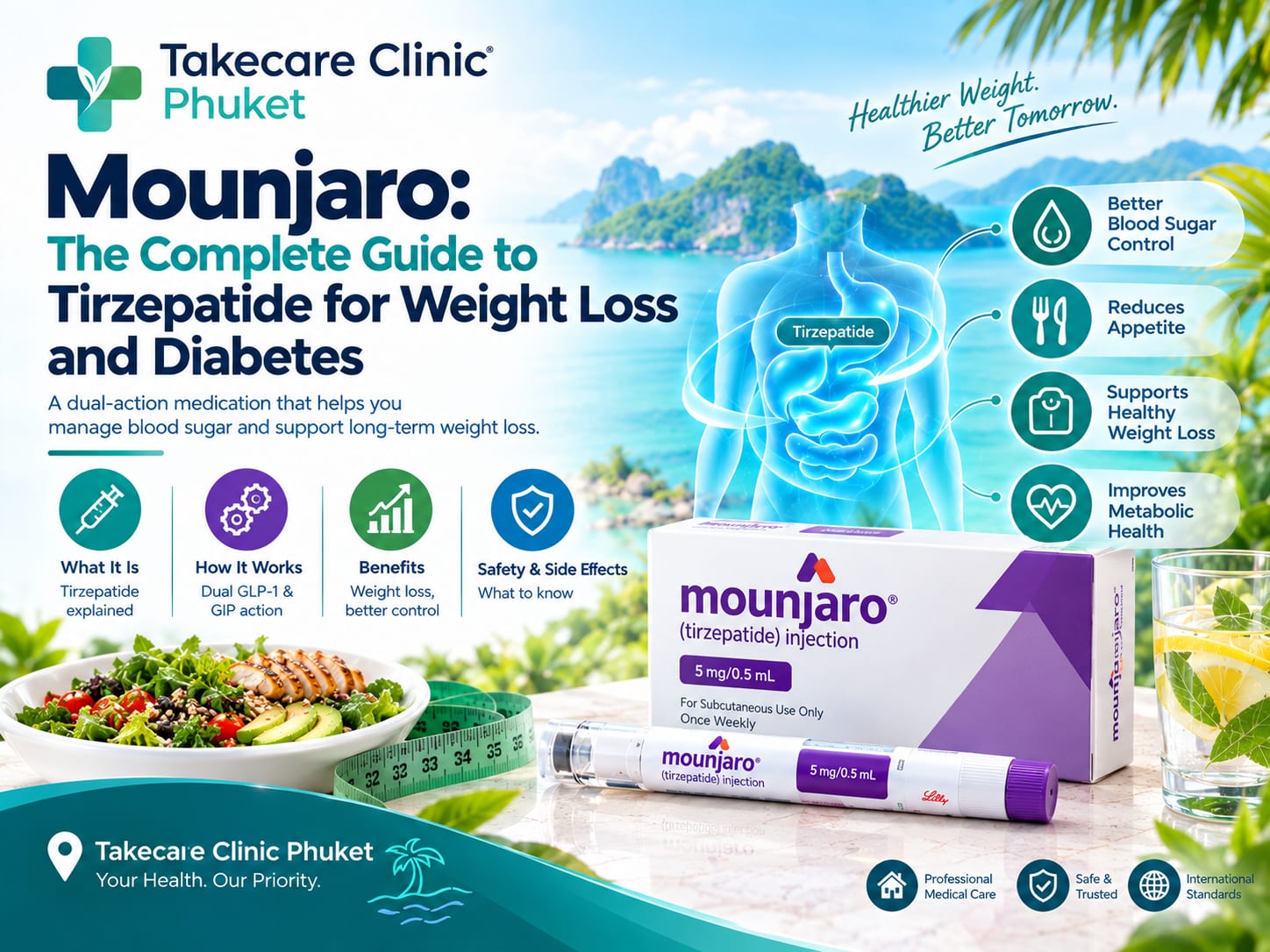
Mounjaro (tirzepatide) is a weekly injectable medication that targets two gut hormones, GIP and GLP-1, to reduce appetite, lower blood sugar, and support significant weight loss. In the SURMOUNT-1 trial, participants lost an average of 20.9% of their body weight over 72 weeks. It is prescribed for type 2 diabetes and, in many countries, for chronic weight management in adults with a BMI over 30 or over 27 with a related health condition. A licensed physician can assess your suitability at Takecare Clinic Phuket with no appointment needed.
You flew into Phuket with a Mounjaro pen in your cool bag, checked into your Kata hotel, and then found that the mini-fridge barely gets cold enough. Your dose is due in two days, and your prescription documents are sitting on a desk back home. Or you are a long-stay expat in Chalong who has been managing your weight and blood sugar well for six months, but your home GP is on a different continent and the prescription has run out.
Either way, you need a doctor who understands this medication, not a blank stare.
This guide covers how Mounjaro works, what the clinical trials showed, how it compares to other GLP-1 drugs, what happens when you stop, and what you need to know to use it safely in Phuket’s heat.

How Mounjaro Works: The Dual GIP and GLP-1 Mechanism
Most weight loss injections target one gut hormone. Mounjaro targets two: GLP-1 and GIP. Both are signals your gut sends after eating. They tell the pancreas to release insulin and tell the brain you are full. By acting on both receptors at once, tirzepatide reduces appetite more strongly than a single-hormone drug. It also improves how sensitive your body is to insulin, which matters for anyone with type 2 diabetes or insulin resistance.
The result is slower stomach emptying, reduced hunger between meals, and better blood sugar control. These effects build gradually as your dose increases over months.
Clinical Evidence: What the Trials Show
The SURMOUNT-1 trial enrolled adults with obesity or overweight plus at least one related health condition, without type 2 diabetes. At the highest dose, participants lost an average of 20.9% of their body weight over 72 weeks.
For type 2 diabetes, the SURPASS trial programme showed meaningful reductions in HbA1c, the three-month blood sugar average, across all doses. Most participants also lost weight, which is not always the case with older diabetes medications.
The SURMOUNT-5 trial published direct head-to-head data comparing tirzepatide against semaglutide, the active ingredient in Ozempic and Wegovy. At 72 weeks, tirzepatide produced 20.2% body weight loss versus 13.7% for semaglutide. That is the clearest trial evidence we have that the dual-agonist approach outperforms a single GLP-1 drug for weight loss.

Mounjaro vs Ozempic vs Wegovy: How They Compare
The most common question from patients who have done their research: is Mounjaro actually better than Ozempic? Based on the SURMOUNT-5 head-to-head trial, yes, for weight loss in adults with obesity, tirzepatide produced greater average weight loss than semaglutide. Side effect profiles are broadly similar, with nausea, vomiting, and loose stools being the most common complaints with both.
| Mounjaro (Tirzepatide) | Ozempic (Semaglutide) | Wegovy (Semaglutide) | |
|---|---|---|---|
| Mechanism | Dual GIP + GLP-1 agonist | GLP-1 agonist | GLP-1 agonist |
| Primary approval | Type 2 diabetes; weight management | Type 2 diabetes | Weight management |
| Dosing range | 2.5 mg to 15 mg weekly | 0.25 mg to 2 mg weekly | 0.25 mg to 2.4 mg weekly |
| Peak trial weight loss | 20.9% (SURMOUNT-1) | ~6-7% (SUSTAIN trials, up to 1 mg) | ~15% (STEP-1, semaglutide 2.4 mg) |
| Head-to-head vs semaglutide | 20.2% vs 13.7% (SURMOUNT-5) | Reference arm | Same drug, different dose |
The choice between these drugs should be based on your medical history, what you have already tried, and how well you tolerate each one. A physician review at Takecare Clinic Phuket can help you work through that decision properly.
Mounjaro Dosage and Titration Schedule
Mounjaro is started at a low dose and increased slowly over months. This titration process reduces nausea and other gut side effects as your body adjusts. The schedule below reflects the approved prescribing information.
| Phase | Dose | Duration |
|---|---|---|
| Starting dose | 2.5 mg once weekly | 4 weeks |
| Step 2 | 5 mg once weekly | 4 weeks minimum |
| Step 3 | 7.5 mg once weekly | 4 weeks minimum |
| Step 4 | 10 mg once weekly | 4 weeks minimum |
| Step 5 | 12.5 mg once weekly | 4 weeks minimum |
| Maximum dose | 15 mg once weekly | Ongoing maintenance |
Not everyone needs to reach 15 mg. Some patients do well at 5 mg or 10 mg. Dose increases should be guided by tolerability and clinical response. If you miss a dose, take it as soon as you remember, as long as your next scheduled dose is more than four days away. If it is less than four days away, skip the missed dose and continue on your usual day.
Side Effects and What to Watch For
Nausea is the most reported side effect, especially in the first few weeks after a dose increase. It usually settles as your body adjusts. Vomiting, diarrhoea, constipation, and reduced appetite are also common and tend to improve over time.
Some symptoms need same-day medical attention. Severe abdominal pain that radiates to your back can signal pancreatitis, which is inflammation of the pancreas. Face swelling or difficulty breathing may indicate a serious allergic reaction. If you are also taking insulin or a sulfonylurea medication, watch for symptoms of low blood sugar.
Mounjaro carries a boxed warning for thyroid C-cell tumours based on animal studies. It should not be used by anyone with a personal or family history of medullary thyroid carcinoma or Multiple Endocrine Neoplasia syndrome type 2. If you develop a lump in your neck or hoarseness, see a doctor promptly.
Drug Interactions and Safety Considerations
The most important interaction for many patients involves oral contraceptives. Because Mounjaro slows stomach emptying, it can reduce how reliably the pill is absorbed. For the first four weeks after starting Mounjaro and for four weeks after each dose increase, additional contraception is recommended. If you are starting Mounjaro in Phuket, raise this with the prescribing doctor.
Mounjaro also affects how quickly other oral medications absorb. If you take thyroid medication, blood pressure medication, or any time-sensitive drug by mouth, flag this at your consultation. Insulin doses may need adjusting to avoid low blood sugar. Mounjaro is not recommended during pregnancy and should be stopped before attempting to conceive.
Who Is a Good Candidate for Mounjaro
Standard criteria include a BMI of 30 or above, or a BMI of 27 or above with at least one weight-related condition such as type 2 diabetes, high blood pressure, or raised cholesterol. It is also used in adults with type 2 diabetes as a glucose-lowering medication regardless of BMI.
Metabolic syndrome, a combination of high blood sugar, high blood pressure, abnormal cholesterol, and excess abdominal fat, is one of the clearest use cases. Mounjaro addresses several of those components at once. A physician needs to review your full history, current medications, and any contraindications before prescribing. Blood tests at Takecare Clinic Phuket can confirm your baseline before you start.
What Happens When You Stop Taking Mounjaro
This is the question most patients do not think to ask until it is too late. The honest answer: weight regain is common after stopping. Data from the SURMOUNT extension trials showed that participants who stopped tirzepatide regained a substantial portion of lost weight over the following months. This is not a sign that the drug failed. It reflects that obesity is a chronic condition, not a short-term problem with a fixed endpoint.
Stopping without a plan is the worst outcome. A physician-supervised approach, whether that means tapering the dose, holding at a maintenance dose, or building a structured lifestyle plan alongside the medication, significantly reduces rebound weight gain. If you are thinking about stopping, talk to a doctor first.
Mounjaro in Phuket: Practical Considerations for Tourists and Expats
Phuket’s ambient temperature sits around 30 to 35 degrees Celsius for most of the year. Mounjaro pens must be stored between 2°C and 8°C in the refrigerator. Do not freeze them. A frozen pen cannot be used. According to the prescribing information, an in-use pen can be kept at room temperature up to 30°C for a maximum of 21 days. In Phuket, that 30°C ceiling is often the outdoor temperature, not the indoor one. Keep your pen in the hotel mini-fridge, not in a beach bag, not in the car.
If you are flying in with pens, carry them in your hand luggage in an insulated cool bag with an ice pack. Checked baggage temperatures are uncontrolled. Declare the medication at customs if asked. Thailand generally permits personal-use quantities of prescription medication when accompanied by documentation.
For tourists already on Mounjaro who need a refill mid-trip, a prescription refill in Phuket is available at Takecare Clinic Phuket after a physician review. For long-stay expats wanting to start treatment, a full assessment can be done on the same visit.
Getting a Mounjaro Prescription in Phuket
Starting or continuing Mounjaro in Phuket is straightforward at the right clinic. You need a physician who understands the medication, can review your current health status and other drugs you take, and can write a Thai prescription that local pharmacies will fill.
An English-speaking doctor in Phuket at Takecare Clinic will take your history, check your weight and relevant baseline numbers, and either continue your existing titration or start a new one from the lowest dose. Blood tests can be done at the same visit if needed. The clinic serves patients across the whole island, from Bang Tao and Surin in the north to Rawai and Nai Harn in the south. Walk in, no appointment needed. You can also arrange a health check-up in Phuket if you want a broader metabolic review at the same time.
If you are in Phuket and need a Mounjaro prescription, a refill, or a physician review before your next dose, Takecare Clinic Phuket is a walk-in clinic in Patong with English-speaking doctors and no appointment needed. We see tourists, expats, and residents across the whole island, from Kata and Karon to Chalong, Cherng Talay, and Bang Tao. Walk in, or contact us to arrange a consultation.
FAQ
Dr. Ponlawat Pitsuwan
Physician, Takecare Medical Clinic Phuket
a walk-in medical clinic based in Patong with English-speaking physician care and no appointment needed. He sees tourists, expats, and residents across Phuket for weight management, type 2 diabetes, prescription refills, and general medical care. His focus is straightforward, evidence-based care delivered in plain language.
References
- Jastreboff AM, et al. Tirzepatide Once Weekly for the Treatment of Obesity. N Engl J Med. 2022;387:205-216.
- Wadden TA, et al. Tirzepatide vs Semaglutide for the Treatment of Obesity (SURMOUNT-5). N Engl J Med. 2025.
- Wilding JPH, et al. Once-Weekly Semaglutide in Adults with Overweight or Obesity (STEP 1). N Engl J Med. 2021;384:989-1002.
- Eli Lilly. What is the recommended storage for MOUNJARO tirzepatide single-dose pen? Lilly Medical, 2024.
- American Diabetes Association. Standards of Care in Diabetes 2024: Pharmacologic Approaches to Glycemic Treatment. Diabetes Care. 2024;47(Suppl 1):S158-S178.
- Therapeutic Goods Administration (Australia). Updated contraception advice: Mounjaro (tirzepatide). TGA Safety Update, 2024.
The information in this article is for educational purposes only and does not constitute medical advice. It should not be used to self-diagnose or replace a consultation with a qualified physician. If you have concerns about your health, contact a licensed medical professional. For appointments at Takecare Clinic Phuket, visit takecareclinicphuket.com.
