
Clinically reviewed by Dr. Ponlawat Pitsuwan, Physician, Takecare Clinic Phuket.
Last reviewed: October 2026
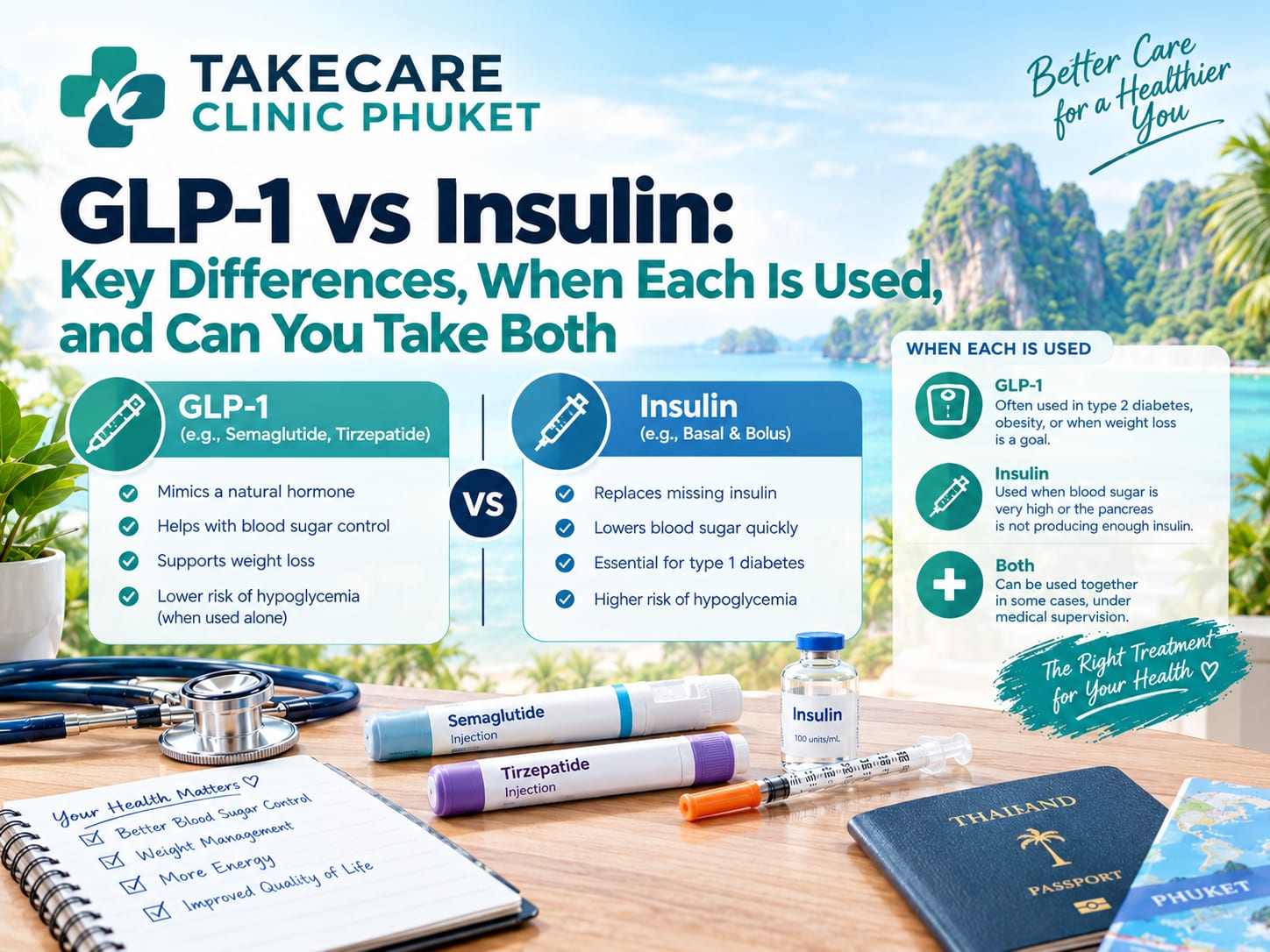
GLP-1 receptor agonists and insulin are both used to manage blood glucose, but they work differently and are not interchangeable. GLP-1 drugs stimulate your pancreas to release insulin only when glucose is elevated, which lowers hypoglycaemia risk. Insulin directly replaces or supplements what your body cannot produce. In type 2 diabetes, they can sometimes be used together. In type 1 diabetes, insulin is always required and GLP-1 cannot replace it.
Three weeks into a long stay in Chalong, managing type 2 diabetes the same way you have for years: basal insulin at night, careful eating, the usual routine. Then your specialist back home mentions GLP-1 as an option, and suddenly you are reading about Ozempic and wondering whether you can swap, combine, or even stop the insulin you have been carrying in a cooler bag since you arrived. It is a real question, and the answer depends on which type of diabetes you have, how well controlled it currently is, and what you are actually trying to achieve.
GLP-1 and insulin are not rivals. They do different things. Understanding the difference helps you have a more useful conversation with a doctor, whether that is your usual specialist or an English-speaking doctor in Phuket at a walk-in clinic here on the island.

How GLP-1 Receptor Agonists Work
GLP-1 stands for glucagon-like peptide-1. It is a hormone your gut releases after you eat. GLP-1 receptor agonists, such as semaglutide (Ozempic, Wegovy) and liraglutide (Victoza), mimic this hormone.
When blood glucose rises after a meal, these drugs signal your pancreas to release insulin. When glucose is normal or low, that signal stops. This is why hypoglycaemia risk is lower with GLP-1 drugs than with insulin alone. They also slow gastric emptying, which flattens the spike in blood sugar after meals. The weight loss many patients notice comes largely from reduced appetite.
GLP-1 drugs are injected once weekly (semaglutide) or once daily (liraglutide) depending on the medication.
How Insulin Works: Basal, Bolus, and Why Type 1 Is Different
Insulin does not stimulate your body to produce anything. It replaces or supplements insulin your pancreas cannot make enough of on its own.
Basal insulin, such as insulin glargine or insulin degludec, provides a steady background level throughout the day and night. Bolus insulin, taken at mealtimes, handles the glucose spike from food. Many patients on a full insulin regimen use both.
In type 1 diabetes, the immune system has destroyed the beta cells that produce insulin. There is no reserve left to stimulate. A GLP-1 drug cannot provide the baseline insulin the body needs. Stopping insulin in type 1 diabetes is dangerous. This is not a grey area.
In type 2 diabetes, the pancreas still produces some insulin but the body uses it poorly. That is where GLP-1 drugs, used alone or combined with insulin, can genuinely help.

GLP-1 vs Insulin: Side-by-Side Comparison
| GLP-1 Receptor Agonist | Insulin (Basal or Bolus) | |
|---|---|---|
| How it works | Stimulates insulin release when glucose is elevated | Directly replaces or supplements insulin |
| Hypoglycaemia risk (alone) | Lower, glucose-dependent release | Higher, especially bolus insulin |
| Weight effect | Weight reduction in most patients | Weight neutral to weight gain |
| HbA1c reduction | Meaningful reduction in type 2 | Meaningful reduction in both types |
| Used in type 1 | No, not a replacement for insulin | Yes, required |
| Used in type 2 | Yes, first or add-on therapy | Yes, when other therapies insufficient |
| Cardiovascular benefit | Demonstrated for some agents (semaglutide, liraglutide) | Not demonstrated as a drug class |
| Dosing | Once daily or once weekly injection | Daily, sometimes multiple times daily |
Comparative trial data consistently show GLP-1 drugs carry lower hypoglycaemia risk than insulin-based regimens in type 2 diabetes, alongside meaningful weight reduction. Exact figures vary by trial and patient population. Your doctor can discuss what the evidence shows for your specific situation.
Can You Take GLP-1 and Insulin Together?
Yes, and it is a recognised treatment strategy in type 2 diabetes. Combining a GLP-1 receptor agonist with basal insulin targets two different problems at once. The GLP-1 handles post-meal glucose and supports weight loss. The basal insulin keeps overnight glucose stable.
Evidence from meta-analyses supports this approach. Adding a GLP-1 agonist to basal insulin in type 2 diabetes lowers hypoglycaemia risk compared to adding bolus insulin, and produces meaningful weight reduction where basal-bolus regimens tend to cause weight gain.
Some combination products deliver both in a single injection. IDegLira combines insulin degludec and liraglutide in a fixed-ratio dose, which simplifies the regimen for patients already on both separately.
One important point: when you add a GLP-1 drug to existing insulin therapy, your insulin dose usually needs to come down. A physician must supervise this. If you are managing this while living in Phuket, you can read about getting medication support without seeing your usual specialist through our prescription refill service.
Practical Realities for Travellers and Expats in Phuket
Both insulin and GLP-1 pens are sensitive to heat. Product labelling for most pens specifies storage below 25 to 30°C. Phuket’s average temperature sits at 30 to 33°C year-round. A pen left in a beach bag at Kata, a hotel room with the air conditioning off, or a parked car during a day trip to Rawai can degrade in hours.
Heat-damaged insulin or GLP-1 solution may look unchanged but perform poorly. If your glucose readings have shifted unexpectedly, a compromised pen is worth considering first.
Keep medication in your hotel room fridge, not the minibar shelf. Use an insulated travel case with cooling gel packs for beach days. Carry your prescription packaging so a local doctor can match the product exactly.
If you run out or your pen is damaged, you do not need to wait to contact your home doctor. Takecare Clinic Phuket can assess the situation, check your current readings, and issue a replacement prescription the same day.
Getting a GLP-1 or Insulin Prescription in Phuket
Running out of medication while abroad is stressful. In Phuket it is also solvable, often the same day.
Bring your medication packaging, any recent HbA1c or blood glucose results, and a list of your current doses. The more information you bring, the faster and more accurately a physician can help. For expats managing type 2 diabetes without a regular local GP, this also works as an ongoing arrangement.
For blood glucose and HbA1c monitoring, our blood test service in Phuket runs the same day with no appointment needed. If your situation is more urgent, the emergency doctor service in Phuket is also available with extended hours.
Which Is Right for You?
There is no single answer. It depends on your diagnosis, your current glucose control, your weight, your cardiovascular history, and how your regimen has been going.
In early type 2 diabetes with some pancreatic function still intact, a GLP-1 drug is often tried before insulin. It manages glucose, supports weight loss, and carries lower hypoglycaemia risk. As type 2 diabetes progresses, basal insulin is often added. The two can work together.
In type 1 diabetes, insulin is not optional. GLP-1 drugs are occasionally used as an add-on in type 1 under specialist supervision, but they are not approved as primary therapy for type 1.
If your current regimen is not doing what it should, that is a conversation to have with a physician, not a decision to make alone. An assessment of your HbA1c, your current medication doses, your weight trajectory, and any cardiovascular risk factors is what guides the right choice. Walk-in physician care at Takecare Clinic Phuket is available without an appointment for exactly this kind of review.
Managing diabetes with GLP-1 medication or insulin while in Phuket, whether you are on a long stay, living here as an expat, or your regular supply has run short? Takecare Clinic Phuket is a walk-in medical clinic in Patong with English-speaking physician care and no appointment needed. We can review your regimen, arrange same-day blood tests including HbA1c and fasting glucose, and issue prescriptions for GLP-1 or insulin without needing to contact your home doctor first. Open to patients from across the island, including Kata, Karon, Rawai, Chalong, Bang Tao, and Phuket Town.
Frequently Asked Questions
Dr. Ponlawat Pitsuwan
Physician, Takecare Medical Clinic Phuket
a walk-in medical clinic based in Patong with English-speaking physician care and no appointment needed. He sees tourists, expats, and residents across Phuket for diabetes management, GLP-1 and insulin prescriptions, ongoing chronic disease care, and same-day blood testing including HbA1c and fasting glucose. His focus is straightforward, evidence-based care delivered in plain language.
References
- Marso SP, et al. Semaglutide and Cardiovascular Outcomes in Patients with Type 2 Diabetes. N Engl J Med. 2016;375:1834-1844. (SUSTAIN-6 trial)
- American Diabetes Association. Standards of Care in Diabetes — 2024. Diabetes Care. 2024;47(Suppl 1).
- Gough SCL, et al. Insulin degludec/liraglutide (IDegLira) for the management of type 2 diabetes. Expert Rev Endocrinol Metab. 2018;13(2):99-113.
- World Health Organization. Classification of Diabetes Mellitus. WHO. 2019.
The information in this article is for educational purposes only and does not constitute medical advice. It should not be used to self-diagnose or replace a consultation with a qualified physician. If you have concerns about your health, contact a licensed medical professional. For appointments at Takecare Clinic Phuket, visit takecareclinicphuket.com.
