
Clinically reviewed by Dr. Ponlawat Pitsuwan, Physician, Takecare Clinic Phuket.
Last reviewed: November 2026
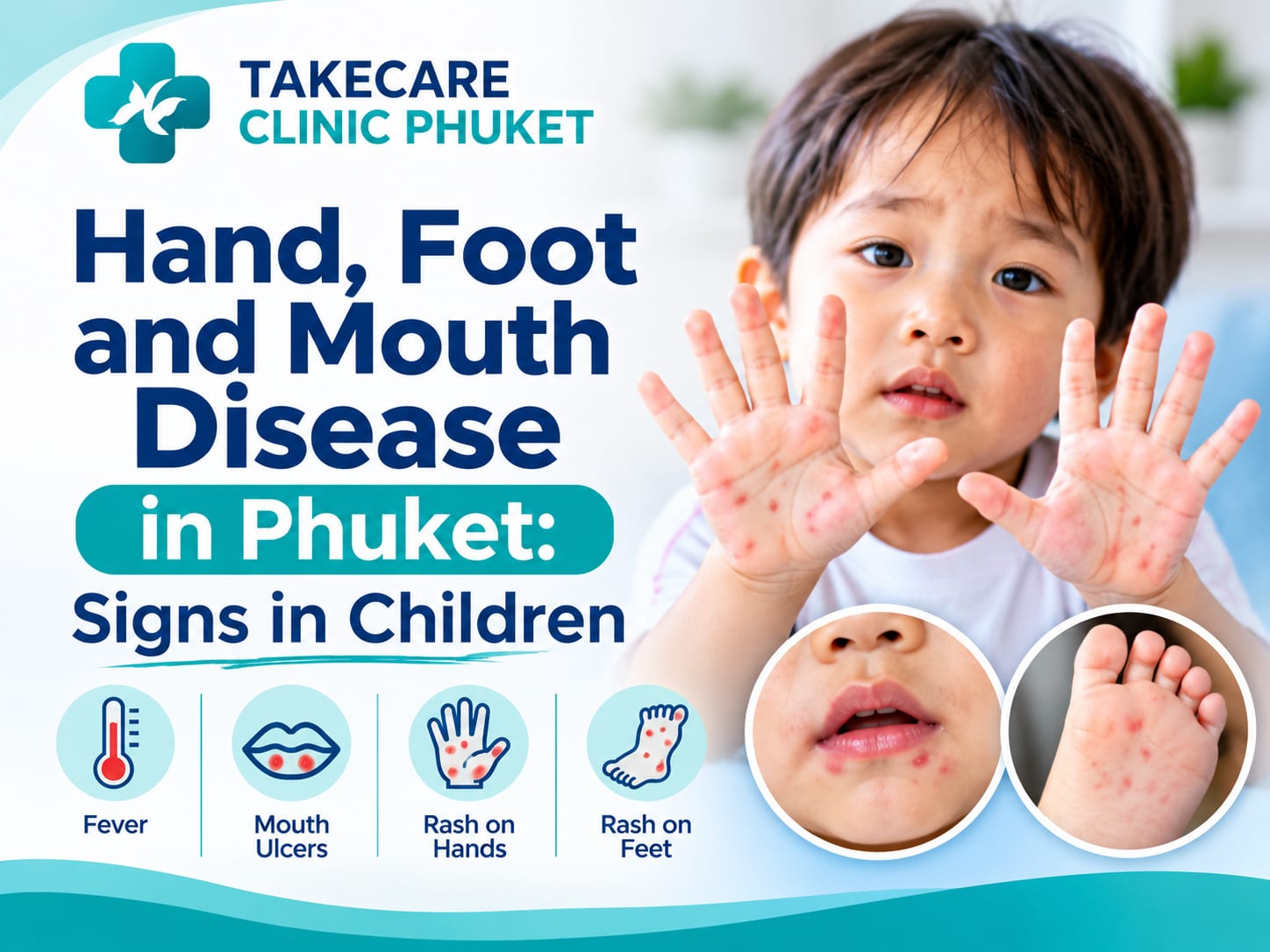
Hand, foot and mouth disease is a viral illness common in young children, caused by enteroviruses including Coxsackievirus and Enterovirus A71. It starts with fever and mouth sores, then a blistering rash on the hands, feet, and sometimes the bottom. Most cases clear within seven to ten days with rest and fluids. In Phuket, outbreaks peak during the rainy season, and hotel kids clubs, shared pools, and toy areas are common transmission points.
Your two-year-old woke up cranky at your Bang Tao hotel on day three of the holiday. By lunch she had a fever and was refusing food. By evening you spotted small blisters on her palms and raw-looking sores inside her mouth. You have searched the symptoms and hand, foot and mouth disease keeps coming up. That is probably right, and knowing what to watch for next matters more than the diagnosis itself.
Most cases in Phuket are manageable at home. The part that catches parents off guard is that the strains circulating in Thailand are not always the mild version they may have seen back home. Some outbreaks here have involved Enterovirus A71 (EV-A71), a strain linked to more serious complications. That is not a reason to panic, but it is a reason to know exactly when home care is enough and when it is not.
First Symptoms of Hand Foot Mouth Disease Thailand
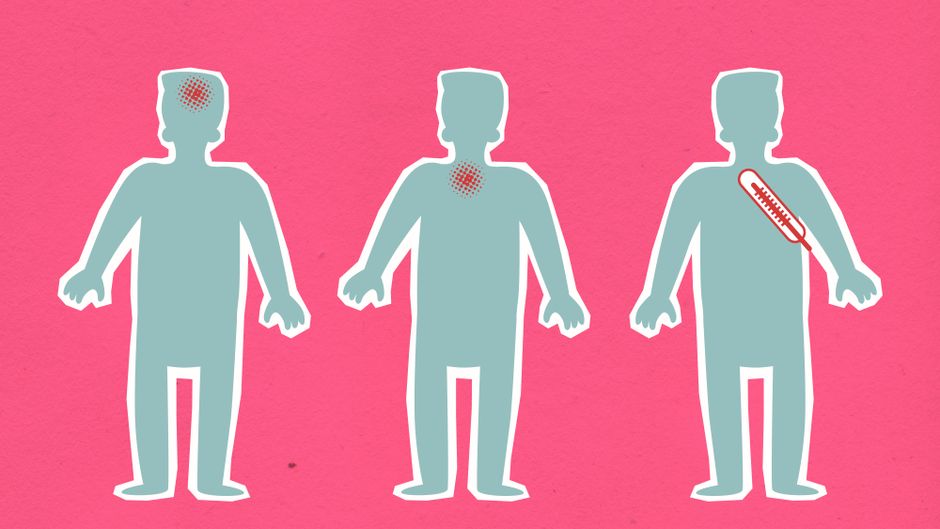
The first sign is usually a fever, often arriving a day or two before anything else. Mouth sores, small and painful, appear on the tongue, gums, or inside the cheeks. Your child may start drooling more, refuse to eat, or seem unusually miserable even for a sick toddler.
The rash comes next. Small flat spots that become blisters, usually on the palms, the soles of the feet, and sometimes the buttocks. They are not typically itchy. If your child had HFMD at nursery back home and you remember it as brief and mild, that is a reasonable baseline but not a guarantee here.
Thailand outbreaks have included both Coxsackievirus A6 and EV-A71. EV-A71 has been associated with neurological complications in children across Southeast Asia, though most infections, even with this strain, still resolve without serious problems. Symptoms usually appear three to seven days after exposure, so if your child spent time at a hotel kids club or resort pool earlier in the week, that is likely where it began.
Spread in Pools and Kids Clubs
HFMD spreads through saliva, blister fluid, and stool. A kids club with shared soft toys, a splash pool at a Patong resort, or shared pool floats are all efficient transmission routes. The rainy season, roughly June through September, is when cases in Thailand peak, and that window lines up closely with European and Australian school holidays.
Proper chlorination kills the virus in a main resort pool, but smaller wading pools and underfiltrated kiddie pools at budget hotels carry more risk. If another child in the same kids club develops symptoms, treat it as a real exposure for your child.
Disinfect toys, door handles, and changing surfaces with a diluted bleach solution. Wash hands after nappy changes. These steps protect every other family at the resort, not just your own.

Home Care
There is no antiviral treatment for HFMD. The goal is keeping your child comfortable while the immune system clears the virus.
Paracetamol syrup for children is available at pharmacies across Phuket, including 24-hour pharmacies in Patong, and it manages both fever and mouth pain. One important gap to know about: ibuprofen suspension is not reliably available over the counter in Thailand. If you rely on alternating paracetamol and ibuprofen at home, this will catch you short. A doctor can help with alternatives.
Fluids are the priority. Cold water, chilled milk, or ice lollies can make swallowing less painful when mouth sores are bad. Oral rehydration salts are available at every 7-Eleven on the island. If your child is refusing all fluids because of mouth pain, that is the point where home care is no longer enough. For more on managing dehydration in Phuket’s heat, the diarrhea treatment page gives useful guidance on fluid management for children.
Avoid acidic foods and drinks. Keep your child out of the hotel pool and kids club until all blisters have fully crusted over.
Warning Signs That Need a Doctor
Most children feel better within a week. But some symptoms mean you should stop waiting and get to a clinic the same day.
Go in if your child has a fever persisting beyond three days, is unable to drink anything due to mouth pain, seems unusually drowsy or hard to wake, is breathing fast, or is vomiting repeatedly. A febrile convulsion, a seizure triggered by rapid fever rise, is more common in young children than many parents realise. If this happens, call emergency services immediately.
The neurological complications associated with EV-A71 include encephalitis (swelling around the brain) and acute flaccid paralysis (sudden weakness in the limbs). These are rare but are more likely to present in Thailand than in the UK or Australia, and they require hospital-level care. A child who seems confused, develops a sudden limp, or loses coordination after HFMD warrants urgent assessment.
Takecare Clinic Phuket can assess fever and rash presentations in children, rule out other causes, and advise clearly on whether your child needs hospital referral. If you are unsure whether a rash is HFMD or something else, our skin rash assessment service covers a range of paediatric presentations that can look similar. No appointment is needed, and all consultations are with an English-speaking physician.
Flying Home With HFMD
This is where most parents in Phuket get stuck. The blisters have mostly dried, the fever is gone, and you have a flight in two days.
Open, weeping blisters are a reason airlines can deny boarding. Most blisters crust over within seven to ten days of onset. A child who is fever-free and whose blisters have fully dried is generally considered fit to fly, though individual airline policies vary.
If your trip is disrupted and you need to rebook, your travel insurer will want documentation. Takecare Clinic Phuket can issue a fit-to-fly certificate and a medical certificate if your insurer requires one. Contact your insurer before changing flights, not after.
If you are unsure whether your child is ready to fly, come in. We will tell you plainly where things stand and what paperwork you need.
If your child has fever, mouth sores, or a blistering rash in Phuket and you are not sure how serious it is, come in. Takecare Clinic Phuket is a walk-in clinic in Patong with no appointment needed and English-speaking physician care. We can assess your child, advise on home management, and issue a medical certificate or fit-to-fly letter if your travel plans are affected. We see families staying and living across the whole island, from Bang Tao to Rawai.
Frequently Asked Questions
Dr. Ponlawat Pitsuwan
Physician, Takecare Medical Clinic Phuket
a walk-in medical clinic in Patong with no appointment needed and English-speaking physician care for the whole island. He sees tourists, expats, and residents across Phuket for fever, rash, and childhood illness presentations, including hand, foot and mouth disease in Thailand, and advises families on managing illness when travel plans are involved. His focus is straightforward, evidence-based care delivered in plain language.
References
- Centers for Disease Control and Prevention. Hand, Foot, and Mouth Disease (HFMD). CDC.
- NHS. Hand, foot and mouth disease. NHS, 2024.
- Ooi MH, Wong SC, Lewthwaite P, Cardosa MJ, Solomon T. Clinical features, diagnosis, and management of enterovirus 71. Lancet Neurol. 2010;9(11):1097-1105.
- Puenpa J et al. Enterovirus A71 Infection, Thailand, 2017. Emerg Infect Dis. 2018;24(7). PMC6038748.
- Mao Q et al. Hand, foot and mouth disease and Coxsackievirus A6 outbreak in China. PLoS ONE. 2013. PMC3647428.
The information in this article is for educational purposes only and does not constitute medical advice. It should not be used to self-diagnose or replace a consultation with a qualified physician. If you have concerns about your health, contact a licensed medical professional. For appointments at Takecare Clinic Phuket, visit takecareclinicphuket.com.
