Clinically reviewed by Dr. Ponlawat Pitsuwan, Physician, Takecare Clinic Phuket. Last reviewed: September 2026
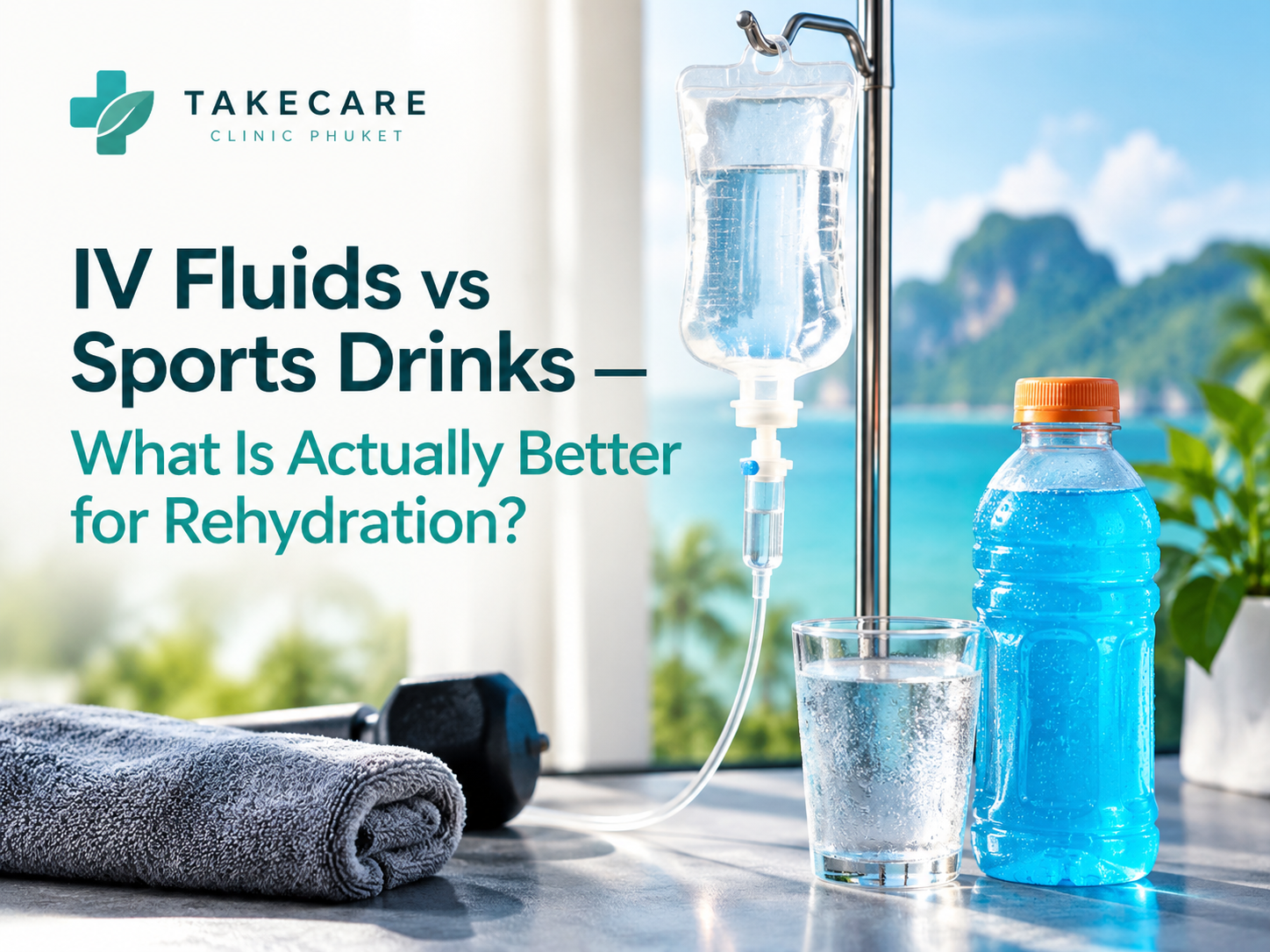
For mild dehydration, a sports drink or oral rehydration salts will work. But if you cannot keep fluids down, your urine has gone dark, or you feel dizzy standing up, a sports drink is not going to be enough. IV fluids bypass your gut entirely and get fluid into your bloodstream within minutes. In Phuket’s heat and humidity, dehydration can escalate faster than most visitors expect. Knowing which option you actually need can save you a miserable afternoon, or worse.
You have just done two dives out near Phi Phi, skipped lunch, and spent the afternoon on a longtail back to Chalong in direct sun. By the time you reach your guesthouse, you have a headache, your mouth is dry, and someone hands you a Gatorade. That is a reasonable instinct. In many situations it would work.
But the question I get asked at the clinic more than you would think is whether that sports drink is actually doing the job, or whether something is getting missed. The honest answer depends on how dehydrated you are and whether your gut can absorb what you are drinking. Those two things change everything.

What Is Actually in IV Fluids vs Sports Drinks
Most people assume sports drinks and a clinic drip are basically the same thing in different packaging. They are not.
The base fluid used in IV rehydration is usually normal saline or Ringer’s lactate. These fluids match your blood’s concentration almost exactly, so your body absorbs them directly without pulling water from elsewhere or pushing it away.
Most commercial sports drinks are a different story. The sugar content in a standard 500 ml sports drink is high enough that during active diarrhoea it can draw water into your intestine rather than helping you absorb it. That is the opposite of what you need.
Oral rehydration salts, available at every 7-Eleven on the island, sit between the two. The electrolyte balance is formulated specifically for fluid replacement, not for athletes finishing a training run.
How Fast Does Each Method Actually Work
This is where IV wins, and not by a small margin.
When you drink a sports drink, it has to leave your stomach and cross your intestinal wall before anything reaches your blood. Under normal conditions, that takes 15 to 60 minutes. If you are vomiting or your gut is inflamed from food poisoning, it takes longer, or nothing gets through at all.
IV fluids skip the entire process. They go directly into your vein and reach your blood plasma within minutes. If your blood pressure is low and your heart is working harder to compensate, that speed is clinically significant. A sports drink cannot match it.
For mild dehydration with a functioning gut, oral fluids still work well. The issue is knowing which situation you are actually in.

The Real Problem With Sports Drinks When You Are Genuinely Sick
I see this pattern regularly. Someone gets food poisoning after a buffet in Patong, spends the night vomiting and with diarrhoea, and by morning they are forcing down sports drinks because they read it helps. Sometimes it does. Sometimes the sugar load makes the diarrhoea worse.
If you are dealing with active vomiting and diarrhoea, oral rehydration salts are a better choice than a standard sports drink. And if you cannot keep ORS down either, that is the point where oral anything is not enough. You need IV.
How to Know Which Option You Actually Need
Mild dehydration looks like thirst, a dry mouth, and feeling flat. You have been in Phuket’s heat all day and forgot to drink enough. A sports drink, ORS, or plain water will sort this out.
Moderate dehydration looks different. You feel dizzy when you stand. Your urine is dark yellow or you have not urinated in several hours. You have a headache that does not shift. At this level, oral fluids can still work, but you need to drink steadily and watch yourself closely.
Severe dehydration is a medical situation. You cannot keep anything down, you feel confused or very weak, your heart is racing, or your mouth is completely dry and your eyes look sunken. This is not a sports drink problem. Phuket’s heat makes this escalate faster than visitors from northern Europe or North America typically expect.
What IV Rehydration at a Clinic Includes Beyond Salt Water
A lot of people picture an IV drip as just a bag of salty water. In a clinical setting, it is considerably more targeted than that.
After a physician assesses your level of dehydration, the drip can include dextrose for energy if you have not been eating, potassium to correct electrolyte losses, an antiemetic to stop the vomiting so you can keep fluids down afterward, and B-complex vitamins or vitamin C for recovery support. None of that comes in a sports drink.
The physician assessment also gives you a diagnosis. Sometimes what looks like dehydration from a big day out is dengue starting. Sometimes it is a bacterial infection that needs antibiotics. A bottle from 7-Eleven does not tell you which one you are dealing with. Takecare Clinic Phuket runs blood tests on site when the picture is unclear, and results usually come back the same day.
Common Phuket Scenarios and What to Reach For
After a full beach day in Kamala or Surin with light sun exposure and no vomiting, drink water and ORS. A sports drink is fine. No IV needed.
After a night out on Bangla Road with a hangover and mild nausea but you can keep fluids down, ORS and rest will do it. If the nausea is severe or you vomited through the night, an IV drip with an antiemetic will reset you far faster.
After eating seafood at the Rawai market and spending the night with vomiting and diarrhoea, try ORS first. If you cannot keep it down by mid-morning, come in. You likely need IV fluids, and a physician needs to check whether antibiotics are appropriate.
After a long day diving and you feel dehydrated with ear pain, get assessed. Divers are more dehydrated than they realise, and the ear issue needs to be looked at separately. IV fluids help, but a sports drink while you wait is not a plan.
When Sports Drinks Are Not Enough: Red Flags to Take Seriously
Any one of these means oral rehydration is not the right call right now.
You cannot keep fluids down for more than two hours. Your urine is dark amber or you have not urinated since yesterday. You feel dizzy or faint when you stand. You feel confused, unusually weak, or cannot concentrate. Your heart is racing. Your mouth is bone dry and your skin does not spring back when you pinch it.
In Phuket’s heat and humidity, these signs can develop faster than you would expect, especially after diving near Phi Phi, a scooter ride on a hot afternoon, or a night of drinking in Patong. Do not wait to see if the next sports drink helps. You can read more about what to expect from our IV therapy service in Phuket before you come in.
If you are dehydrated and cannot keep fluids down, or your symptoms are getting worse instead of better, walk into Takecare Clinic Phuket in Patong. No appointment needed. An English-speaking physician will assess you first, choose the right IV fluid and add-ons for your specific situation, and get you feeling better the same day. We see patients from Bang Tao and Kamala through to Rawai and Chalong. Walk in, and we will take it from there. Find out more about our IV rehydration therapy and what it includes.
Frequently Asked Questions
Dr. Ponlawat Pitsuwan
Physician, Takecare Medical Clinic Phuket
a walk-in medical clinic based in Patong with English-speaking physician care and no appointment needed. He sees tourists, expats, and residents across the island for dehydration, heat-related illness, IV rehydration, and the full range of acute and ongoing medical needs. His focus is straightforward, evidence-based care delivered in plain language.