
Clinically reviewed by Dr. Ponlawat Pitsuwan, Physician, Takecare Clinic Phuket.
Last reviewed: November 2026
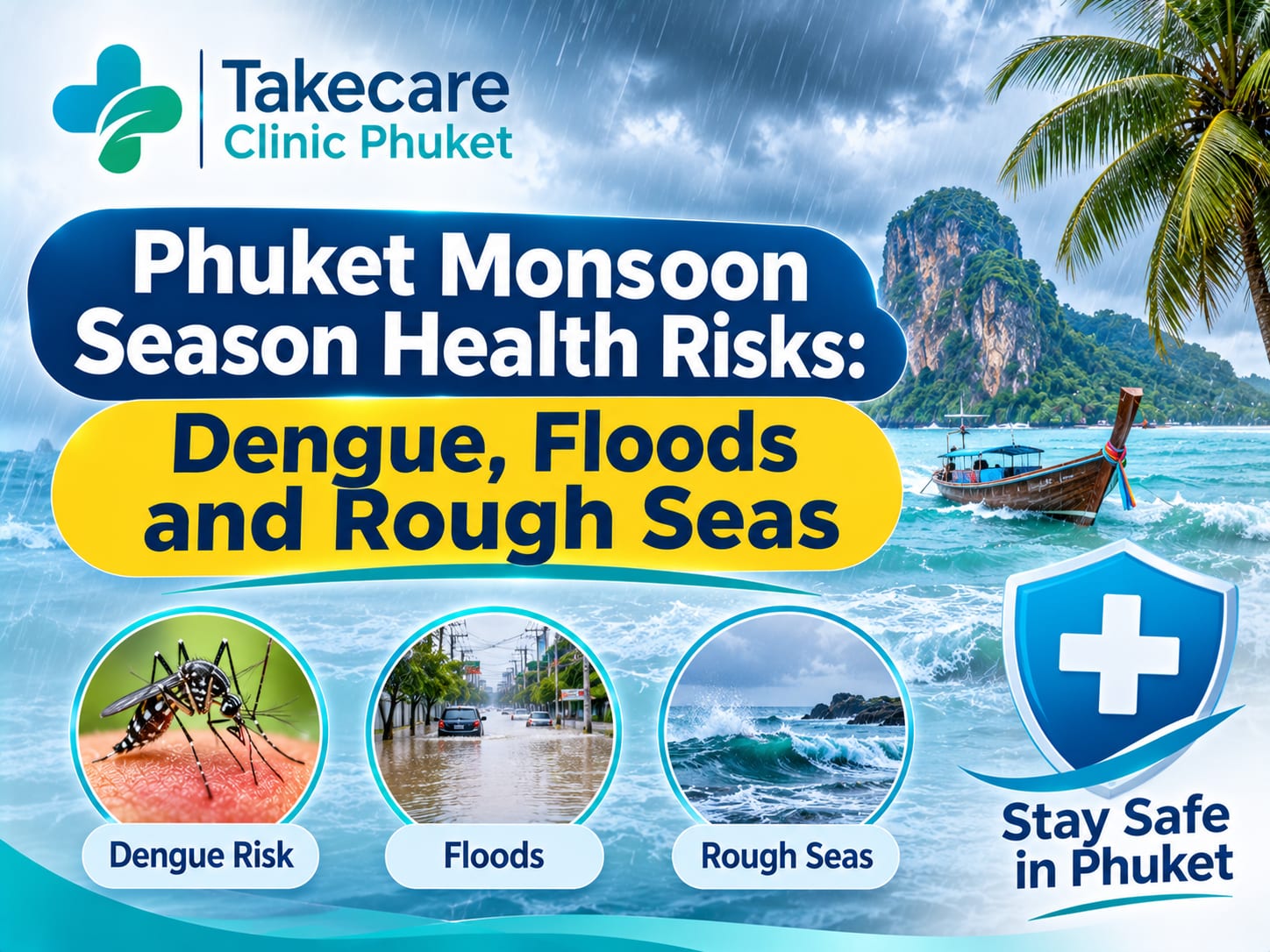
Phuket’s southwest monsoon runs roughly from May through October, bringing heavier rain, flash flooding, rough Andaman seas, and a sharp rise in dengue cases. The main health risks are dengue fever, infected wounds from floodwater or road crashes, leptospirosis from wading through standing water, and injuries linked to wet roads and poor visibility. Most of these are manageable if you act quickly, and walk-in care is available in Patong with no appointment needed.
You booked Phuket in June because flights were cheap and the hotels had space. What nobody mentioned is that June puts you squarely inside the southwest monsoon, when the roads flood, the boats get cancelled, and the mosquitoes are busier than at any other time of year. That is not a reason to cancel your trip. It is a reason to know what you are walking into.
The risks shift in the rainy season, and the mistakes that land people in a clinic are usually the same ones. Ignoring a fever for three days. Walking barefoot through Patong’s flooded side streets after a heavy downpour. Riding a scooter on wet roads with no gear. Treating monsoon Phuket like dry-season Phuket. This article covers what actually changes, what to watch for, and when to come in.

When the Phuket Rainy Season Starts
The wet season is not a switch that flips on a single date. Rain usually increases from May, peaks between July and September, and eases through October. Some years the break arrives in November; some years it stretches into it.
What changes medically is not dramatic on its own, but the combination matters. Humidity climbs, standing water collects everywhere, and Aedes mosquitoes breed faster in those pools. Skin stays damp longer, and minor wounds take longer to dry. Fungal skin infections rise in this period because heat and moisture together are exactly the conditions fungi need. If you are prone to tinea or you are a surfer spending hours in a wetsuit, that risk is real. Getting skin rash treatment right early matters more than waiting for a small patch to spread through a two-week trip.
Mould-related skin irritation also increases in accommodation with poor airflow. If you develop an itchy, spreading rash in the first few days and you have not been in the sea or touched anything unusual, the room itself may be part of the picture.
Dengue Peaks During the Phuket Rainy Season
This is the risk that matters most during the wet season, and it does not live only in the jungle. Dengue is spread by the Aedes aegypti mosquito, which bites during the day and breeds in small collections of standing water. It is as comfortable in a Patong hotel courtyard as it is in the green residential streets of Chalong, Thalang, and Cherng Talay. Living or staying outside the tourist strip does not protect you. It may actually increase your exposure.
The symptoms are fever, severe headache, pain behind the eyes, and joint and muscle aches, sometimes with a rash. Early dengue looks like a lot of other things. If you have a fever of three days or more in Phuket’s rainy season, do not wait it out. A dengue NS1 antigen test looks for the virus directly in the first few days of illness. We run this alongside IgM and IgG antibodies and a platelet count. You can walk in with no appointment for dengue fever testing at Takecare Clinic Phuket.
One drug point that most visitors miss: if dengue is possible, do not take ibuprofen, aspirin, or any NSAID pain reliever. These can worsen bleeding complications if the diagnosis is dengue. Use paracetamol only until dengue has been ruled out. Dengue is managed, not cured with medication. Staying hydrated, monitoring your platelet count, and knowing what warning signs to watch for is how most cases are handled safely. Full dengue fever treatment guidance is available if you test positive.
Feeling better on day four is not proof you are out of danger. Dengue can deteriorate between days three and seven. If you test positive, we will tell you exactly what to watch for.
Wet Roads and Scooter Crashes
Phuket’s roads are steep in places that catch people off guard. The Patong hill roads, Route 4028 through Kamala, and Chao Fa West Road all become genuinely hazardous when wet. Drainage is inconsistent, and a smooth-looking road surface can have zero grip in heavy rain. The pattern of monsoon scooter accidents tends to follow a familiar logic: a rider without rain gear, reduced visibility, an unexpected corner, and a wet road.
Road rash in Phuket’s wet season is not the same as road rash on a dry day back home. Heat, humidity, tropical bacteria on road surfaces, and monsoon moisture mean a graze can show signs of infection within twenty-four to forty-eight hours. Redness spreading beyond the wound edge, warmth, swelling, or pus at that speed is not unusual here. Rinse any wound thoroughly with clean water immediately. Do not leave embedded debris in a wound. Get it seen the same day if it is deeper than a surface graze, if debris remains, or if it is on a foot or lower leg.
Motorbike accident care is a core part of what we do at Takecare Clinic Phuket. We can irrigate wounds properly, assess whether closure is needed, and give tetanus cover where appropriate.
Flood Water and Infected Cuts
After heavy rain, parts of Patong’s lower streets and the Karon-Kata valley flood within an hour. Most of this water looks like a nuisance. What it actually contains is whatever the drains were carrying: animal waste, bacteria, and in some cases Leptospira, the organism behind leptospirosis.
Leptospirosis is a bacterial infection spread through water or soil contaminated by animal urine. Thai health authorities flag it as an elevated risk during the monsoon. If you wade through floodwater with any cut, blister, skin abrasion, or bare feet, you have given bacteria a direct entry point. Symptoms can appear anywhere from two days to four weeks after exposure: fever, headache, and severe muscle pain, particularly in the calves. It responds well to antibiotics if caught early.
If you have waded through floodwater and develop a fever in the days that follow, say so when you come in. That detail changes what we test for. Never let an open wound contact floodwater if you can avoid it, and if it does, clean it immediately with antiseptic. Wound care in Phuket is available at Takecare Clinic Phuket with no appointment needed.
Rough Seas and Cancelled Trips
The Andaman Sea from May through October produces regular swells that cancel speedboat routes to Phi Phi, the Similan Islands, and Racha. The Thai Meteorological Department publishes Andaman sea forecasts, and operators are supposed to follow wave-height thresholds before departing. In practice, passengers sometimes board without checking. Do not.
Phang Nga Bay routes generally run year-round because the bay is sheltered from open-ocean swell. If a far-island trip matters to you and you are travelling between June and September, Phang Nga is a more reliable option than a Phi Phi speedboat.
The medical side of rough seas is less discussed. Seasickness can produce dehydration quickly, particularly in children and older adults. Diving in conditions with strong surge increases ear barotrauma risk. If you surface from a dive with ear pain or pressure, ear infection treatment in Phuket is straightforward, but do not dive again on an ear that has not been assessed.
Sick during Phuket’s rainy season? Takecare Clinic Phuket in Patong is open with no appointment needed and English-speaking physician care. We can run a dengue NS1 antigen test and platelet count the same day, assess and clean road rash or floodwater wounds, check for leptospirosis if you have been exposed to standing water, and provide tetanus cover where appropriate. Walk in at 34/14 Prachanukhro Road, Kathu District, Patong, or contact us in advance to find out more about what we can do for you during monsoon season.
Frequently Asked Questions
Dr. Ponlawat Pitsuwan
Physician, Takecare Medical Clinic Phuket
a walk-in medical clinic based in Patong with no appointment needed and English-speaking physician care for the whole island. He sees tourists, expats, and residents across Phuket for monsoon-season illness, dengue assessment, wound care, and travel medicine. His focus is straightforward, evidence-based care delivered in plain language.
References
- World Health Organization. Dengue and severe dengue. WHO Fact Sheet, 2024.
- Centers for Disease Control and Prevention. Clinical Care of Dengue. CDC, 2024.
- Centers for Disease Control and Prevention. Leptospirosis: Signs and Symptoms. CDC, 2024.
- Centers for Disease Control and Prevention. Leptospirosis: Clinical Overview for Healthcare Providers. CDC, 2024.
- Centers for Disease Control and Prevention. Clinical Features of Dengue. CDC, 2024.
- Thai Meteorological Department. Andaman Sea Marine Forecast. TMD.
The information in this article is for educational purposes only and does not constitute medical advice. It should not be used to self-diagnose or replace a consultation with a qualified physician. If you have concerns about your health, contact a licensed medical professional. For appointments at Takecare Clinic Phuket, visit takecareclinicphuket.com.
